


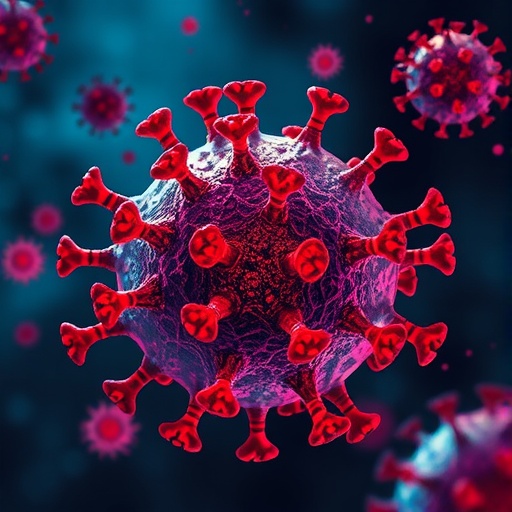
In an extraordinary stride forward for molecular biology and immunology, researchers at the La Jolla Institute for Immunology (LJI) have unveiled the first-ever three-dimensional structure of a protein derived from human endogenous retroviruses (HERVs). This breakthrough centers on the envelope glycoprotein (Env) of the HERV-K family—a viral relic embedded within approximately 8 percent of the human genome. Despite their viral origins, these sequences have remained largely silent over evolutionary timescales, earning their reputation as the “dark matter” of our DNA. The new study, published in Science Advances, unlocks potential avenues for diagnostics and therapeutics targeting diseases where HERV-K Env resurfaces, such as in various cancers and autoimmune disorders.
Endogenous retroviruses represent ancient viral infections that inserted their genetic material into the germline of human ancestors millions of years ago, becoming permanent fixtures within our chromosomes. Among them, HERV-K stands out for its relative activity and expression in contemporary human tissues, notably in pathological states. The Env protein encoded by HERV-K not only adorns the viral particle surface but also manifests on the surface of certain tumor cells and immune cells involved in autoimmune conditions. Despite this significance, structural information about any human endogenous retroviral protein has eluded scientists—until now.
The LJI team, spearheaded by President and CEO Erica Ollmann Saphire, Ph.D., applied cutting-edge cryo-electron microscopy (cryo-EM) techniques to stabilize and visualize the HERV-K Env protein in its elusive pre-fusion state. Envelope glycoproteins are intricately dynamic, existing as metastable complexes poised to dramatically refold upon engaging host cells—a process essential for viral entry. Capturing this fleeting conformation required innovative protein engineering to ‘lock’ HERV-K Env’s shape without disrupting its native architecture, an approach previously employed with success on technically challenging viral proteins such as those from Ebola and Lassa viruses.
The high-resolution images generated reveal an architecture unlike any other retroviral envelope protein solved to date. Unlike the comparatively short and squat trimers characterizing HIV and SIV envelope proteins, HERV-K Env adopts a tall and slender trimeric form. The unique folding pattern, comprising a novel configuration of beta strands and alpha helices interwoven into its functional machinery, sets it apart mechanistically and structurally. This divergence underscores the evolutionary variety among retroviral envelopes and offers fresh insights into the molecular mechanisms driving retroviral fusion and immune recognition.
Notably, this study marks only the third retroviral envelope structure ever solved, and the first from an endogenous human retrovirus, representing a monumental advance in retrovirology. The implications extend beyond structural biology, touching on diseases where aberrant HERV expression has been implicated. For instance, HERV-K Env expression has been documented on the surfaces of breast, ovarian, and other tumor cells. Antibodies directed against this protein could serve as precise markers, discriminating tumor cells from healthy tissue, thereby aiding targeted immunotherapies—such as antibody-drug conjugates or chimeric antigen receptor T-cell (CAR-T) therapies engineered to recognize HERV-K Env-expressing cells.
Moreover, the role of HERV-K Env in autoimmune diseases is gaining attention. Autoimmune conditions like systemic lupus erythematosus and rheumatoid arthritis exhibit upregulated HERV-K Env on patient immune cells, notably neutrophils, which mediate inflammation and tissue damage. The research team demonstrated that their custom-developed monoclonal antibodies could specifically bind these HERV-K Env-expressing immune cells extracted from patients, but not from healthy controls. This suggests a link between HERV-K Env expression and immune dysregulation, highlighting a new landscape for therapeutic intervention aimed at mitigating autoimmune pathology by targeting viral protein components perceived erroneously as threats by the immune system.
The generation and characterization of these monoclonal antibodies against HERV-K Env were pivotal for stabilizing the protein complexes and enabling high-definition structural studies. By identifying antibodies that bind discrete subunits and configurations of the Env trimer, the team dissected the molecular landscape of antibody recognition, an essential step toward rational vaccine design or antibody-based therapies. This panel of antibodies also serves as a valuable toolkit for future diagnostic applications that seek to identify HERV-K-related pathologies at the cellular or molecular level with unprecedented sensitivity.
A remarkable challenge overcome by the researchers was maintaining the HERV-K Env protein in its delicate pre-fusion conformation amid the tendency of such envelope proteins to spontaneously transition to post-fusion states. These rearrangements involve massive structural shifts required for mediating membrane fusion during viral entry. The team’s strategic mutations and antibody-assisted stabilization arrested the protein mid-transition, unveiling structural snapshots critical for understanding viral entry and immune evasion pathways. Such mechanistic insight might help design inhibitors that prevent Env from initiating fusion, curbing pathogenic processes downstream.
This study also represents an exemplar of how advanced imaging modalities like cryo-EM are revolutionizing our understanding of complex biological machines. By producing 3D renderings of HERV-K Env at various functional states—both free on the cell surface and when engaged with neutralizing antibodies—the researchers elucidated the choreography of viral-host interactions at near-atomic resolution. These images reveal not only the static architecture but also dynamic states relevant to infection and immune recognition, guiding future drug discovery focused on these transient but vulnerable stages.
The broader scientific community is watching the unfolding story of HERV-K with growing excitement, as additional diseases and pathological states appear linked to this retroviral relic. With a structurally characterized Env as a molecular beacon, researchers can pivot toward exploring its role in neurodegenerative disorders and other immune-mediated conditions where HERV activity is suspected but mechanistically unclear. This work offers a scaffold for integrative studies merging genomics, immunology, and structural biology to unravel the complexity of human endogenous viruses and their contributions to health and disease.
Ultimately, this groundbreaking research reminds us that humans carry viral ghosts in their genomes—fragments of ancient infections embedded into our DNA across millennia. Far from inert, these endogenous viral elements sometimes wake from dormancy in disease contexts, presenting both challenges and opportunities for science and medicine. The elucidation of HERV-K Env’s structure establishes a foundational platform not only for clinical innovation but also for deeper insights into our evolutionary history and intrinsic biology.
As efforts continue to translate this structural knowledge into therapeutic strategies, including antibody-based diagnostics and targeted immunotherapies, the scientific and medical communities are poised to enter a new era of exploiting endogenous retroviral proteins for human health. The LJI team’s achievement is a testament to perseverance, ingenuity, and multidisciplinary collaboration that merges cutting-edge imaging with molecular engineering to solve one of the longstanding puzzles of viral legacy within the human genome.
News Publication Date: 27-Aug-2025
Web References:
https://www.science.org/doi/10.1126/sciadv.ady8168
References:
Wilson EM, Moadab F, Hastie KM, Rajamanickam RR, Penalosa PJ, Harkins SS, Parekh D, Hariharan C, Zyla DS, Yu C, Shaffer KCL, Lewis VI, Diaz Avalos R, Mustelin T, et al. Human endogenous retrovirus K (HERV-K) envelope structures in pre- and postfusion by cryo-EM. Science Advances. 2025; DOI:10.1126/sciadv.ady8168.
Cite Scienmag News
Rowan B. (August 27, 2025). Revealing the Hidden World: A Stunning First Look at the Viruses Within Us. Scienmag. https://scienmag.com/revealing-the-hidden-world-a-stunning-first-look-at-the-viruses-within-us/
Rowan B. "Revealing the Hidden World: A Stunning First Look at the Viruses Within Us." Scienmag, 27 August 2025, https://scienmag.com/revealing-the-hidden-world-a-stunning-first-look-at-the-viruses-within-us/. Accessed 28 August 2026.
Rowan B. "Revealing the Hidden World: A Stunning First Look at the Viruses Within Us." Scienmag. August 27, 2025. https://scienmag.com/revealing-the-hidden-world-a-stunning-first-look-at-the-viruses-within-us/


