


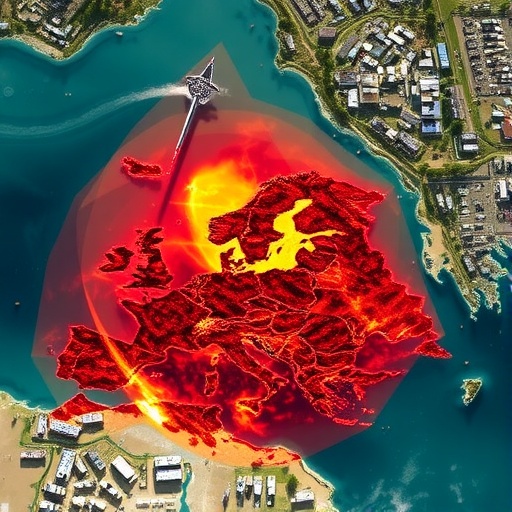
The Mediterranean Sea, a vibrant ecosystem known for its biodiversity and economic significance, is facing unprecedented challenges due to climate change. Recent research highlights how concurrent atmospheric heatwaves are exacerbating marine heatwaves in this vital region. The study, conducted by Paredes-Fortuny, Pastor, and Khodayar, utilizes sophisticated climate models and observational data to illustrate the impact of combined heat events on air-sea heat flux changes, catalyzing a worrying trend for marine life and coastal communities alike.
During the last decade, incidents of heatwaves have become more frequent and intense, both in the atmosphere and the ocean. The study reveals a concerning correlation between atmospheric conditions and ocean temperatures. This interaction amplifies marine heatwaves, leading to prolonged periods of extreme heat in the water. As global temperatures rise, the Mediterranean Sea is projected to confront unprecedented levels of warmth, compelling researchers to delve deeper into how these simultaneous heatwaves interact and intensify each other.
The implications extend beyond mere temperature increases. High sea temperatures can lead to the bleaching of corals and the disruption of marine species’ habitats. Fish populations, essential for local fisheries and economies, may see their distributions change dramatically, impacting food security for communities reliant on seafood. These dynamics have cascading effects, altering entire food webs and threatening the intricate balance of the Mediterranean marine ecosystem.
The scientists employed a range of climate models, from historical simulations to projections for the coming decades. The use of these models reveals a concerning trend: as atmospheric temperatures continue to rise, the Mediterranean Sea will experience broader and more severe heatwaves. The research concludes that the interaction of heatwaves is not merely additive; instead, it creates feedback loops that enhance warming effects. This insight underscores the urgency for adaptive management strategies in marine resource exploitation and coastal zone management.
The findings are particularly alarming as they indicate that a significant portion of marine life is likely to be affected. Species that are sensitive to temperature changes, such as various fish and shellfish, may experience reductions in reproductive success and survival rates. This phenomenon could lead to declining marine biodiversity, impacting not only ecological balance but also economic stability in the region heavily reliant on these biological resources.
Researchers focused not only on the immediate effects of marine heatwaves but also on the longer-term consequences of sustained high temperatures. The ocean’s capacity to absorb carbon dioxide is diminished at elevated temperatures, leading to increased greenhouse gas concentrations in the atmosphere. This perpetuates a vicious cycle of warming, resulting in further climate destabilization. The research illuminates how the interplay between atmospheric and oceanic heatwaves may present complex feedback mechanisms that reinforce climate change.
Moreover, with tourism being a cornerstone of the Mediterranean economy, the study indicates potential repercussions for this sector as well. Warmer sea temperatures could impact recreational fishing, diving, and beach activities, ultimately affecting local economies. As marine ecosystems become stressed, the allure of the Mediterranean as a tourist destination may dwindle, necessitating adaptation by stakeholders dependent on tourism revenue.
In response to these findings, it is imperative for policymakers and environmental organizations to take immediate actions. The study suggests implementing more receptive practices regarding marine conservation. This includes bolstering marine protected areas, enhancing habitat restoration initiatives, and enforcing regulations that mitigate the impacts of fishing and pollution. Strengthening resilience within marine ecosystems can provide a buffer against the cascading effects of heatwaves, helping to safeguard biodiversity and human communities alike.
Public awareness is also crucial. Engaging local communities and raising awareness about the impacts of climate change on marine environments can help spur grassroots movements advocating for climate action. Advocacy for sustainable practices, coupled with education on the importance of marine ecosystems, can empower communities to take an active role in conservation efforts and in combating climate change at local, regional, and global levels.
This study acts as a clarion call to both the scientific community and the public, underlining the interconnectedness of atmospheric and oceanic phenomena. The Mediterranean Sea, often regarded as a serene oasis, is increasingly becoming a barometer for the broader implications of climate change. As such, the findings prompt a reevaluation of how societies perceive and interact with marine environments in the face of escalating climate extremes.
The culmination of research and observations from Paredes-Fortuny et al. reinforces the pressing need for interdisciplinary approaches to climate science. Understanding the intricate relationships among atmospheric conditions, ocean temperatures, and marine life is crucial for creating effective environmental policies. Collaborative efforts among scientists, policymakers, and communities are essential to devise comprehensive strategies to address these challenges and build resilience against the inevitability of climate-induced changes.
In conclusion, the alarming interplay of heatwaves in the Mediterranean underscores the urgency for informed and decisive action. The findings presented in this study will help guide future research and policy development, ultimately aiming to mitigate the adverse effects of climate change on marine ecosystems and the human communities that rely on them. As the region grapples with the realities of a warming world, it is essential that steps are taken now to safeguard the Mediterranean Sea’s future.
Paredes-Fortuny, L., Pastor, F. & Khodayar, S. Concurrent atmospheric heatwaves intensify marine heatwaves through air-sea heat flux change in the Mediterranean Sea.
Commun Earth Environ 6, 638 (2025). https://doi.org/10.1038/s43247-025-02633-2
Cite Scienmag News
Violet Maxwell. (August 6, 2025). Heatwaves Amplify Marine Heat in Mediterranean Sea. Scienmag. https://scienmag.com/heatwaves-amplify-marine-heat-in-mediterranean-sea/
Violet Maxwell. "Heatwaves Amplify Marine Heat in Mediterranean Sea." Scienmag, 6 August 2025, https://scienmag.com/heatwaves-amplify-marine-heat-in-mediterranean-sea/. Accessed 1 September 2026.
Violet Maxwell. "Heatwaves Amplify Marine Heat in Mediterranean Sea." Scienmag. August 6, 2025. https://scienmag.com/heatwaves-amplify-marine-heat-in-mediterranean-sea/


