


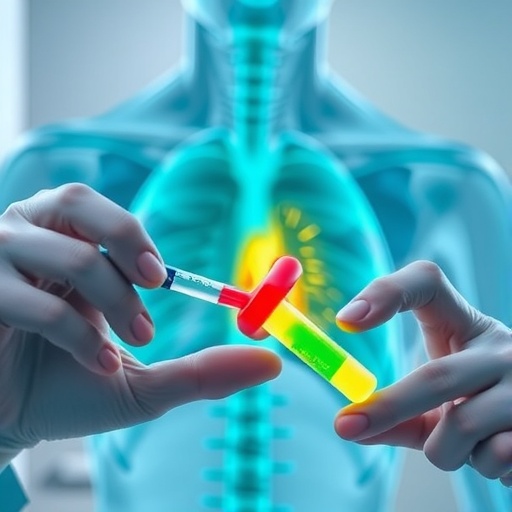
In a groundbreaking development that could transform forensic investigations, researchers have unveiled the potential of cardiac biomarker “point-of-care” testing as a pivotal tool for postmortem diagnostics. This innovative approach promises to streamline cause-of-death determinations by introducing a rapid, bedside-compatible technique capable of delivering crucial biochemical insights in forensic pathology. The work, detailed by Federspiel, Kettner, Potente, and colleagues in the International Journal of Legal Medicine (2025), indicates a significant leap forward, as the adaptation of point-of-care testing technology, traditionally used in clinical settings, finds novel applicability in postmortem examinations.
Forensic pathology often wrestles with the quandary of timely and accurate cause-of-death assessments, especially in cases where external examination fails to reveal immediate answers. Cardiac biomarkers, proteins released during myocardial injury, have long been recognized as critical indicators in clinical cardiology. However, their postmortem diagnostic utility remained underexplored due to methodological challenges and the potential biochemical alterations that arise after death. By implementing point-of-care (POC) devices, the researchers aim to circumvent these issues, providing rapid, sensitive, and portable assays for cardiac-specific proteins such as troponins directly at the autopsy scene.
The methodology harnessed by Federspiel et al. revolves around the quantification of cardiac troponin I and T, alongside other biomarkers indicative of cardiac tissue damage. These proteins serve as molecular fingerprints of myocardial infarction, the leading cause of sudden cardiac death. Historically, conventional laboratory immunoassays required prolonged sample preparation and centralized analytical infrastructure, impeding immediate forensic decision-making. The transition to POC diagnostics employs portable immunochromatographic analyzers, capable of delivering quantitative results within minutes from minimally invasive tissue or fluid samples.
One of the pivotal technical challenges addressed by the study was the validation of biomarker stability and reliability in postmortem specimens. Biological degradation, enzymatic activity, and postmortem interval variations can dramatically alter biomarker concentrations, potentially confounding diagnostic interpretations. The authors meticulously analyzed myocardial and peripheral blood samples over varied postmortem intervals to characterize degradation kinetics. Their findings suggest that while troponins undergo some chronological decline, their detectability remains sufficiently robust within the critical time frames typical of forensic examinations.
Moreover, the researchers elucidated that certain pre-analytical variables, such as storage conditions, hemolysis, and putrefaction, exert differential impacts on biomarker integrity. They advocate for stringent protocols encompassing rapid sample collection and cooling to preserve analyte stability. Such procedural refinements are crucial for maximizing the diagnostic yield of POC testing and minimizing false negatives or equivocal results. This emphasis on standardization underscores the necessity of integrating biochemical expertise into forensic laboratories and training pathologists in novel assay techniques.
Intriguingly, the study further explored the correlation between biomarker quantifications obtained via POC devices and established laboratory immunoassays, demonstrating strong concordance. This cross-validation fortifies the credibility of point-of-care methods as viable adjuncts or even alternatives to traditional approaches. The potential of bedside biochemical screening could drastically reduce turnaround times for forensic determinations, facilitating more efficient case resolutions and legal processes.
Beyond myocardial infarction, the authors examined the spectrum of cardiac pathologies detectable by biomarker profiling, including myocarditis, contusion, and ischemic injury secondary to systemic factors. The ability of POC devices to discriminate among these conditions remains an active area of investigation, yet preliminary data underscore promising specificity. In particular, the differentiation of sudden cardiac death etiologies stands to benefit immensely from rapid biomarker assessment, augmenting histopathological and circumstantial evidence.
The practical implications of this technology extend to resource-limited settings, where access to centralized laboratories is often a bottleneck. The miniaturization and user-friendly design of POC platforms democratize advanced diagnostic capabilities, enabling forensic experts working in remote or austere environments to undertake sophisticated biochemical analyses. This decentralization aligns with the broader trend in medicine towards point-of-care diagnostics, emphasizing immediacy, affordability, and accessibility.
Notably, the ethical and legal ramifications of introducing rapid biochemical assays into forensic workflows warrant considerable contemplation. The authors highlight the need for rigorous validation, quality control, and adherence to forensic standards to prevent misinterpretations that could influence judicial outcomes. As such, interdisciplinary collaboration between clinicians, forensic scientists, and legal professionals is paramount to responsibly implement these novel diagnostics.
The research also pioneers a framework for integrating POC biomarker data with other forensic modalities, such as imaging, genetic testing, and toxicology. This holistic approach promises to refine diagnostic algorithms, enhancing the sensitivity and specificity of cause-of-death determinations. Advanced data fusion techniques and machine learning may soon capitalize on multiparametric datasets generated at the autopsy, further elevating forensic precision.
From a technical perspective, the choice of biomarkers remains critical. Troponins, being highly cardiac-specific and released promptly upon injury, represent ideal candidates. Nevertheless, the identification of additional markers with complementary diagnostic properties is an active frontier. Biomarkers reflecting systemic inflammatory responses, oxidative stress, or endothelial damage could enrich the interpretive landscape. The modular adaptability of POC devices supports multiplexed assays, enabling simultaneous detection of multiple analytes.
Furthermore, Federspiel and colleagues discuss the importance of longitudinal studies across diverse populations to assess variability attributable to demographics, comorbidities, and environmental exposures. Such epidemiological considerations are essential for establishing robust reference ranges and threshold values applicable in medicolegal contexts. Customizing diagnostic cut-offs to account for postmortem intervals and individual factors will enhance interpretive accuracy.
The translation of these research findings into routine forensic practice demands comprehensive training programs to familiarize forensic pathologists with POC technologies and their interpretative nuances. This educational component should be complemented by the development of standardized guidelines and operating procedures endorsed by forensic and legal authorities. Collaboration with device manufacturers to tailor platforms to forensic specifications will further facilitate widespread adoption.
Accessibility and cost-effectiveness are additional factors poised to influence the impact of POC biomarker testing. While the initial investment in devices and consumables may be substantial, projected efficiencies gained through accelerated diagnostics and reduced laboratory dependencies could yield net economic benefits. Strategic implementation plans in forensic institutes can leverage these advantages to optimize workflow and case throughput.
Looking forward, the integration of POC biomarker testing may catalyze paradigm shifts in forensic evidence gathering, enhancing the objectivity and reproducibility of cause-of-death assessments. By furnishing rapid molecular insights, these technologies help unravel complex cardiac pathologies that often evade conventional autopsy scrutiny. As forensic medicine embraces this biochemical revolution, the ultimate beneficiaries will be justice systems striving for timely and accurate death investigations.
In conclusion, the pioneering work by Federspiel and colleagues encapsulates the transformative potential of cardiac biomarker point-of-care testing in forensic diagnostics. Their comprehensive evaluation paves the way for innovative, rapid, and reliable postmortem analyses that circumvent traditional limitations. As this technology matures and integrates into forensic protocols worldwide, it promises to reshape the landscape of medicolegal investigations, blending biochemical sophistication with practical ingenuity to serve the cause of justice.
Federspiel, J.M., Kettner, M., Potente, S. et al. Assessment of cardiac biomarker “point-of-care” testing as postmortem diagnostic tool. Int J Legal Med (2025). https://doi.org/10.1007/s00414-025-03517-y
Cite Scienmag News
Ophelia Keating. (August 4, 2025). Postmortem Cardiac Biomarker Testing at Point-of-Care. Scienmag. https://scienmag.com/postmortem-cardiac-biomarker-testing-at-point-of-care/
Ophelia Keating. "Postmortem Cardiac Biomarker Testing at Point-of-Care." Scienmag, 4 August 2025, https://scienmag.com/postmortem-cardiac-biomarker-testing-at-point-of-care/. Accessed 1 September 2026.
Ophelia Keating. "Postmortem Cardiac Biomarker Testing at Point-of-Care." Scienmag. August 4, 2025. https://scienmag.com/postmortem-cardiac-biomarker-testing-at-point-of-care/


