


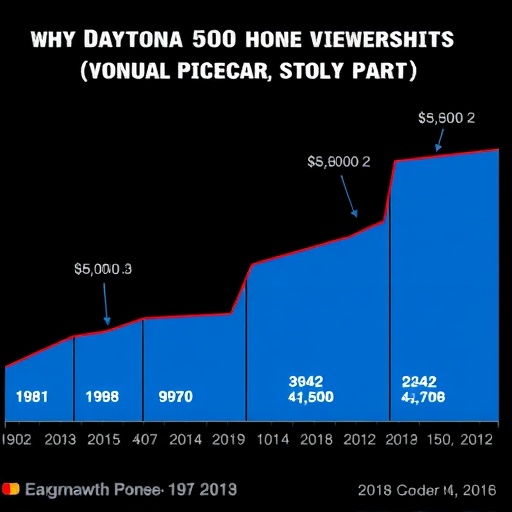
The Daytona 500 has long stood as a cultural cornerstone in American sports, captivating millions each year with its heady mix of speed, strategy, and spectacle. Yet, beneath the roar of engines and the thrill of the chase lies a complex and shifting landscape of viewership that has puzzled economists and media analysts alike. In his recent paper published in the Atlantic Economic Journal, A.K. Lynch embarks on an ambitious quest to unravel the intricate factors behind the variability in Daytona 500 viewership rates, painting a nuanced portrait of what drives audience engagement in this quintessentially American race.
At first glance, the Daytona 500 appears to be a consistent draw for television audiences, often cited as the pinnacle event of NASCAR’s racing calendar. However, Lynch’s analysis reveals that viewership is far from static; it ebbs and flows in ways that defy simple explanation. By deploying rigorous econometric models and incorporating a broad array of socio-economic variables, Lynch ventures beyond conventional wisdom to explain why some years see explosive ratings while others experience marked declines. His approach sheds light on how the interplay between race dynamics, viewer preferences, and broader societal trends shape the fluctuating numbers behind the beloved event.
Central to Lynch’s argument is the proposition that traditional predictors of sports viewership, such as star athlete popularity or weather conditions, provide an incomplete picture when it comes to NASCAR’s premier race. Instead, he identifies a more intricate web of factors encompassing technological accessibility, regional demographic shifts, and even concurrent national events. For instance, Lynch highlights how the increasing availability of streaming platforms has diversified the viewership base while simultaneously fragmenting the traditional TV audience, creating pockets of highly engaged yet smaller viewer segments.
Delving deeper, the study probes the temporal aspect of race day itself: the timing of the Daytona 500 within the broader annual sports calendar. Lynch’s models indicate that scheduling conflicts with other major sporting events or national broadcasts significantly influence viewership numbers, underscoring the importance of strategic timing in capturing audience attention. This phenomenon is further compounded by the rise of on-demand content, which challenges the concept of ‘live’ viewership as the sole barometer of engagement.
Another pivotal consideration that Lynch explores is the demographic composition of NASCAR’s fanbase. Over the past decades, diversifying population trends have altered the traditional profile of NASCAR fans, and this transformation resonates through the patterns of who tunes in to watch the Daytona 500. Lynch probes how shifts in age, ethnicity, and socioeconomic status correlate with changes in viewership, revealing nuanced divides in racing fandom that are often overshadowed by the sport’s historically homogenous image.
Economic factors also play a significant role in Lynch’s framework. He points to the relationship between regional economic health and localized viewership figures, demonstrating that economic downturns, particularly in areas with strong NASCAR followings, tend to depress audience numbers. This insight suggests that broader macroeconomic conditions cannot be disentangled from the dynamics of race day engagement, emphasizing the sport’s vulnerability to external financial pressures.
The study also ventures into the psychology of sports spectatorship, exploring how the narrative arc of the race itself impacts viewer interest. Lynch argues that unpredictability in the outcome, marked by close finishes or dramatic incidents, spikes viewership both during and after the event, as audiences become invested in the suspense and emotional drama unfolding on the track. He supports this claim with detailed statistical analyses correlating finish margins with ratings surges, highlighting the importance of competitive balance in sustaining audience appeal.
Lynch doesn’t overlook the cultural resonance of the Daytona 500, framing it as more than just a sporting event but a ritual that taps into the collective American ethos. His research suggests that fluctuations in patriotism and national mood—as measured through surveys and social indicators—can subtly, yet meaningfully, influence willingness to engage with NASCAR’s flagship race. This dimension brings a sociological depth to his economic analysis, positioning the Daytona 500 as a reflection of broader societal currents.
Technological innovations in broadcasting also figure prominently in Lynch’s examination. He details how the advent of high-definition television, augmented reality features, and interactive social media platforms have transformed the ways in which audiences consume the race, creating immersive experiences that transcend traditional spectating. However, these same advancements have introduced fragmentation, with younger viewers migrating towards digital platforms and older demographics remaining tethered to cable broadcasts, adding layers of complexity toAudience measurement.
A particularly compelling aspect of Lynch’s paper tackles the influence of sponsorship and advertising strategies on viewership fluctuations. By analyzing data on commercial spend and brand engagement linked to the Daytona 500, he argues that effective marketing partnerships can amplify excitement and attract niche audiences, thus boosting overall numbers. Conversely, lapses in promotional momentum or mismatched advertising content can suppress viewer interest, highlighting the symbiotic relationship between economic investment and audience capture.
Lynch also pays attention to external shocks and anomalies, such as the impact of the COVID-19 pandemic on sports consumption habits. While the NASCAR community demonstrated resilience with adapted formats and virtual fan engagement, the pandemic heralded shifts in viewing patterns that continue to reverberate. His longitudinal data traces the post-pandemic recovery curve of Daytona 500 viewership, offering insights into how extraordinary events recalibrate long-term audience behavior.
Beyond domestic factors, the study touches upon the internationalization of NASCAR and its limited, yet growing, global audience. Lynch posits that expanding the Daytona 500’s appeal abroad could buffer against domestic viewership variability, suggesting pathways for the sport’s strategic growth. However, he tempers this optimism with recognition of cultural barriers and the inherently American character of the event, which complicates global marketing initiatives.
In conclusion, A.K. Lynch’s investigation into the variability of Daytona 500 viewership is a landmark contribution to sports economics and media studies. By fusing technical rigor with cultural insight, his work elucidates the multifaceted ecosystem underpinning one of America’s most iconic sporting spectacles. The findings underscore that variability in viewership is a product of dynamic and interlinked factors—ranging from economic conditions and demographic trends to technological shifts and cultural moods—offering a blueprint for stakeholders aiming to sustain and grow audience engagement amidst a rapidly evolving media landscape.
Moving forward, Lynch advocates for continuous monitoring of emerging trends and the adoption of adaptive strategies that can respond to the fluid nature of modern sports consumption. His research sets the stage for an interdisciplinary approach to understanding and enhancing the Daytona 500’s resonance with audiences, suggesting that the future of America’s Great Race depends not only on speed and skill on the track but also on adept navigation of the complex terrain of viewer behavior.
Lynch, A.K. The Great American Race: Explaining Variability in Viewership Rates of the Daytona 500. Atl Econ J 51, 207–209 (2023). https://doi.org/10.1007/s11293-023-09776-7
Cite Scienmag News
Courtney Benton. (May 23, 2025). Why Daytona 500 Viewership Rates Widely Vary. Scienmag. https://scienmag.com/why-daytona-500-viewership-rates-widely-vary/
Courtney Benton. "Why Daytona 500 Viewership Rates Widely Vary." Scienmag, 23 May 2025, https://scienmag.com/why-daytona-500-viewership-rates-widely-vary/. Accessed 1 September 2026.
Courtney Benton. "Why Daytona 500 Viewership Rates Widely Vary." Scienmag. May 23, 2025. https://scienmag.com/why-daytona-500-viewership-rates-widely-vary/


