


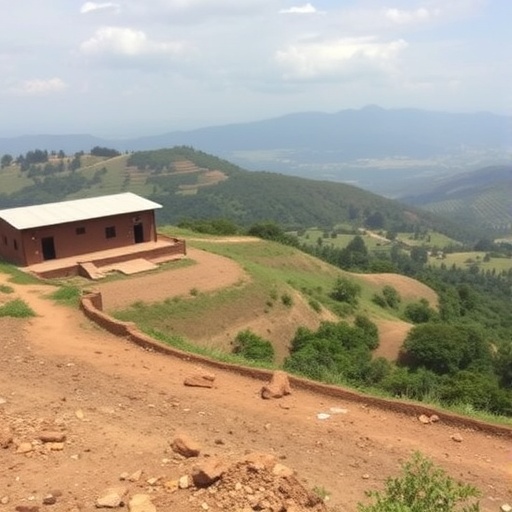
In the rural districts of Raya-Kobo and Angot in Ethiopia, child labor remains a pervasive and multifaceted challenge that profoundly impacts the lives of countless children and hinders socioeconomic development. Recent research conducted by Weldeyesus M.A. and Alemu B.A., published in ICEP, offers an unprecedented deep dive into the profile of child labor in these regions, examining the prevalence, nature of activities, contextual backgrounds, and the extent of harm inflicted upon the young population. Their comprehensive study reveals urgent and often overlooked realities that demand global attention, innovative policy responses, and an intensified protective framework for children.
The investigation brings to light the high prevalence rates of child labor in Raya-Kobo and Angot districts, underscoring how entrenched this issue is despite Ethiopia’s continued efforts in legislative reform and education promotion. Children, some as young as five, are involved across a wide spectrum of labor activities, which vary widely but share common traits of risk, exploitation, and deprivation of fundamental rights. These children are not merely economic contributors; they are victims of systemic poverty, weak social protections, and insufficient enforcement of child welfare policies. The study’s methodology combines qualitative and quantitative analyses to yield a nuanced understanding of these children’s daily engagements and the environments that sustain such widespread labor practices.
Delving deeper into the labor activities themselves, the researchers catalog a diverse array – from agricultural labor, which dominates rural economies, to domestic servitude, small-scale trading, and hazardous industries such as brick-making and quarry work. Each form of labor exposes children to particular types of physical, psychological, or developmental harm. Agricultural work, while considered somewhat traditional, involves long hours of strenuous physical exertion often under extreme climatic conditions without adequate safety measures. Domestic servitude isolates children from protective community networks and frequently involves exploitative treatment. Hazardous jobs, on the other hand, carry immediate risks of injury or chronic health complications that can permanently impair children’s futures.
Contextual analysis within the research uncovers an intricate web of socioeconomic, cultural, and policy-related factors that perpetuate child labor in these areas. Poverty emerges as the most prominent driver, compelling families to rely on the economic contributions of their children simply to survive. However, poverty alone does not account for the persistence of child labor. Cultural norms valuing early work initiation, limited access to quality schooling, and the absence of accessible social safety nets converge to reinforce exploitative labor dynamics. Even when school enrollment is relatively high, as the study suggests, attendance and retention suffer due to labor demands, creating a vicious cycle of illiteracy and economic vulnerability.
One of the distinctive contributions of the study lies in its exploration of the harm extent inflicted on child laborers, a dimension often marginalized in broader discussions. Harm is quantified not only in immediate physical injuries but also through indicators of chronic disorders, psychological distress, and educational deprivation. The research employs multidisciplinary frameworks including public health, psychology, and educational outcomes to paint a holistic picture of child labor’s detrimental impacts. Children engaged in labor exhibit higher rates of malnutrition, respiratory illnesses due to dust and chemicals, musculoskeletal problems, and emotional trauma. These adversities translate into diminished life prospects, reduced productivity, and intergenerational perpetuation of poverty.
The researchers argue that existing child protection mechanisms remain inadequate in these districts. Policy frameworks, while progressive on paper, struggle with implementation in remote and resource-scarce settings. Community vigilance and enforcement by local authorities are inconsistent, often hindered by corruption or competing economic interests. This gap underscores the need for targeted interventions that incorporate local voices, culturally sensitive programming, and sustainable livelihood strategies for families. Importantly, the study identifies promising entry points for intervention such as conditional cash transfers, community awareness campaigns, and school feeding programs that could alleviate immediate economic pressures on vulnerable families.
Intriguingly, the study also addresses the gendered dimensions of child labor, highlighting how boys and girls experience distinct forms of work and consequent vulnerabilities. Girls frequently engage in domestic work and suffer from invisibility and exploitation within private homes, while boys are more visible in agricultural and industrial sectors but face exacerbated physical hazards. Gender norms dictate not only the type of labor assigned but also how children’s voices are heard or silenced in efforts to address labor abuses. Incorporating gender analysis thus becomes imperative for the success of any protective or preventive measures.
Further complicating the landscape is the impact of seasonal fluctuations and climatic challenges on child labor patterns. The research reveals that during planting and harvest seasons, children’s labor hours peak substantially, reflecting the agricultural dependency of local communities. Climate variability, including drought and erratic rainfall, exacerbates economic instability, increasing reliance on child labor as a coping mechanism. The intertwining of environmental and social vulnerabilities adds layers of complexity that require integrated policy approaches spanning child rights, environmental sustainability, and rural development.
Education emerges as a critical battleground in the fight against child labor, yet the study exposes systemic barriers that continue to undermine school attendance and learning outcomes. Schools in Raya-Kobo and Angot districts are frequently under-resourced, remote, and understaffed, resulting in poor quality education and low motivation to remain enrolled. Transportation challenges, school fees—even when minimal—and the need for children’s labor all compete with educational aspirations. By documenting these obstacles in detail, the research provides a roadmap for stakeholders to strengthen educational infrastructure and tackle indirect costs that families incur when sending children to school.
From a methodological standpoint, the study by Weldeyesus and Alemu stands out for its rigorous fieldwork and ethical sensitivity. Interviews with children, parents, community leaders, and school officials offer rich qualitative data, while extensive household surveys furnish quantitative backing for prevalence estimates and trend analysis. This mixed-methods design ensures that the voices of those directly affected are central to the narrative, fostering empathy and grounding policy recommendations in lived realities rather than abstract assumptions.
In conclusion, the findings from Raya-Kobo and Angot districts serve as a microcosm of a pressing global issue—child labor as both a symptom and driver of entrenched poverty and inequality. The meticulous documentation of prevalence, activity types, contextual conditions, and harm extent challenges international development actors to recalibrate their strategies. It calls for holistic, context-specific solutions that mobilize multisectoral partnerships spanning government agencies, civil society, educational institutions, and international donors. Protecting children from exploitative labor is not only a moral imperative but a foundational step toward sustainable development for Ethiopia and similar contexts worldwide.
By illuminating the often-hidden realities of child labor through a scientific lens, this study transforms abstract statistics into human stories marked by resilience and urgent need. It beckons the global community to move beyond rhetoric and mobilize tangible action—because every child spared from the shackles of labor is a testament to our collective commitment to human dignity and future prosperity.
—
Cite Scienmag News
Courtney Benton. (May 14, 2025). Child Labour Patterns and Impact in Ethiopian Districts. Scienmag. https://scienmag.com/child-labour-patterns-and-impact-in-ethiopian-districts/
Courtney Benton. "Child Labour Patterns and Impact in Ethiopian Districts." Scienmag, 14 May 2025, https://scienmag.com/child-labour-patterns-and-impact-in-ethiopian-districts/. Accessed 1 September 2026.
Courtney Benton. "Child Labour Patterns and Impact in Ethiopian Districts." Scienmag. May 14, 2025. https://scienmag.com/child-labour-patterns-and-impact-in-ethiopian-districts/


