


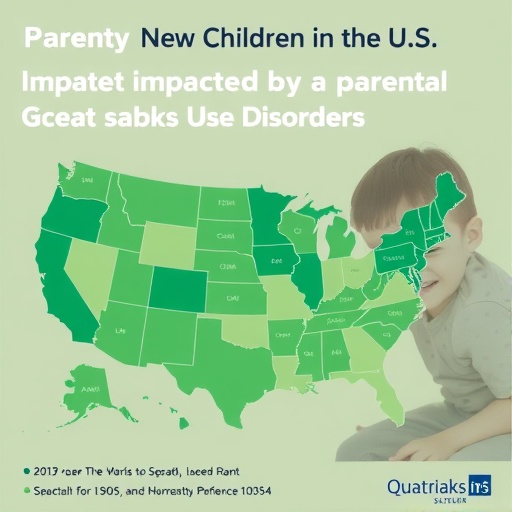
In a landmark study published in JAMA Pediatrics, researchers have revealed a deeply unsettling statistic: nearly 19 million children in the United States—representing approximately one-quarter of all children—reside in households where at least one parent struggles with substance use disorder (SUD) as of 2023. This widespread prevalence underscores a silent epidemic intertwining childhood development and public health, amplifying calls for targeted interventions and policy reform.
The study employs robust epidemiological data derived from nationally representative surveys and health records to quantify the risk environment for millions of American children. By cross-analyzing parental substance use patterns with demographic variables, researchers have painted a comprehensive portrait of the multifaceted challenges these children confront. Importantly, the investigation transcends mere statistics, presenting critical insights into how parental addiction fundamentally alters the health trajectories of young individuals.
Exposure to parental substance use disorders is associated with a constellation of adverse health outcomes, ranging from increased susceptibility to mental health conditions such as anxiety, depression, and behavioral disorders to elevated risks of developmental delays and chronic physical ailments. The biological and psychosocial mechanisms underpinning these outcomes are complex, involving neurodevelopmental disruptions, environmental instability, and heightened exposure to stressors during formative years.
Interdisciplinary approaches integrating psychology, sociology, and medical sciences have elucidated how familial substance abuse disrupts parenting capacities, leading to compromised caregiving environments. Children in these households often face inconsistent emotional support, neglect, and increased likelihood of maltreatment, all of which compound vulnerability. The study calls attention to the indispensable role of supportive social networks and early intervention programs in mediating these risks.
A particularly salient aspect of the research is the granular examination of demographic patterns. The prevalence of children living with parents suffering from SUD varies across socioeconomic strata, geographic regions, and family structures. The data suggest a disproportionate burden on marginalized and economically disadvantaged communities, highlighting systemic inequities that exacerbate health disparities. These findings demand an integrated public health response sensitive to social determinants of health.
The methodological rigor of the study is noteworthy. Researchers implemented advanced statistical modeling to adjust for confounding variables and potential biases inherent in self-reported data. The use of a large sample size enhances the reliability and external validity of the findings, offering policymakers and healthcare providers a reliable evidence base to inform interventions tailored to at-risk populations.
Moreover, the study outlines the intergenerational implications of substance use disorders. Beyond immediate effects, children exposed to parental addiction face increased risks of engaging in substance use themselves, perpetuating cycles of addiction and social dysfunction. Genetic predispositions combined with environmental exposures necessitate holistic prevention strategies that address both biological and psychosocial dimensions.
Healthcare systems are called upon to integrate screening for familial substance use disorders into pediatric and primary care settings. Early identification of at-risk children can facilitate timely referrals to supportive services, including counseling, social work, and addiction treatment programs for parents. The research underscores the critical need for cross-sector collaboration among healthcare, social services, and educational institutions.
Policy recommendations derived from the study emphasize expanding access to evidence-based addiction treatment services, enhancing social support for affected families, and promoting community-based resources aimed at resilience building. Additionally, the study advocates for increased funding toward longitudinal research to track the long-term health and social outcomes of children exposed to parental substance use disorders.
A nuanced understanding of the pathophysiological effects of early-life stress induced by parental SUD is evolving. Chronic stress exposure can dysregulate the hypothalamic-pituitary-adrenal (HPA) axis in children, impairing stress response systems and predisposing to psychiatric disorders. This biological perspective complements psychosocial findings, advocating for integrative treatment frameworks that address mind-body health.
The implications of this research reverberate beyond clinical domains, touching on the educational attainment, social integration, and economic prospects of affected children. Schools may serve as critical arenas for intervention, offering supportive environments that counteract home instability. Training educators to recognize and respond to signs of distress linked to parental substance use is an emerging imperative.
Finally, this groundbreaking study punctuates an urgent public health crisis that extends beyond individual families to societal structures. Confronting the pervasive impact of parental substance use disorders on children necessitates concerted efforts that bridge research, clinical practice, and public policy. Without immediate action, the health and well-being of a generation of American children remain at profound risk.
News Publication Date: Not provided.
Web References: Not provided.
References: (doi:10.1001/jamapediatrics.2025.0828)
Cite Scienmag News
Glenn Wilkins. (May 12, 2025). Children in the U.S. Impacted by Parental Substance Use Disorder: New Insights. Scienmag. https://scienmag.com/children-in-the-u-s-impacted-by-parental-substance-use-disorder-new-insights/
Glenn Wilkins. "Children in the U.S. Impacted by Parental Substance Use Disorder: New Insights." Scienmag, 12 May 2025, https://scienmag.com/children-in-the-u-s-impacted-by-parental-substance-use-disorder-new-insights/. Accessed 31 August 2026.
Glenn Wilkins. "Children in the U.S. Impacted by Parental Substance Use Disorder: New Insights." Scienmag. May 12, 2025. https://scienmag.com/children-in-the-u-s-impacted-by-parental-substance-use-disorder-new-insights/


