


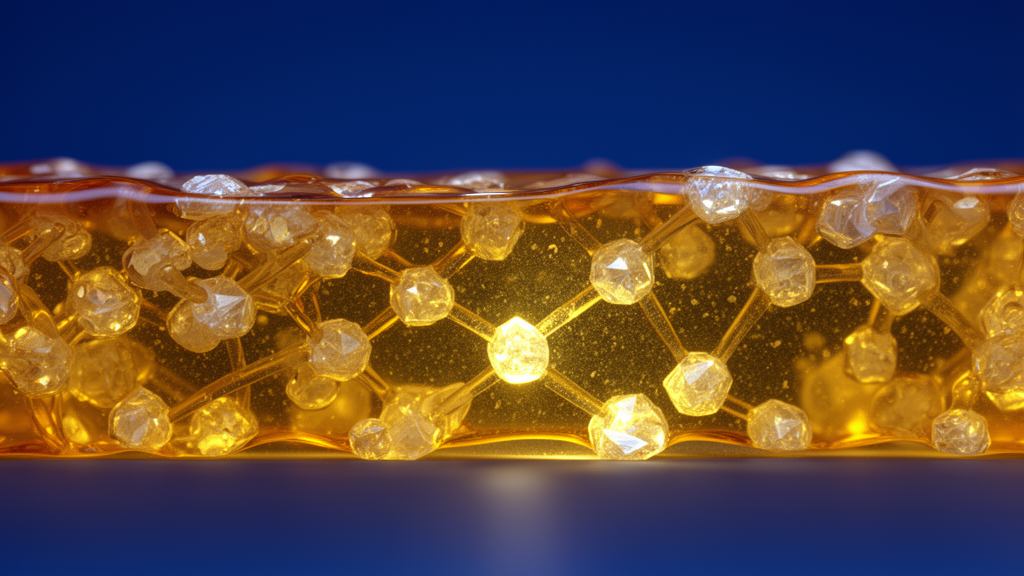
Published in the journal Discover Polymers in February 2026, the study demonstrates that these agricultural waste materials can significantly improve the mechanical and physical properties of epoxy resin. The team, led by Mathew A. Ajayi and colleagues, aimed to use agricultural by-products to develop and characterize wood particle and snail shell nanoparticle hybrid reinforced epoxy bio-composites. The central finding is that the hybrid composites, particularly those reinforced with wood charcoal, exhibit substantial enhancements in key properties such as tensile strength, hardness, and impact resistance compared to unreinforced epoxy controls.
The study specifically investigates the synergistic effects of combining these natural reinforcements, a combination that the authors note has been underexplored in the literature. By utilizing agro-by-products, the research aligns with circular economy principles, aiming to reduce environmental impact while promoting the use of renewable resources.
The experimental design involved the careful preparation of the reinforcement materials. Snail shells were cleaned, dried, and processed into nanoparticles using a planetary ball mill and a hydrolysis process at 500 degrees Celsius, followed by heating at 900 degrees Celsius to obtain the final nanofiller. Wood was air-dried, oven-dried, and pyrolyzed at 300 degrees Celsius to produce wood ash and wood charcoal microparticles with an average size of 180 microns. These materials were then characterized using Scanning Electron Microscopy (SEM) and Energy Dispersive X-ray (EDS) analysis. The SEM images revealed that wood ash had an irregular, porous surface, while wood charcoal showed particle agglomerations with a rough morphology. Elemental analysis indicated that wood charcoal was rich in carbon (65.70%), whereas wood ash was dominated by calcium (41.25%), suggesting different functional potentials for each material.
The composites were fabricated using a hand lay-up method, incorporating filler weight fractions ranging from 3 to 15 percent. The epoxy resin and hardener were mixed in a 2:1 ratio and thoroughly stirred before the addition of the predetermined filler amounts. The resulting mixtures were poured into molds and cured at an ambient temperature of 24 degrees Celsius for six hours. The study evaluated a wide range of properties, including mechanical strength, wear resistance, water absorption, density, flammability, and thermal conductivity, providing a comprehensive profile of the composite materials.
Mechanical testing revealed that the wood charcoal-based hybrid composites generally outperformed their wood ash counterparts in terms of tensile strength and hardness. The 9 wt% wood charcoal hybrid composite yielded the optimal tensile properties, demonstrating a 16.6% increase in tensile strength and an 88.6% increase in tensile modulus compared to the control sample. This significant improvement in stiffness is attributed to the rigid particulate nature of the wood charcoal, which enhances load transfer between the matrix and the reinforcement. However, the study noted that tensile strength initially increased with filler content but declined at higher weight percentages, likely due to particle agglomeration and increased brittleness. This finding highlights the importance of optimizing the reinforcement-to-matrix ratio to balance strength and ductility.
In terms of hardness and impact strength, the wood charcoal composites also showed superior performance. The 3 wt% wood charcoal hybrid composite exhibited a 42.0% increase in hardness and a 39.0% increase in impact strength compared to the control. The maximum impact strength of 16.68 J/mm² was achieved with this formulation, which the researchers attribute to the intrinsic flexibility and particulate nature of the wood charcoal, allowing it to absorb impact energy effectively. In contrast, the wood ash composites displayed lower impact strength, possibly due to the rigidity and brittleness associated with mineral-based fillers. The study also observed that the addition of snail shell nanoparticles contributed to improved hardness, with the 15 wt% wood charcoal sample achieving a maximum hardness value of 66.77 HS.
Flexural properties, which measure a material’s ability to resist bending, showed a different trend. The 3 wt% wood ash-based composites yielded the best flexural performance, exhibiting a 21.1% increase in flexural strength and a 70.7% increase in flexural modulus compared to the unreinforced epoxy. The wood ash composite demonstrated superior stiffness and structural integrity, making it potentially suitable for high-rigidity applications. The presence of snail shell nanoparticles facilitated excellent dispersion of reinforcements in the matrix, enhancing load transfer and resisting crack propagation. Conversely, the wood charcoal composites had lower flexural modulus due to the porous nature of the charcoal, which introduced micro-voids that weakened the resistance to bending forces.
Wear resistance and flammability were also significantly improved by the addition of the hybrid reinforcements. The wood charcoal composites displayed superior wear resistance, forming a denser microstructure that reduced abrasive wear. The wood ash composites, on the other hand, exhibited some self-lubrication due to their carbon content, leading to relatively lower wear resistance. Regarding flammability, both ash and charcoal reinforcement improved the fire resistance of the epoxy composites. The control sample had a V-2 rating, but the composites achieved a V-0 rating, the highest level of flame retardancy, at higher reinforcement levels. This improvement is attributed to the formation of a char layer during pyrolysis in charcoal and the presence of high-melting-point inorganic oxides in wood ash, which create a ceramic-like shield at high temperatures.
Water absorption and thermal conductivity tests provided further insights into the material’s suitability for various environments. Water absorption decreased as the reinforcement content increased, with the 15 wt% ash composition exhibiting the lowest absorption at 3%. This suggests that higher reinforcement content improves water resistance by creating a barrier effect that slows water diffusion. Wood ash composites generally showed better moisture resistance than charcoal composites, which may be due to the higher porosity of the charcoal. In terms of thermal conductivity, wood ash composites exhibited higher values (0.23–0.42 W/mK) compared to wood charcoal composites (0.22–0.39 W/mK). This difference is attributed to the inorganic oxides in wood ash, which have higher thermal conductivity than the amorphous carbon in wood charcoal. These properties make the ash-based composites potentially suitable for applications requiring efficient heat dissipation, such as electronic casings.
The study concludes that the synergistic effect between wood-based micro-particles and snail shell nanoparticles results in composite samples with 40–88% improvements in key mechanical properties. The wood charcoal hybrid composites exhibited superior overall performance, particularly in strength and hardness. However, the authors emphasize that these materials are promising for biomedical applications only pending further cytotoxicity, antimicrobial, and biocompatibility testing. The current study focuses on mechanical and physical properties, and safety validation in vivo environments is a necessary next step. Additionally, the researchers suggest that residual analysis and the incorporation of flame-retardant additives could further extend the application scope of these bio-materials.
This research contributes to the field of sustainable materials science by demonstrating the potential of agricultural waste in high-performance composite development. The use of snail shell nanoparticles and wood-derived particles offers a cost-effective and environmentally friendly solution to the need for advanced materials.
While wood charcoal excels in tensile strength and hardness, wood ash offers better flexural stiffness and moisture resistance.
Future work will likely focus on the biological compatibility of these composites, as the potential for biomedical implants and bone scaffolds is a significant driver for this research. The biocompatibility of snail shells and the natural origin of the wood-based fillers make them attractive candidates for medical applications. However, further cytotoxicity, antimicrobial, and biocompatibility testing is required to validate the safety of the material in in-vivo environments.
By leveraging the unique properties of snail shell nanoparticles and wood-derived particles, the researchers have created materials with enhanced mechanical, thermal, and physical properties. The results demonstrate the potential of these agro-waste materials to serve as effective reinforcements in polymer composites, offering a viable alternative to synthetic fillers.
Subject of Research: Development and characterization of snail shell and wood-based hybrid reinforced epoxy bio-composites
Article Title: Analytical evaluation of snail shell derived-nanoparticles/wood ash/charcoal hybrid reinforced epoxy bio-composites
Article References: Ajayi, M. A., Bichang’a, D. O., Oladele, I. O., Alabi, A. O., Oyegunna, S. A., & Ojo, A. F. (2026). Analytical evaluation of snail shell derived-nanoparticles/wood ash/charcoal hybrid reinforced epoxy bio-composites. Discover Polymers, 3(1), Article 5. https://doi.org/10.1007/s44347-026-00039-7
Image Credits: AI Generated
DOI: 10.1007/s44347-026-00039-7
Keywords: epoxy composites, snail shell nanoparticles, wood ash, wood charcoal, bio-composites, mechanical properties, sustainable materials, flame retardancy, biomedical applications, polymer science, Analytical, evaluation
Cite Scienmag News
Bethany Barker. (November 10, 2026). Snail Shell Nanoparticles Enhance Epoxy Composite Strength. Scienmag. https://scienmag.com/snail-shell-nanoparticles-enhance-epoxy-composite-strength/
Bethany Barker. "Snail Shell Nanoparticles Enhance Epoxy Composite Strength." Scienmag, 10 November 2026, https://scienmag.com/snail-shell-nanoparticles-enhance-epoxy-composite-strength/. Accessed 10 November 2026.
Bethany Barker. "Snail Shell Nanoparticles Enhance Epoxy Composite Strength." Scienmag. November 10, 2026. https://scienmag.com/snail-shell-nanoparticles-enhance-epoxy-composite-strength/




