


The findings indicate that while a specific activator modulus maximizes compressive and tensile strength, it simultaneously reduces the material’s ability to deform before failure, a critical consideration for structural applications requiring ductility.
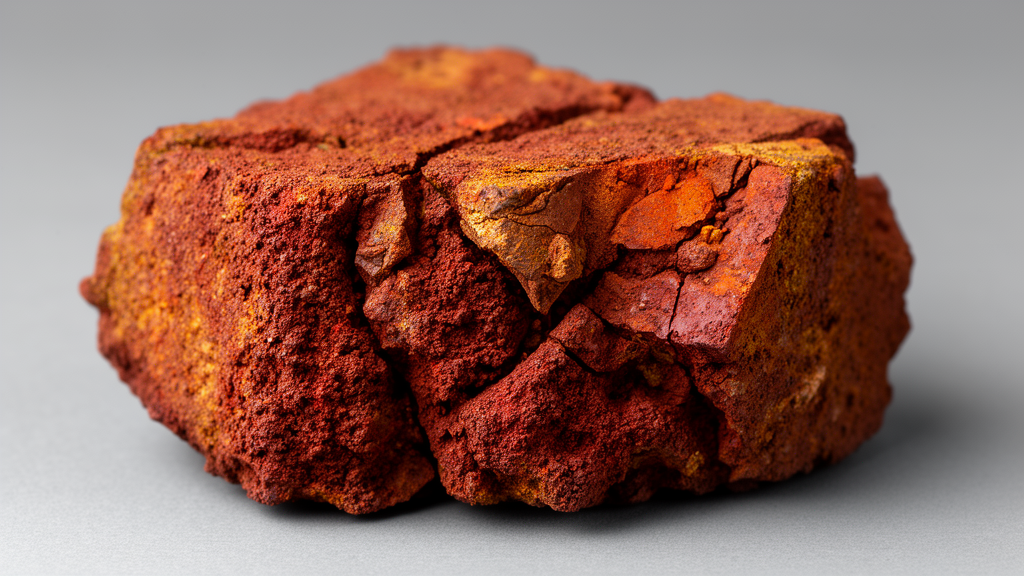
The investigation focused on engineered geopolymer composites, a class of fiber-reinforced cementitious materials characterized by their ability to sustain large tensile deformation through multiple cracking. The team selected red mud, an alkaline industrial residue from alumina production, as a primary precursor to explore waste-derived alternatives to Portland cement.
To isolate the effect of the activator modulus, designated as Ms, the researchers maintained a constant precursor composition throughout the experiments. The binder system consisted of 23.1% red mud, 30.8% low-activity ground granulated blast-furnace slag, and 46.1% high-activity ground granulated blast-furnace slag by weight. This specific combination was chosen to complement the high iron content of the red mud, which can otherwise interfere with the formation of binding gels. The mixtures were reinforced with 2.0 volume percent of polyvinyl alcohol fibers, which have a tensile strength of 1560 MPa and an ultimate elongation of 6.5%. By keeping the fiber content and water-to-binder ratio fixed, the study ensured that variations in mechanical properties could be attributed directly to changes in the activator chemistry.
The experimental design involved four distinct mixtures, labeled M1.0, M1.3, M1.6, and M1.9, corresponding to activator moduli of 1.0, 1.3, 1.6, and 1.9, respectively. The activator modulus is defined as the molar ratio of SiO2 to Na2O in the alkaline solution, which is prepared by adjusting the relative dosages of sodium silicate and sodium hydroxide. A lower Ms value provides a higher concentration of hydroxide ions, promoting the dissolution of precursor particles but supplying less soluble silicate. Conversely, a higher Ms value increases the supply of soluble silicate but reduces alkalinity, which may restrict precursor dissolution if the hydroxide concentration becomes insufficient. This competing influence between dissolution and silicate availability is central to understanding the non-monotonic responses observed in the mechanical tests.
Compressive strength measurements revealed a clear non-monotonic trend as the activator modulus increased. The compressive strength rose from 71.4 MPa at Ms = 1.0 to a peak of 82.1 MPa at Ms = 1.6, representing a 15.0% increase. However, further increasing the modulus to 1.9 caused the strength to drop to 73.6 MPa. The researchers attributed the peak strength at Ms = 1.6 to a favorable balance between alkalinity and soluble-silicate supply, which optimized precursor reaction and matrix development. At Ms = 1.9, the reduced sodium hydroxide dosage likely limited the dissolution of the precursors, leading to a less reactive matrix and consequently lower strength. This pattern suggests that there is an optimal window for activator composition that maximizes the density and quality of the binding phases.
Uniaxial tensile tests showed that all mixtures exhibited clear strain-hardening behavior, a hallmark of high-performance fiber-reinforced composites. As Ms increased from 1.0 to 1.6, the tensile strength increased from 5.1 MPa to 6.0 MPa, and the tensile elastic modulus rose from 15.7 GPa to 18.6 GPa. These increases in stiffness and strength were consistent with the compressive strength trends, reinforcing the conclusion that Ms = 1.6 is the most favorable condition for matrix development. However, the deformation-related properties exhibited an opposite response. Tensile ductility, defined as the strain at the end of the strain-hardening stage, decreased progressively from 6.3% at Ms = 1.0 to 4.3% at Ms = 1.6. This reduction indicates that while the matrix became stronger and stiffer, it became less capable of accommodating deformation through multiple cracking.
The trade-off between strength and ductility was further confirmed by flexural and bending tests. Three-point flexural strength increased from 17.2 MPa to 23.5 MPa as Ms rose from 1.0 to 1.6, a 36.6% improvement. Similarly, four-point bending strength increased from 9.0 MPa to 13.5 MPa over the same range. However, the ultimate displacement under four-point bending, a measure of deformation capacity, decreased from 14.1 mm to 10.5 mm. When Ms was increased to 1.9, the bending strength dropped to 9.9 MPa, but the ultimate displacement recovered to 11.4 mm. This recovery in deformation capacity at higher Ms values suggests that the reduced matrix resistance allows for more extensive fiber bridging and crack propagation, thereby restoring some of the lost ductility.
To quantify the overall performance, the researchers introduced a combined strength-ductility index based on the product of compressive strength, tensile strength, and tensile ductility. Although Ms = 1.6 achieved the highest individual strength values, its low tensile ductility resulted in the lowest combined index of 21.2 MPa². In contrast, Ms = 1.0, despite having lower strength, achieved the highest index of 22.9 MPa² due to its superior ductility. This finding highlights that the optimal activator modulus depends on the specific engineering requirements. If maximum load-bearing capacity is the priority, Ms = 1.6 is preferred. However, if overall structural safety and energy absorption are more critical, Ms = 1.0 provides a more favorable balance.
Microstructural analysis using scanning electron microscopy provided insights into the mechanisms behind these mechanical differences. At Ms = 1.3, the matrix appeared compact and continuous, with densely distributed reaction products and fewer visible pores. The fiber-matrix interface showed strong bonding, with matrix products adhering closely to the fiber surfaces and local fiber splitting observed. In contrast, the matrix at Ms = 1.9 was more heterogeneous, exhibiting evident pores, cracks, and plate-like products. The fiber-matrix interface in this mixture showed more pronounced pullout cavities and detached matrix fragments, indicating weaker interfacial bonding. These microstructural features explain the reduced strength at higher Ms values, as the less compact matrix and weaker interface limit stress transfer between the fibers and the binder.
X-ray diffraction analysis revealed that the major crystalline phases, including quartz, hematite, and calcite, remained similar across the different Ms values. Quartz was associated with the fine silica sand and residual precursors, while hematite was inherited from the red mud. The most significant difference was observed in the broad diffuse feature between 20° and 35° 2θ, which indicates the presence of poorly crystalline aluminosilicate binding products. This feature was more pronounced at Ms = 1.3, suggesting a greater contribution of these binding gels to the matrix structure. At Ms = 1.9, the diffuse feature was less evident, consistent with the reduced development of binding products and the less compact matrix observed in the SEM images.
The study also compared its results with previous research on fly ash and slag-based engineered geopolymer composites. While the non-monotonic response of compressive strength to activator modulus was consistent with most prior studies, the tensile ductility response was distinct. In many previous systems, tensile ductility increased or remained stable at intermediate Ms values. In the present red mud-slag system, however, tensile ductility decreased as strength increased up to Ms = 1.6. The findings suggest that precursor composition plays a crucial role in determining the optimal activator modulus for specific mechanical properties.
The implications of this research extend to the sustainable development of construction materials. By utilizing red mud, an industrial waste product, the study offers a potential route for reducing the environmental burden associated with its disposal while simultaneously lowering the carbon footprint of concrete production. The detailed understanding of how activator modulus affects the strength-ductility balance provides engineers with a tool to tailor the performance of geopolymer composites for specific applications. The work underscores the importance of considering both strength and deformation capacity when designing next-generation cementitious materials.
Subject of Research: Tailoring mechanical properties of strain-hardening red mud/slag composites: Regulation of activator modulus
Article Title: Tailoring mechanical properties of strain-hardening red mud/slag composites: Regulation of activator modulus
Article References: Zhao, X.-H., Shi, N., Zhang, Z.-L., Fang, Y.-H., Dong, J.-Y., Kang, W., Ran, H., Xu, P., & Peng, K.-D. (2026). Tailoring mechanical properties of strain-hardening red mud/slag composites: Regulation of activator modulus. Case Studies in Construction Materials, 25, Article e06669. https://doi.org/10.1016/j.cscm.2026.e06669
Image Credits: AI Generated
DOI: 10.1016/j.cscm.2026.e06669
Keywords: Tailoring, mechanical, properties, strain-hardening, slag, composites, Regulation, activator, modulus, scientific research
Cite Scienmag News
Denise Maddox. (November 10, 2026). Red Mud Composites Show Strength-Ductility Tradeoff. Scienmag. https://scienmag.com/red-mud-composites-show-strength-ductility-tradeoff/
Denise Maddox. "Red Mud Composites Show Strength-Ductility Tradeoff." Scienmag, 10 November 2026, https://scienmag.com/red-mud-composites-show-strength-ductility-tradeoff/. Accessed 22 November 2026.
Denise Maddox. "Red Mud Composites Show Strength-Ductility Tradeoff." Scienmag. November 10, 2026. https://scienmag.com/red-mud-composites-show-strength-ductility-tradeoff/




