


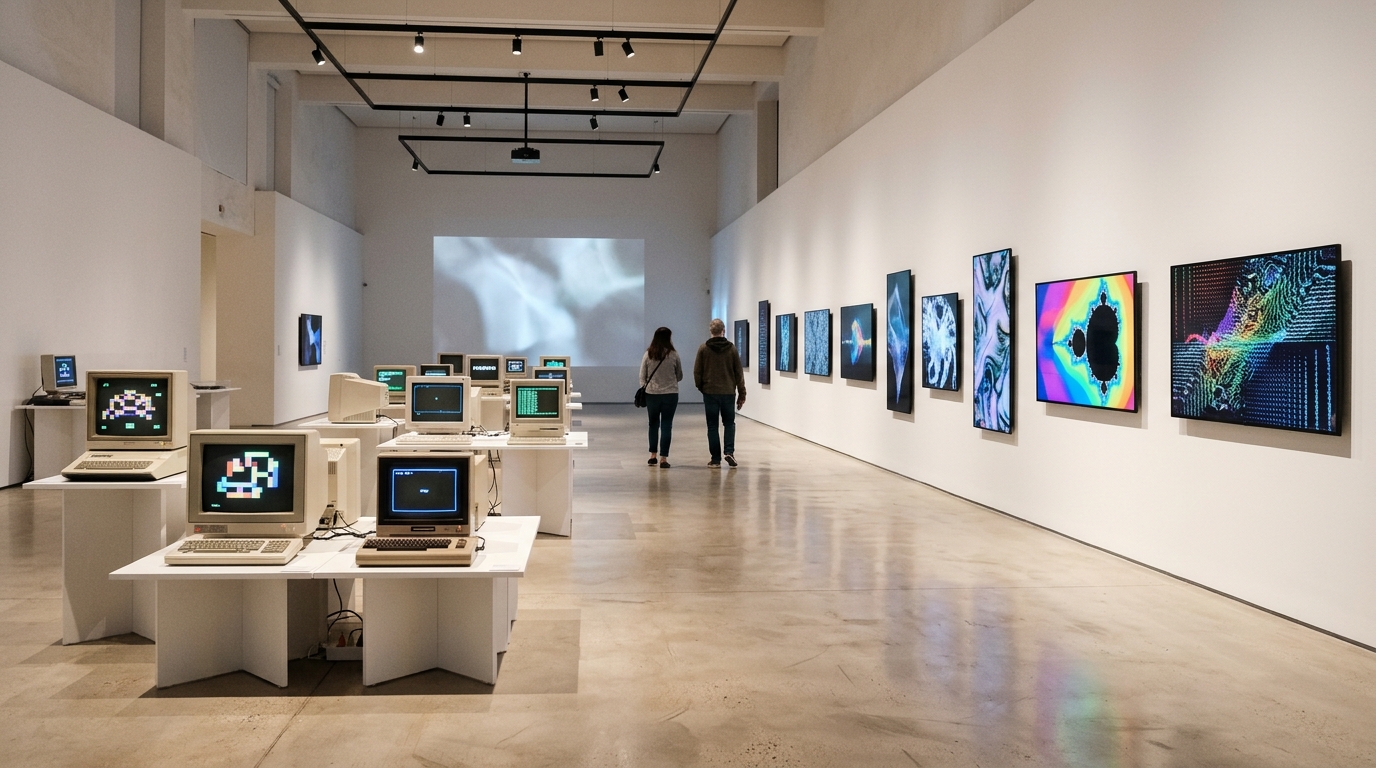
A peer-reviewed article published in Humanities and Social Sciences Communications on October 31, 2026, examines the evolving mechanisms of digital art through the lens of the philosophy of technology. The study, authored by Qi Wu, Yiwei Mo, Qin Yu, Chao Luo, and Jie Chen, traces the historical evolution of artistic media from mechanical and electronic formats to contemporary algorithmic systems. The central argument posits that technology has ceased to function merely as an external tool for artists. Instead, the research suggests that technological systems increasingly intervene in artistic cognition, creative processes, and the fundamental conditions under which artworks are generated.
The paper outlines three distinct dimensions of change characterizing the current landscape of digital art. The first dimension is described as technologically mediated existence. The second dimension involves distributed creative relations. The third dimension is algorithmically shaped aesthetic processes.
Alongside these structural changes, the study identifies three specific tensions inherent in the current digital art ecosystem. One tension arises from Western aesthetic dominance, which the authors attribute to biases present in training data used for generative models. A second tension is described as NFT-driven value paradoxes. The third tension concerns the destabilization of artistic subjectivity under generative AI.
To address these complexities, the authors draw on process philosophy, complexity theory, and technological phenomenology to propose a techno-cognitive framework. This framework positions digital art as a dynamic interface between technology and human cognition.
The study concludes by proposing evaluative and ethical discussion frameworks that are better suited to the specificities of contemporary digital art. The study aims to support further theoretical analysis. The article is available as an open-access early version, with the final version of record subject to further edits.
Subject of Research: Philosophical analysis of technological shifts in digital art
Article Title: Revolutionary transformation of digital art:ontological reconstruction and paradigm shift driven by technology
Article References: Wu, Q., Mo, Y., Yu, Q., Luo, C., & Chen, J. (2026). Revolutionary transformation of digital art:ontological reconstruction and paradigm shift driven by technology. Humanities and Social Sciences Communications. https://doi.org/10.1057/s41599-026-09574-x
Image Credits: AI Generated
DOI: 10.1057/s41599-026-09574-x
Keywords: digital art, philosophy of technology, algorithmic systems, generative AI, techno-cognitive framework, artistic subjectivity, NFTs, aesthetic processes, Revolutionary, transformation, digital, ontological
Cite Scienmag News
Courtney Benton. (November 10, 2026). Study Maps Digital Art’s Technological Shifts. Scienmag. https://scienmag.com/study-maps-digital-arts-technological-shifts/
Courtney Benton. "Study Maps Digital Art’s Technological Shifts." Scienmag, 10 November 2026, https://scienmag.com/study-maps-digital-arts-technological-shifts/. Accessed 10 November 2026.
Courtney Benton. "Study Maps Digital Art’s Technological Shifts." Scienmag. November 10, 2026. https://scienmag.com/study-maps-digital-arts-technological-shifts/




