
Wednesday, April 15, 2026
Science
No Result
View All Result
  • Login
  • HOME
  • SCIENCE NEWS
  • CONTACT US
  • HOME
  • SCIENCE NEWS
  • CONTACT US
No Result
View All Result
Scienmag
No Result
View All Result
Home Science News Science Education

Auburn mathematics professor elected as AAAS fellow

April 19, 2024
in Science Education
Reading Time: 2 mins read
0
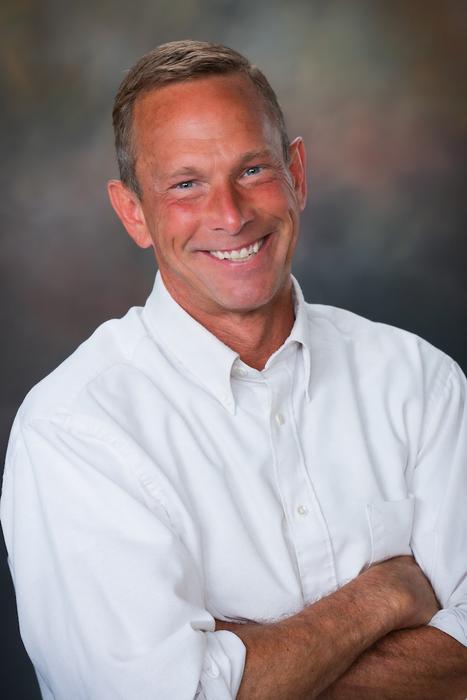
Henry “Hal” Schenck
67
SHARES
609
VIEWS
Share on FacebookShare on Twitter
ADVERTISEMENT

AUBURN, Ala. – Auburn University mathematics professor Henry “Hal” Schenck has been named a 2023 fellow of the American Association for the Advancement of Science, or AAAS, the world’s largest general scientific society and the publisher of the prestigious journal Science.

Henry “Hal” Schenck

Credit: Auburn University College of Sciences and Mathematics

AUBURN, Ala. – Auburn University mathematics professor Henry “Hal” Schenck has been named a 2023 fellow of the American Association for the Advancement of Science, or AAAS, the world’s largest general scientific society and the publisher of the prestigious journal Science.


Honoring a 150-year tradition, the AAAS Council elects a new cohort of scientists, engineers and innovators as fellows each year. The selected faculty researchers are recognized for their significant contributions and impactful applications across both scientific and social realms. Determined by peers, selection as an AAAS Fellow is one of the most prestigious distinctions within the scientific community; less than one percent of AAAS members receive the honor annually. 


“Professor Schenck is an outstanding scholar whose work has significantly advanced the field of mathematics,” said Auburn Provost Vini Nathan. “His scholarly contributions in computational algebra have opened new realms of mathematical discovery, while enriching both undergraduate and graduate education at Auburn and internationally.”


Last fall Schenck, the Rosemary Kopel Brown Chair in the Department of Mathematics and Statistics, taught Calculus III to over 500 Auburn students—the majority of the sophomore engineering class, and in spring of 2023, he was one of twelve scientists from around the world selected for a Leverhulme Visiting Professorship. He spent the visit working with collaborators at University of Oxford on understanding systems of oscillators: why do swarms of fireflies sometimes begin flashing in unison?


A US Army veteran and active Auburn Student Veteran Association member, Schenck has held faculty positions at Auburn University, Iowa State University, the University of Illinois, and Texas A&M University. He holds an undergraduate degree from Carnegie Mellon University and a master’s and a doctoral degree from Cornell University. Asked to comment on the award, Schenck said “I’ve been fortunate throughout my career to have terrific collaborators and students; the recognition from AAAS is an award to them.”


###


Share27Tweet17
Previous Post

Hutson named TTUHSC Hematology Oncology Division Chief and UMC Cancer Center Director

Next Post

Cosmic rays streamed through Earth’s atmosphere 41,000 years ago

Related Posts

blank
Science Education

Breakthrough Research Illuminates Ageing and the ‘Digital Divide’

April 15, 2026
blank
Science Education

Popular Chatbots Provide Significant Amounts of Inaccurate and Incomplete Medical Information

April 15, 2026
blank
Science Education

Marie Neurath Exhibition Highlights Designer’s Pioneering Contributions to Science Communication

April 14, 2026
blank
Science Education

UT San Antonio’s Doctor of Physical Therapy Program Advances in National Rankings

April 13, 2026
blank
Science Education

Study Finds Prenatal Opioid Exposure in Infants Does Not Determine Future Academic Performance

April 13, 2026
blank
Science Education

Estimated 2.4 to 4.1 Million People Living with Chronic Hepatitis B in Europe

April 13, 2026
Next Post
Cosmic rays streamed through Earth’s atmosphere 41,000 years ago

Cosmic rays streamed through Earth’s atmosphere 41,000 years ago

  • Mothers who receive childcare support from maternal grandparents show more parental warmth, finds NTU Singapore study

    Mothers who receive childcare support from maternal grandparents show more parental warmth, finds NTU Singapore study

    27634 shares
    Share 11050 Tweet 6906
  • University of Seville Breaks 120-Year-Old Mystery, Revises a Key Einstein Concept

    1037 shares
    Share 415 Tweet 259
  • Bee body mass, pathogens and local climate influence heat tolerance

    675 shares
    Share 270 Tweet 169
  • Researchers record first-ever images and data of a shark experiencing a boat strike

    538 shares
    Share 215 Tweet 135
  • Groundbreaking Clinical Trial Reveals Lubiprostone Enhances Kidney Function

    524 shares
    Share 210 Tweet 131
Science

Embark on a thrilling journey of discovery with Scienmag.com—your ultimate source for cutting-edge breakthroughs. Immerse yourself in a world where curiosity knows no limits and tomorrow’s possibilities become today’s reality!

RECENT NEWS

  • Oncofetal Plasticity Emerges in Early Colorectal Cancer
  • Brain Scans May Predict Risk of Psychiatric Hospitalization
  • UT Health San Antonio Multispecialty and Research Hospital Enrolls First Participant in Groundbreaking Cancer Clinical Trial
  • Why Gay Men Often Feel More Attractive While on Holiday: A Scientific Perspective

Categories

  • Agriculture
  • Anthropology
  • Archaeology
  • Athmospheric
  • Biology
  • Biotechnology
  • Blog
  • Bussines
  • Cancer
  • Chemistry
  • Climate
  • Earth Science
  • Editorial Policy
  • Marine
  • Mathematics
  • Medicine
  • Pediatry
  • Policy
  • Psychology & Psychiatry
  • Science Education
  • Social Science
  • Space
  • Technology and Engineering

Subscribe to Blog via Email

Enter your email address to subscribe to this blog and receive notifications of new posts by email.

Join 5,145 other subscribers

© 2025 Scienmag - Science Magazine

Welcome Back!

Login to your account below

Forgotten Password?

Retrieve your password

Please enter your username or email address to reset your password.

Log In
No Result
View All Result
  • HOME
  • SCIENCE NEWS
  • CONTACT US

© 2025 Scienmag - Science Magazine

Discover more from Science

Subscribe now to keep reading and get access to the full archive.

Continue reading
