


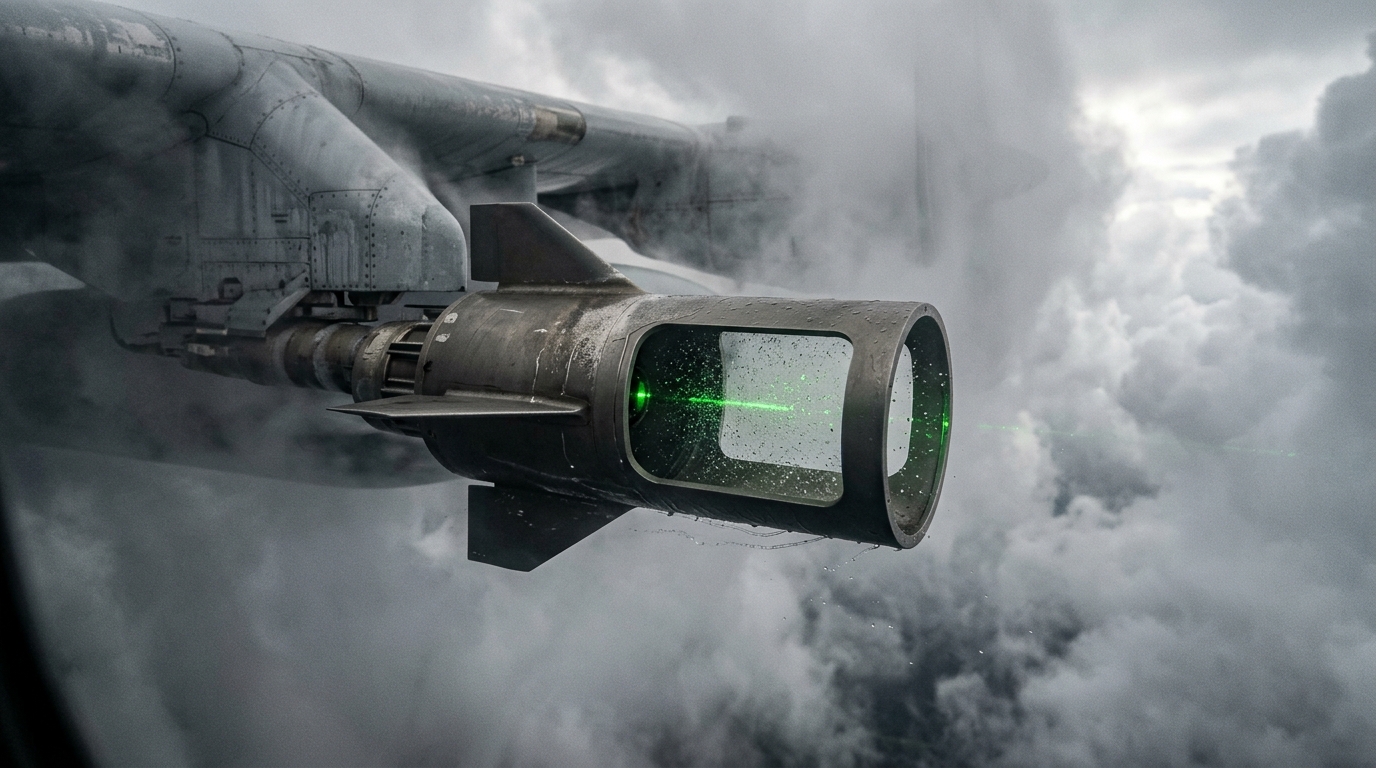
Researchers at Pacific Northwest National Laboratory have developed and characterized a new holographic instrument called HOLODROPS, designed to measure cloud droplet size distributions and three-dimensional motion with high precision. The system, detailed in a study published in Atmospheric Measurement Techniques, operates in two distinct configurations to address different aspects of cloud microphysics. The primary configuration, HOLODROPS, is optimized for long-term, high-precision measurements of ongoing cloud conditions, while the secondary configuration, HOLODROPS-TRACK, is designed for short-interval particle tracking to study turbulence and collision-coalescence processes. This dual-mode approach allows scientists to capture both the static structural properties of clouds and the dynamic behaviors of individual droplets within them.
The development of HOLODROPS addresses a significant limitation in current atmospheric instrumentation. Traditional optical scattering or imaging probes typically measure single droplets at a time, requiring averaging over time or space to obtain statistically meaningful size distributions. In contrast, holographic imaging uses a coherent light source to illuminate particles and capture the interference wavefront, allowing for the simultaneous measurement of the size, shape, and three-dimensional position of multiple droplets and ice crystals within a sample volume. This capability eliminates the need for multiple instruments and yields more accurate and cohesive data, providing a comprehensive view of cloud internal structure that is essential for understanding why some clouds rain and others do not.
The HOLODROPS system utilizes a 31.4 megapixel machine vision camera paired with a 355 nm ultraviolet laser. This high-resolution setup enables the accurate imaging of very small particles, with a resolution of 3.45 micrometers per pixel. The instrument is designed for ground-based measurements, allowing for a variable sample volume that can be adapted to different laboratory or field conditions. At a distance of one meter, the sample volume is approximately 3000 cubic centimeters, which is significantly larger than the fixed sensor spacing found in many mobile holographic systems. This large sample volume allows for the examination of cloud structure from a few collected holograms without the need for extensive temporal averaging.
For short-term tracking applications, the HOLODROPS-TRACK configuration employs an 8.3 megapixel high-speed camera with a 532 nm continuous-wave green laser. This system is capable of recording at up to 1397 frames per second, making it suitable for capturing rapid particle movements. However, the detailed three-dimensional particle tracking provided by this configuration requires significant computational resources for hologram reconstruction and data processing, which limits its use over extended measurement periods. To address this challenge, the researchers developed a complementary event-based Particle Image Velocimetry (ePIV) system that leverages an event-based camera to assess key cloud motion features in real time with substantially lower data volume.
The ePIV system utilizes a neuromorphic event camera that operates by monitoring changes in light intensity at each pixel asynchronously, rather than recording full image frames at fixed intervals. This approach generates a sparse stream of data that represents motion in a scene with remarkable temporal precision, removing motion blur and reducing redundant information. The event camera uses only 1.5 watts of power and is 32 times smaller than the high-speed camera used in HOLODROPS-TRACK, which requires up to 75 watts. The ePIV system provides continuous monitoring of fluid flows to identify optimal measurement windows, informing the targeted deployment of HOLODROPS-TRACK when conditions are most scientifically valuable for high-resolution particle tracking.
The team validated the instrument through a series of laboratory calibrations and field tests. In the laboratory, they used a USAF1951 resolution target to verify effective pixel sizes, achieving a resolution of 4.4 micrometers at a distance of 125.5 centimeters for the high-resolution system. They also used dry borosilicate glass microspheres of known sizes to assess sizing accuracy. The high-resolution system detected beads within two pixels of their certified means, with biases corresponding to relative errors ranging from 11% to 29%. The researchers noted that the bias expressed in pixels was nearly constant, indicating a fixed edge-localization offset in the sizing algorithm rather than an error in magnification or reconstruction geometry.
To test the instrument under realistic conditions, the team deployed HOLODROPS at an instrument platform outside during a drizzle event in Richland, Washington, on March 13, 2026. The sample distance between the camera and laser system was 32.3 centimeters, leading to an effective sample volume of 106 cubic centimeters. Despite some alignment issues that reduced the sample volume by 12%, the holograms were of high quality, and the drops were well detected. The average size of the drizzle drops was measured at 377 micrometers, demonstrating the system’s ability to capture droplets in a real-world atmospheric setting. The outdoor deployment served as a successful proof of concept for the instrument’s adaptive operation.
The particle tracking capability of HOLODROPS-TRACK was evaluated using synthetic holograms and nebulizer flow imaging. In the nebulizer tests, frames were recorded at 1397 frames per second with an exposure time of 15.99 microseconds. The positional uncertainty in the holographically reconstructed particle data was approximately one pixel in the x and y directions, corresponding to 4.5 micrometers, while the uncertainty in the z direction was about 100 micrometers. The residual distributions for particle-track positions showed that lateral positional uncertainties were much tighter than axial uncertainties, consistent with the characteristics of digital in-line holography. This difference in uncertainty highlights the inherent limitations of inferring depth from holographic reconstruction compared to direct pixel-based lateral measurements.
The ePIV system’s performance was assessed by comparing synthetic particle-image data with known displacement fields to the experimental measurements. The displacement error average values were found to be between 7.0 and 1.13 pixels for a peak-to-peak signal-to-noise ratio of 1 to 2.5. The instantaneous velocity uncertainty was calculated to be 23.1 micrometers per millisecond at the lowest signal-to-noise ratio and 3.3 micrometers per millisecond at the highest. The system effectively captured fluid motion, with time-averaged velocity fields showing a pronounced mean flow in the negative x-direction, attributed to a steady draft in the laboratory environment created by the HVAC system.
Comparisons between HOLODROPS-TRACK and ePIV revealed complementary strengths. While ePIV measures only in-plane velocities within a thin laser sheet, it provides rapid, low-latency flow information across many particles. In contrast, HOLODROPS-TRACK resolves full three-dimensional trajectories over shorter intervals, enabling direct estimation of all three velocity components. The ePIV system is more sensitive to intermittent and turbulent fluctuations over extended time intervals due to its larger number of particles passing through the light sheet. However, HOLODROPS-TRACK provides more detailed information on individual particles, which is crucial for studying specific microphysical processes like collision-coalescence.
The study highlights the effectiveness of event cameras and inline holographic imaging for analyzing fluid flows and particle scattering dynamics. The event camera’s low latency and inherent ability to detect pixel intensity changes enabled the real-time visualization of velocity fields and particle distribution. This capability allows for the efficient deployment of high-resolution holographic tracking when conditions are most favorable. The integration of these systems fills a niche that existing instruments cannot cover, offering high versatility, large sample volume, and fast flow processing for atmospheric research.
Future work will focus on improving the weatherproofing of HOLODROPS for long-term outdoor operation, including the addition of waterproof housing and temperature control for critical electronic components. The team also plans to reduce processing time for holographic data using advanced machine learning algorithms, which would enable faster data access and improved particle detection. Additionally, efforts will be made to extend ePIV to measure three-dimensional fluid flows and to optimize the simultaneous operation of both systems to minimize cross-talk between the independent laser sources. These developments aim to enhance the instrument’s utility in diverse atmospheric environments, from laboratory cloud chambers to mountaintop observatories.
Subject of Research: Development and characterization of the HOLODROPS holographic instrument for atmospheric cloud droplet measurement.
Article Title: Development and characterization of an advanced holographic instrument for atmospheric research
Article References: Glienke, S., Bertschinger, K. L., Mei, F., Rodriguez-Feo Bermudez, E., & Shilling, J. (2026). Development and characterization of an advanced holographic instrument for atmospheric research. Atmospheric Measurement Techniques, 19(21), 6973-6989. https://doi.org/10.5194/amt-19-6973-2026
Image Credits: AI Generated
Keywords: holography, cloud microphysics, atmospheric research, particle tracking, droplet size distribution, event camera, PIV, instrumentation, Development, characterization, advanced, holographic
Cite Scienmag News
Cecilia Raines. (November 8, 2026). New Holographic Sensor Captures 3D Cloud Droplet Motion. Scienmag. https://scienmag.com/new-holographic-sensor-captures-3d-cloud-droplet-motion/
Cecilia Raines. "New Holographic Sensor Captures 3D Cloud Droplet Motion." Scienmag, 8 November 2026, https://scienmag.com/new-holographic-sensor-captures-3d-cloud-droplet-motion/. Accessed 16 November 2026.
Cecilia Raines. "New Holographic Sensor Captures 3D Cloud Droplet Motion." Scienmag. November 8, 2026. https://scienmag.com/new-holographic-sensor-captures-3d-cloud-droplet-motion/




