

Friday, November 20, 2026
Science
No Result
View All Result
  • Login
  • HOME
  • SCIENCE NEWS
  • CONTACT US
  • HOME
  • SCIENCE NEWS
  • CONTACT US
No Result
View All Result
Scienmag
No Result
View All Result
Home Science News Biology

Captivity Reduces Gut Microbial Diversity in Bengal Tigers

November 7, 2026
in Biology
Morgan Morrow
By Morgan Morrow Scienmag Editorial Profile - Bacteriology
Reading Time: 2 mins read
0
Captivity Reduces Gut Microbial Diversity in Bengal Tigers

Captivity Reduces Gut Microbial Diversity in Bengal Tigers

65
SHARES
587
VIEWS
Share on FacebookShare on Twitter
ADVERTISEMENT

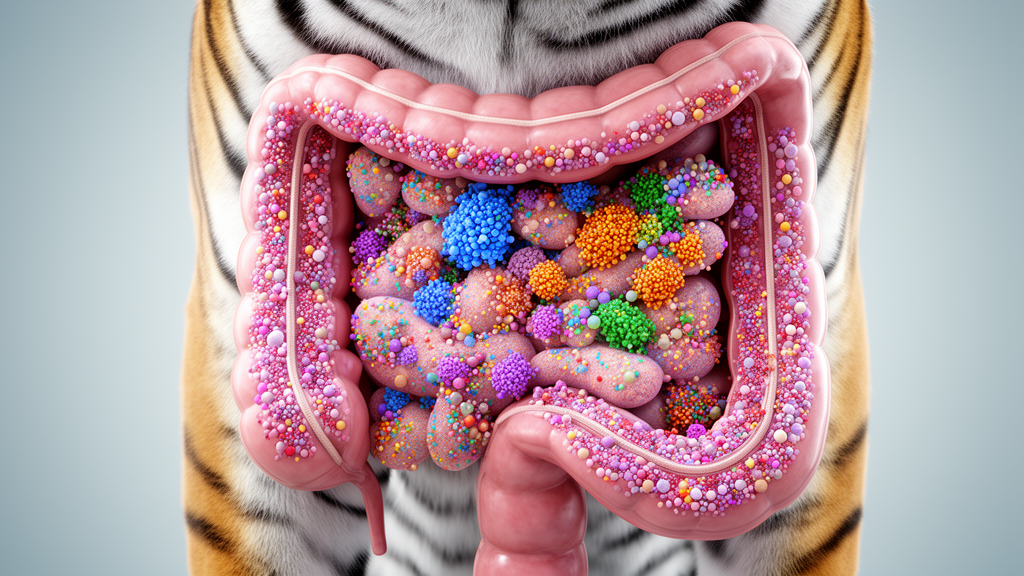
A comparative study published in Molecular Biology Reports indicates that captivity is associated with reduced gut microbial diversity in Bengal tigers (Panthera tigris tigris). The research, led by Stanzin Dolker and colleagues, analyzed fecal microbiomes from both captive and wild individuals to understand how environmental conditions and host factors influence microbial assembly. By integrating these new data with publicly available datasets from Amur, Malayan, and South China tigers, the study provides a broader perspective on how different subspecies and housing conditions shape the gut microbiome of large carnivores.

The gut microbiome plays a critical role in host nutrition, immune regulation, metabolic stability, and overall physiological health in wildlife. However, gut microbiome data from large carnivores remain limited, particularly for endangered tiger populations. This study aimed to fill that gap by conducting a comparative analysis of fecal microbiomes. The researchers sought to determine whether captivity or biological sex had a stronger influence on the structure of the gut microbial community in Bengal tigers.

Across all tiger subspecies examined, Firmicutes and Proteobacteria dominated as core bacterial phyla. Actinobacteriota, Bacteroidota, and Fusobacteriota also formed a conserved microbial backbone, suggesting a shared foundational structure among these big cats. The study found that wild Bengal tigers exhibited higher microbial richness and diversity than their captive counterparts.

Beta diversity analyses demonstrated clear clustering by habitat, distinguishing between captive and wild tigers. In contrast, there was substantial overlap between male and female captive Bengal tigers. This indicates that captivity-associated conditions exert a stronger influence on gut microbiome structure than biological sex.

Comparative analyses among tiger subspecies revealed broad overlap in microbial community composition, suggesting limited phylogenetic influence on the gut microbiome. South China and Amur tigers displayed the lowest richness compared to Bengal and Malayan tigers.

Functional analysis identified an enrichment of protein fermentation-associated taxa in captive tigers. Conversely, wild tigers showed a greater abundance of environmentally associated taxa.

The study provides evidence that captivity promotes a reduction in gut microbial diversity in Bengal tigers. The authors highlight the potential utility of microbiome-informed captive management for conservation efforts. Integrating gut microbiome monitoring into conservation breeding, zoo exchange, and reintroduction programs may improve adaptive fitness in endangered tiger populations.

Subject of Research: Comparative analysis of gut microbial diversity in captive and wild Bengal tigers

Article Title: Exploring sex- and captivity-associated gut microbial diversity in Bengal Tigers (Panthera tigris tigris)

Article References: Dolker, S., Ghosh, A., Singh, V. K., Joshi, B. D., Sharma, L. K., & Thakur, M. (2026). Exploring sex- and captivity-associated gut microbial diversity in Bengal Tigers (Panthera tigris tigris). Molecular Biology Reports, 53(1), Article 1863. https://doi.org/10.1007/s11033-026-13087-w

Image Credits: AI Generated

DOI: 10.1007/s11033-026-13087-w

Keywords: Bengal Tigers, Gut Microbiome, Captivity, Wildlife Conservation, Microbial Diversity, Molecular Biology Reports, Firmicutes, Proteobacteria, Beta Diversity, Conservation Breeding, Exploring, sex-

Cite Scienmag News

Morgan Morrow. (November 7, 2026). Captivity Reduces Gut Microbial Diversity in Bengal Tigers. Scienmag. https://scienmag.com/captivity-reduces-gut-microbial-diversity-in-bengal-tigers/

Morgan Morrow. "Captivity Reduces Gut Microbial Diversity in Bengal Tigers." Scienmag, 7 November 2026, https://scienmag.com/captivity-reduces-gut-microbial-diversity-in-bengal-tigers/. Accessed 20 November 2026.

Morgan Morrow. "Captivity Reduces Gut Microbial Diversity in Bengal Tigers." Scienmag. November 7, 2026. https://scienmag.com/captivity-reduces-gut-microbial-diversity-in-bengal-tigers/

Tags: Bengal tigersbeta diversitycaptivityconservation breedingExploringFirmicutesGut microbiomemicrobial diversityMolecular Biology ReportsProteobacteriasexWildlife Conservation
Share26Tweet16
Previous Post

Ecological Study Unpacks Multilevel Drivers of Ethiopian Distance Running Success

Next Post

Legacy Landfills Leak Persistent Chemical Contaminants Decades Later Into Floodplain Aquifers

Related Posts

Peroxisomal Enzyme EHHADH Suppresses Hepatocellular Carcinoma Proliferation by Modulating DLST Succinylation
Biology

Peroxisomal Enzyme EHHADH Suppresses Hepatocellular Carcinoma Proliferation by Modulating DLST Succinylation

November 20, 2026
Iroquois Transcription Factors Repress Cytokines to Block Malignant Tumor Growth in Flies
Biology

Iroquois Transcription Factors Repress Cytokines to Block Malignant Tumor Growth in Flies

November 20, 2026
GeneExplorer Hierarchy Graphs Reduce Fragmentation Without Showing Broad Predictive Advantage
Biotechnology

GeneExplorer Hierarchy Graphs Reduce Fragmentation Without Showing Broad Predictive Advantage

November 20, 2026
Transient Retinal Antioxidant Defenses Collapse Following Pressure-Induced Ischemia in Rats
Biology

Transient Retinal Antioxidant Defenses Collapse Following Pressure-Induced Ischemia in Rats

November 20, 2026
Gold Mine Actinomycetes Biosynthesize Highly Stable Antimicrobial Silver Nanoparticles
Biology

Gold Mine Actinomycetes Biosynthesize Highly Stable Antimicrobial Silver Nanoparticles

November 20, 2026
VCD Mouse Model Reveals Gradual Mammary Regression and Environmental Pollutant Sensitivity
Biology

VCD Mouse Model Reveals Gradual Mammary Regression and Environmental Pollutant Sensitivity

November 20, 2026
Next Post
Legacy Landfills Leak Persistent Chemical Contaminants Decades Later Into Floodplain Aquifers

Legacy Landfills Leak Persistent Chemical Contaminants Decades Later Into Floodplain Aquifers

  • Mothers who receive childcare support from maternal grandparents show more optimized

    Mothers who receive childcare support from maternal grandparents show more parental warmth, finds NTU Singapore study

    27656 shares
    Share 11059 Tweet 6912
  • University of Seville Breaks 120-Year-Old Mystery, Revises a Key Einstein Concept

    1061 shares
    Share 424 Tweet 265
  • Bee body mass, pathogens and local climate influence heat tolerance

    682 shares
    Share 273 Tweet 171
  • Researchers record first-ever images and data of a shark experiencing a boat strike

    546 shares
    Share 218 Tweet 137
  • Groundbreaking Clinical Trial Reveals Lubiprostone Enhances Kidney Function

    531 shares
    Share 212 Tweet 133
Science

Embark on a thrilling journey of discovery with Scienmag.com—your ultimate source for cutting-edge breakthroughs. Immerse yourself in a world where curiosity knows no limits and tomorrow’s possibilities become today’s reality!

RECENT NEWS

  • Semi-Supervised AI Detects Beluga Whales and Calves in Aerial Drone Surveys
  • Prison Healthcare Consent Decrees Depend on Leadership Support and Sustained Resources
  • Colorectal Cancer Metabolic Adaptations Reveal Potential Routes for Combined Therapies
  • Large Language Models Routinely Aid Illicit Requests Across Varying Legal Contexts

Categories

  • Agriculture
  • Anthropology
  • Archaeology
  • Athmospheric
  • Biology
  • Biotechnology
  • Blog
  • Bussines
  • Cancer
  • Chemistry
  • Climate
  • Earth Science
  • Editorial Policy
  • Marine
  • Mathematics
  • Medicine
  • Pediatry
  • Policy
  • Psychology & Psychiatry
  • Science Education
  • Science News
  • Social Science
  • Space
  • Technology and Engineering

Subscribe to Blog via Email

Enter your email address to subscribe to this blog and receive notifications of new posts by email.

Join 5,151 other subscribers

© 2026 Scienmag - Science Magazine

Welcome Back!

Login to your account below

Forgotten Password?

Retrieve your password

Please enter your username or email address to reset your password.

Log In
No Result
View All Result
  • HOME
  • SCIENCE NEWS
  • CONTACT US

© 2026 Scienmag - Science Magazine

Discover more from Science

Subscribe now to keep reading and get access to the full archive.

Continue reading

