


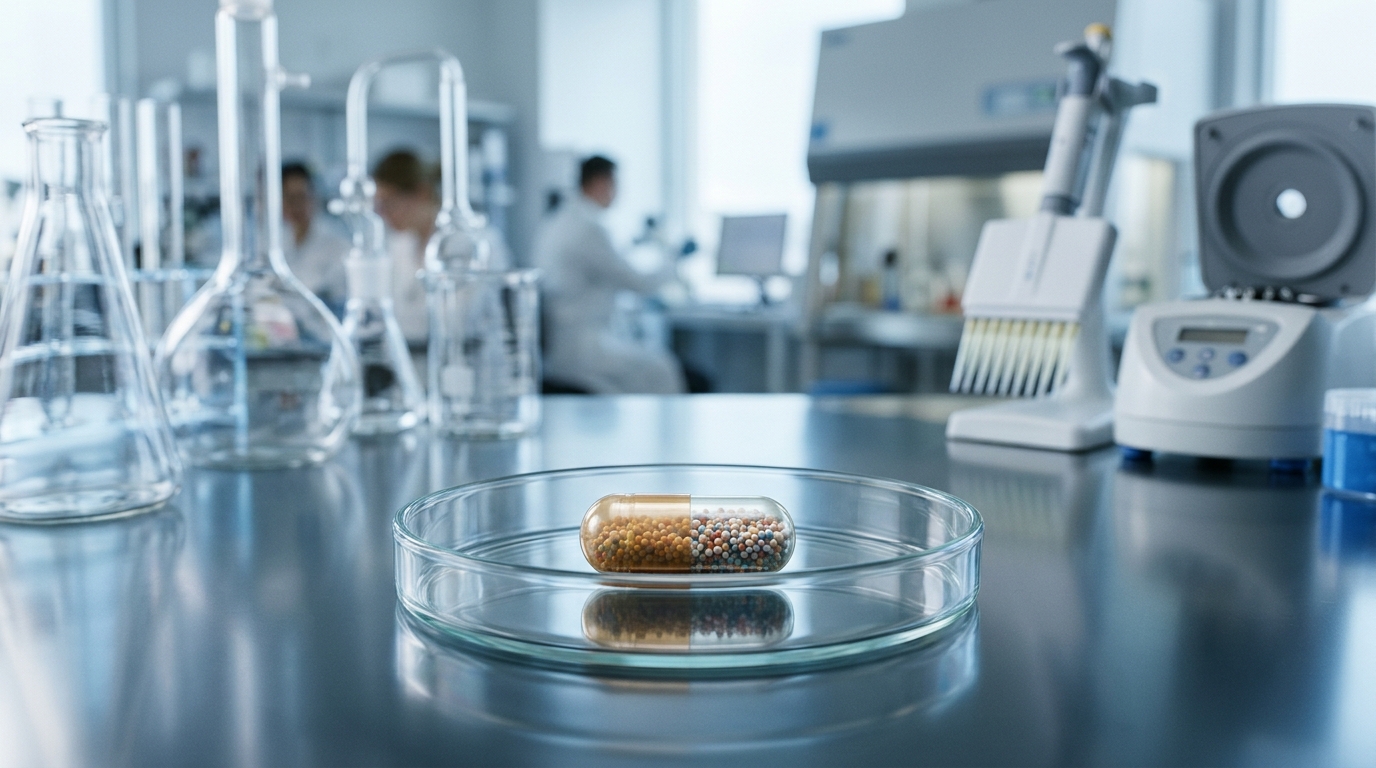
Researchers at City of Hope and collaborators have shown that a pill containing 16 carefully selected strains of beneficial bacteria can be safely given to severely immunocompromised patients, and that those who received it experienced fewer bloodstream infections and lower levels of harmful pathogens. The findings, published in Nature Medicine, come from a multicenter phase 1 clinical trial sponsored by Seres Therapeutics and conducted with scientists from City of Hope, Memorial Sloan Kettering Cancer Center and Seres Therapeutics. The experimental therapy, called SER-155, was well tolerated, with no treatment-related side effects reported in the trial.
The trial focused on patients undergoing allogeneic stem cell transplantation, an effective but high-risk treatment for leukemia and other blood cancers. While the transplant can be lifesaving, it leaves patients highly vulnerable to infection as their immune systems recover, and bloodstream infections are among the most serious complications, capable of leading to sepsis, a life-threatening condition. Currently, these patients are given antibiotics to prevent infection, but no therapies exist that treat the underlying disruption of the microbiome that makes them vulnerable in the first place. The new study offers early evidence that live biotherapeutics, medicines made from beneficial bacteria, can be delivered safely to this highly vulnerable population and may help prevent serious infections.
Senior author Marcel van den Brink, M.D., Ph.D., City of Hope chief physician executive and the Morgan and Helen Chu Presidential Chair of City of Hope National Medical Center, called the work a landmark for the field. “The immediate result is fewer bloodstream infections, but the larger significance is what it tells us about the future of medicine,” he said. “For the first time, we’ve shown that it’s possible to design a consortium of beneficial bacteria with a specific clinical purpose and to safely deliver it to highly vulnerable patients. That opens the door to an entirely new class of therapies.”
The microbiome, the trillions of bacteria and other microbes that live in and on the body, is increasingly recognized as a key factor in cancer care. Researchers are finding that it can influence how patients respond to treatment, recover from therapy or develop side effects. City of Hope is working to turn those discoveries into new ways to prevent complications, improve treatment outcomes and support recovery. The trial, described as a partially randomized, placebo-controlled phase 1b study of adult allogeneic hematopoietic cell transplantation recipients, was designed to test whether an engineered bacterial consortium could reestablish a protective gut ecosystem after the intense disruption caused by transplantation and the antibiotics these patients routinely receive.
Designing the therapy required a deliberate departure from existing microbiome-restoring approaches. Fecal transplants have been used to restore healthy gut bacteria in other conditions that disrupt the microbiome, such as C. difficile infection, but those treatments are essentially a grab-bag of bacteria in which it can be hard to know what strains they actually contain, making them potentially dangerous for immunocompromised patients. Instead, the researchers identified and selected specific strains offering targeted, infection-preventing benefits: bacteria known to consume the nutrients that harmful bacteria rely on, to release pathogen-killing compounds, or to regulate the body’s immune response. “Instead of giving patients a broad mix of bacteria, we selected specific strains for specific jobs and put them into a single pill,” Dr. van den Brink said. “That level of precision is what makes this approach fundamentally different from simply trying to replenish the microbiome. We’re moving from observing the microbiome to engineering it for specific therapeutic outcomes.”
The treatment protocol reflected the biology of the gut ecosystem. In the phase 1 trial, researchers first treated patients with an antibiotic to clear their existing microbiomes, making it easier for the introduced bacteria to establish new ecosystems. Patients then received pills containing the selected strains. The treatment was given before transplant and repeated at least once after transplant, since many patients are given antibiotics to prevent infection, which can again deplete the newly established communities. Because the approach involves giving live bacteria to severely immunocompromised patients, a central question was whether it was safe. “The safety profile was excellent — we didn’t see any complications with infections,” Dr. van den Brink said.
The study also showed that the therapy worked as intended biologically. The beneficial bacteria successfully established themselves in the patients’ microbiomes, particularly after the second course of treatment. Although the trial was not primarily focused on clinical outcomes, early results were promising: patients who received the therapy had lower levels of the most harmful pathogens and significantly lower risk of bloodstream infections. Dr. van den Brink emphasized that beyond the encouraging results, the study demonstrates the potential for scientifically designed live biotherapeutic drugs. “We are only beginning to understand the therapeutic potential of the microbiome,” he said.
Larger clinical trials are needed before SER-155 can be approved for use and made available to patients, and the phase 1 results should be understood as early evidence rather than proof of a new standard of care. Still, the trial’s design and findings carry technical significance for the broader field of microbiome medicine. The concept of a defined bacterial consortium, rationally assembled so that each strain performs a specified function such as nutrient competition, pathogen suppression or immune modulation, represents a shift from empirical microbiome manipulation toward engineered therapeutics with known composition. That known composition also matters for safety, because immunocompromised patients cannot tolerate products with uncertain contents. The published study, titled “A live biotherapeutic product for adult allogeneic hematopoietic cell transplantation recipients: a partially randomized, placebo-controlled phase 1b trial,” reports results from the multicenter trial sponsored by Seres Therapeutics.
In the meantime, Dr. van den Brink noted that research supports other strategies patients can use to support their microbiomes during cancer treatment. One is antibiotic stewardship: patients should discuss the responsible use of antibiotics with their doctors, including avoiding broad-spectrum antibiotics, which can disrupt the microbiome and promote antibiotic resistance. Another is diet. “Prebiotics” such as whole grains, fruits, vegetables and other high-fiber foods provide nutrients for good bacteria, supporting a healthy microbiome. “Diet is a drug,” he said. “Fiber and fiber-rich diets are shown to be a benefit in every setting where it has been studied.”
He also offered a caution about probiotics. Over-the-counter probiotic capsules contain a mix of bacteria that may be dangerous for immunocompromised patients, and in some cases these capsules may contain strains of bacteria that studies have linked to worse outcomes in cancer. City of Hope’s microbiome program is pursuing follow-up research, including studies and clinical trials to develop more therapies targeting the microbiome as a strategy for improving immunotherapy. The disclosure accompanying the study notes that Dr. van den Brink is an inventor, receives royalties and serves as a consultant to and shareholder of Seres Therapeutics, with additional relationships disclosed in the published manuscript. For now, the trial stands as a proof of concept that a rationally designed bacterial consortium can be safely delivered to some of the most vulnerable patients in medicine, with early signals pointing toward fewer of the bloodstream infections that make stem cell transplantation so dangerous.
Subject of Research: An engineered live biotherapeutic of 16 bacterial strains tested in a phase 1 trial to prevent bloodstream infections in stem cell transplant recipients.
Article Title: City of Hope researchers harness the microbiome to prevent deadly bloodstream infections
Article References: City of Hope researchers harness the microbiome to prevent deadly bloodstream infections. Original publication (Bibliographic details unavailable.)
Image Credits: AI Generated
DOI: Not provided
Keywords: microbiome, live biotherapeutic, SER-155, stem cell transplant, bloodstream infection, phase 1 trial, blood cancer, sepsis, City of Hope, Seres Therapeutics, Nature Medicine, immunocompromised
Cite Scienmag News
Nathaniel Bowman. (November 4, 2026). Engineered Bacteria Pill Cuts Bloodstream Infections in Stem Cell Transplant Patients. Scienmag. https://scienmag.com/engineered-bacteria-pill-cuts-bloodstream-infections-in-stem-cell-transplant-patients/
Nathaniel Bowman. "Engineered Bacteria Pill Cuts Bloodstream Infections in Stem Cell Transplant Patients." Scienmag, 4 November 2026, https://scienmag.com/engineered-bacteria-pill-cuts-bloodstream-infections-in-stem-cell-transplant-patients/. Accessed 22 November 2026.
Nathaniel Bowman. "Engineered Bacteria Pill Cuts Bloodstream Infections in Stem Cell Transplant Patients." Scienmag. November 4, 2026. https://scienmag.com/engineered-bacteria-pill-cuts-bloodstream-infections-in-stem-cell-transplant-patients/




