Sunday, November 1, 2026
Science
No Result
View All Result
  • Login
  • HOME
  • SCIENCE NEWS
  • CONTACT US
  • HOME
  • SCIENCE NEWS
  • CONTACT US
No Result
View All Result
Scienmag
No Result
View All Result
Home Science News

Children Learn New Words Best When Speaker Cues and Expectations Align

October 30, 2026
in Science News
Reading Time: 2 mins read
0
Children Learn New Words Best When Speaker Cues and Expectations Align

Children Learn New Words Best When Speaker Cues and Expectations Align

65
SHARES
587
VIEWS
Share on FacebookShare on Twitter
ADVERTISEMENT

Children aged 4 to 7 are surprisingly open to learning new words from speakers who have just been wrong, according to a new study of how young children combine different cues when figuring out what novel labels mean.

Researchers Shalini Banerjee and Ishanti Gangopadhyay examined how two sources of information interact during word learning: speaker testimony, meaning whether a person has previously labeled familiar objects correctly or incorrectly, and mutual exclusivity, the expectation that a new label belongs to an object that does not already have a known name.

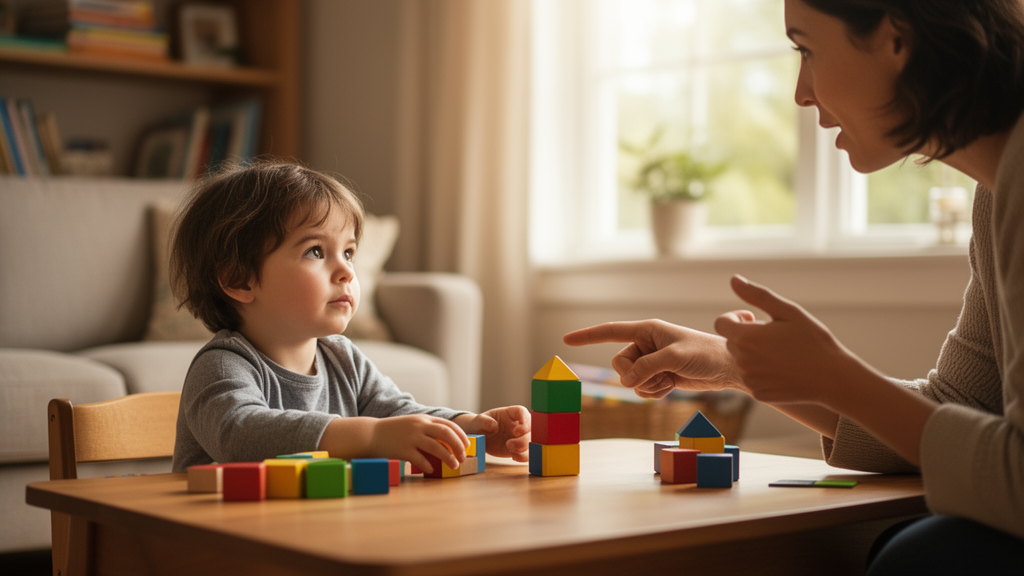
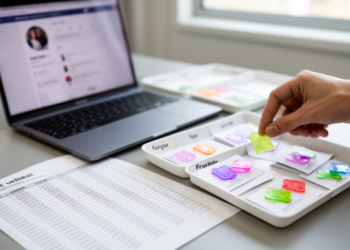
In the study, monolingual English-speaking children were shown pairs of novel and familiar objects and taught new labels by either an accurate speaker, who had previously named familiar objects correctly, or an inaccurate speaker, who had named them incorrectly. The novel labels were introduced under two conditions: one in which the speaker’s testimony aligned with mutual exclusivity, by giving a novel name to a novel object, and one in which it conflicted with that expectation, by giving a novel name to a familiar object.

When speaker testimony aligned with mutual exclusivity, children retained the novel label-object associations in short-term memory regardless of whether the speaker had been accurate or inaccurate. The authors suggest this indicates children may be open to learning novel words from speakers irrespective of prior accuracy, and may also draw on other available cues, such as label-object co-occurrences, during learning.

However, when speaker testimony violated mutual exclusivity expectations, children performed poorly, possibly because they found it difficult to disambiguate between what the speaker said and their existing lexical knowledge.

The findings indicate that children’s short-term retention of label-object associations is supported when the available cues align, irrespective of speaker accuracy status, but become less robust when mutual exclusivity and speaker cues provide conflicting information. The study focused on short-term retention in 4- to 7-year-old monolingual children, so the results apply to that age group and timeframe.

Subject of Research: How speaker accuracy and mutual exclusivity jointly influence novel word learning in children.

Article Title: The role of speaker accuracy and mutual exclusivity in children’s novel word learning

Article References: Banerjee, S., & Gangopadhyay, I. (2026). The role of speaker accuracy and mutual exclusivity in children’s novel word learning. PLOS One, 21(10), e0361483. https://doi.org/10.1371/journal.pone.0361483

Image Credits: AI Generated

DOI: 10.1371/journal.pone.0361483

Keywords: word learning, children, mutual exclusivity, speaker accuracy, language acquisition, cognitive development, lexical knowledge, speaker testimony, novel labels, monolingual children, role, speaker

Cite Scienmag News

Scienmag. (October 30, 2026). Children Learn New Words Best When Speaker Cues and Expectations Align. https://scienmag.com/children-learn-new-words-best-when-speaker-cues-and-expectations-align/

Scienmag. "Children Learn New Words Best When Speaker Cues and Expectations Align." Scienmag, 30 October 2026, https://scienmag.com/children-learn-new-words-best-when-speaker-cues-and-expectations-align/. Accessed 1 November 2026.

Scienmag. "Children Learn New Words Best When Speaker Cues and Expectations Align." Scienmag. October 30, 2026. https://scienmag.com/children-learn-new-words-best-when-speaker-cues-and-expectations-align/

Tags: alignment of cues and expectations in language learningbilingual vs monolingual language acquisitionChildrenChildren's word learningcognitive developmentcognitive mechanisms in early language developmentearly childhood vocabulary growtheffects of speaker errors on learningimpact of speaker testimony on word learninginfluence of speaker accuracy on vocabulary acquisitionlanguage acquisitionlexical knowledgemonolingual childrenmutual exclusivitymutual exclusivity in language developmentnovel label association in childrennovel labelsrolerole of speaker credibility in language comprehensionspeakerspeaker accuracyspeaker cues and expectationsspeaker testimonyword learning
Share26Tweet16
Previous Post

China’s regional climate pacts map uneven road to net zero

Next Post

Noise as Knowledge: Marco Donnarumma’s Biophysical Performances Read Through Crip Aesthetics

Related Posts

Trademarks Meet Patents in New Method to Spot Technology Opportunities
Science News

Trademarks Meet Patents in New Method to Spot Technology Opportunities

October 30, 2026
Reddit self-declarations offer auditable labels for demographic inference
Science News

Reddit self-declarations offer auditable labels for demographic inference

October 30, 2026
Scots pine needles map trace element pollution in Polish industrial town
Science News

Scots pine needles map trace element pollution in Polish industrial town

October 30, 2026
Dual-blockchain scheme secures vehicle handovers without pre-shared keys
Science News

Dual-blockchain scheme secures vehicle handovers without pre-shared keys

October 30, 2026
Soil bacterium from Cassia fistula rhizosphere yields anti-typhoid compound leads
Science News

Soil bacterium from Cassia fistula rhizosphere yields anti-typhoid compound leads

October 30, 2026
Heat and salt interact to reshape how bentonite swells, fractal model shows
Science News

Heat and salt interact to reshape how bentonite swells, fractal model shows

October 30, 2026
Next Post
Noise as Knowledge: Marco Donnarumma’s Biophysical Performances Read Through Crip Aesthetics

Noise as Knowledge: Marco Donnarumma's Biophysical Performances Read Through Crip Aesthetics

  • Mothers who receive childcare support from maternal grandparents show more optimized

    Mothers who receive childcare support from maternal grandparents show more parental warmth, finds NTU Singapore study

    27656 shares
    Share 11059 Tweet 6912
  • University of Seville Breaks 120-Year-Old Mystery, Revises a Key Einstein Concept

    1061 shares
    Share 424 Tweet 265
  • Bee body mass, pathogens and local climate influence heat tolerance

    682 shares
    Share 273 Tweet 171
  • Researchers record first-ever images and data of a shark experiencing a boat strike

    546 shares
    Share 218 Tweet 137
  • Groundbreaking Clinical Trial Reveals Lubiprostone Enhances Kidney Function

    531 shares
    Share 212 Tweet 133
Science

Embark on a thrilling journey of discovery with Scienmag.com—your ultimate source for cutting-edge breakthroughs. Immerse yourself in a world where curiosity knows no limits and tomorrow’s possibilities become today’s reality!

RECENT NEWS

  • Trademarks Meet Patents in New Method to Spot Technology Opportunities
  • Reddit self-declarations offer auditable labels for demographic inference
  • Scots pine needles map trace element pollution in Polish industrial town
  • Dual-blockchain scheme secures vehicle handovers without pre-shared keys

Categories

  • Agriculture
  • Anthropology
  • Archaeology
  • Athmospheric
  • Biology
  • Biotechnology
  • Blog
  • Bussines
  • Cancer
  • Chemistry
  • Climate
  • Earth Science
  • Editorial Policy
  • Marine
  • Mathematics
  • Medicine
  • Pediatry
  • Policy
  • Psychology & Psychiatry
  • Science Education
  • Science News
  • Social Science
  • Space
  • Technology and Engineering

Subscribe to Blog via Email

Enter your email address to subscribe to this blog and receive notifications of new posts by email.

Join 5,150 other subscribers

© 2025 Scienmag - Science Magazine

Welcome Back!

Login to your account below

Forgotten Password?

Retrieve your password

Please enter your username or email address to reset your password.

Log In
No Result
View All Result
  • HOME
  • SCIENCE NEWS
  • CONTACT US

© 2025 Scienmag - Science Magazine

Discover more from Science

Subscribe now to keep reading and get access to the full archive.

Continue reading