Wednesday, November 4, 2026
Science
No Result
View All Result
  • Login
  • HOME
  • SCIENCE NEWS
  • CONTACT US
  • HOME
  • SCIENCE NEWS
  • CONTACT US
No Result
View All Result
Scienmag
No Result
View All Result
Home Science News Psychology & Psychiatry

Ear Nerve Stimulation Matches Escitalopram on Depression, With Extra Gains in Sleep

October 29, 2026
in Medicine, Psychology & Psychiatry
Glenn Wilkins
By Glenn Wilkins Scienmag Editorial Profile - Clinical Psychology
Reading Time: 3 mins read
0
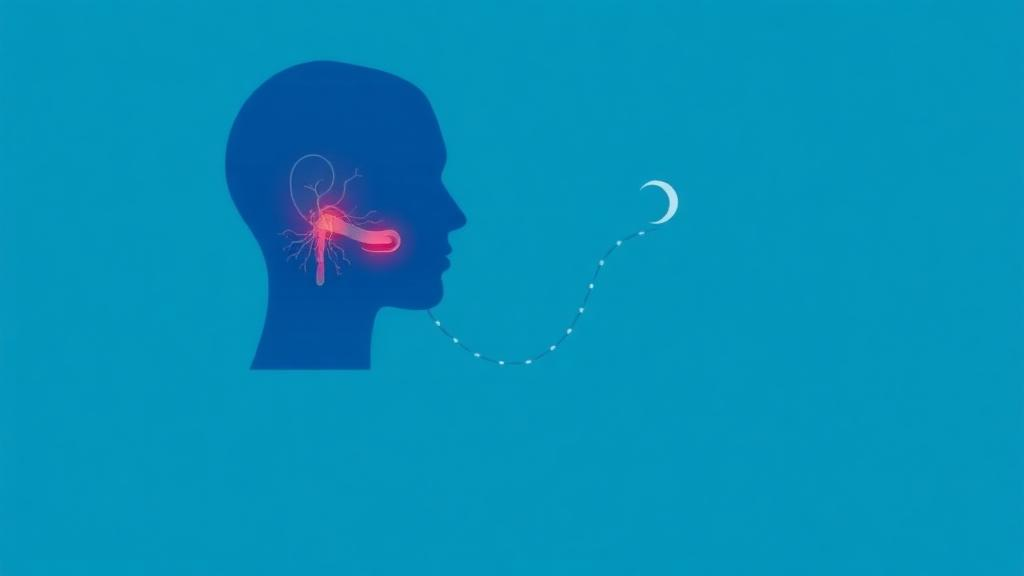
Ear Nerve Stimulation Matches Escitalopram on Depression, With Extra Gains in Sleep

Ear Nerve Stimulation Matches Escitalopram on Depression, With Extra Gains in Sleep

65
SHARES
587
VIEWS
Share on FacebookShare on Twitter
ADVERTISEMENT

A retrospective cohort study from a single hospital has compared transcutaneous auricular vagus nerve stimulation (taVNS) with the antidepressant escitalopram in patients with severe major depressive disorder, and reports that the two approaches performed similarly on core depressive symptoms while differing on secondary outcomes.

The study enrolled patients treated between September 2021 and September 2025, allocating them to either an escitalopram group or a taVNS group. After propensity score matching, 120 patients were included in each group, allowing the researchers to compare the two treatments in balanced cohorts.

Outcome assessments were performed at baseline and at week 8. They covered depressive symptoms measured with the MADRS and HAMD-17 scales, anxiety with the HAMA, sleep quality with the PSQI, cognitive function with the MoCA, anhedonia with the SHAPS, and heart rate variability indices including SDNN, RMSSD and the LF/HF ratio. Adverse events were documented throughout treatment.

The central finding was negative on the primary comparison: no statistically significant between-group difference was observed between taVNS and escitalopram for core depressive symptoms. This suggests that, in this matched retrospective cohort, the non-invasive nerve stimulation approach was not distinguishable from the standard antidepressant on the main symptom measures.

However, taVNS showed advantages on several secondary measures. Compared with escitalopram, it produced greater improvements in sleep quality (PSQI, P < 0.001), cognitive function (MoCA, P = 0.024), and anhedonia (SHAPS, P = 0.040).

The stimulation group also showed greater improvements in autonomic regulation, reflected in heart rate variability: SDNN improved more (P = 0.006), as did RMSSD (P = 0.016) and the LF/HF ratio (P < 0.001). These indices capture different aspects of autonomic function, and the authors interpret the pattern as additional benefit beyond mood symptoms alone.

Safety profiles differed between the treatments. Escitalopram caused more nausea, somnolence and dry mouth, whereas taVNS mainly produced mild local skin reactions at the stimulation site. The study therefore describes a more favorable systemic safety profile for the device-based approach in this cohort.

Several limitations should temper interpretation. The study was retrospective and conducted at a single hospital, and patients were allocated to groups rather than randomly assigned, even after propensity score matching. Unmeasured differences between groups cannot be excluded, and the findings should be viewed as observational rather than as evidence from a randomized trial.

The article was published open access in BMC Psychiatry on 22 October 2026 and was shared early as a peer-reviewed, accepted version of record in progress, meaning it remains subject to further edits before the final version replaces it.

Within those constraints, the study adds to the evidence base for taVNS as a treatment option in severe major depressive disorder, indicating comparable effects on depressive symptoms in this cohort, with reported additional benefits in sleep, cognition, anhedonia and autonomic function, and a different side-effect profile dominated by mild local skin reactions rather than systemic antidepressant-type effects.

Subject of Research: Comparative effectiveness of transcutaneous auricular vagus nerve stimulation versus escitalopram in severe major depressive disorder

Article Title: Comparative effectiveness of transcutaneous auricular vagus nerve stimulation and escitalopram for depressive symptoms in major depressive disorder

Article References: Wu, Y.-L., Ding, L., Yu, C.-Y., Wang, Y.-F., Zhang, Z.-H., Chai, G.-D., Fu, X.-Q., & Tuo, Y. (2026). Comparative effectiveness of transcutaneous auricular vagus nerve stimulation and escitalopram for depressive symptoms in major depressive disorder. BMC Psychiatry. https://doi.org/10.1186/s12888-026-08785-5

Image Credits: AI Generated

DOI: 10.1186/s12888-026-08785-5

Keywords: major depressive disorder, taVNS, escitalopram, vagus nerve stimulation, propensity score matching, heart rate variability, anhedonia, sleep quality, adverse events, BMC Psychiatry, retrospective cohort study, Comparative

Cite Scienmag News

Glenn Wilkins. (October 29, 2026). Ear Nerve Stimulation Matches Escitalopram on Depression, With Extra Gains in Sleep. Scienmag. https://scienmag.com/ear-nerve-stimulation-matches-escitalopram-on-depression-with-extra-gains-in-sleep/

Glenn Wilkins. "Ear Nerve Stimulation Matches Escitalopram on Depression, With Extra Gains in Sleep." Scienmag, 29 October 2026, https://scienmag.com/ear-nerve-stimulation-matches-escitalopram-on-depression-with-extra-gains-in-sleep/. Accessed 4 November 2026.

Glenn Wilkins. "Ear Nerve Stimulation Matches Escitalopram on Depression, With Extra Gains in Sleep." Scienmag. October 29, 2026. https://scienmag.com/ear-nerve-stimulation-matches-escitalopram-on-depression-with-extra-gains-in-sleep/

Tags: adverse effects in depression therapiesadverse eventsalternative depression treatmentsanhedoniaBMC Psychiatrycomparativecomparison of VNS and antidepressantsescitalopramescitalopram for depressionheart rate variabilityheart rate variability in depression treatmentmajor depressive disordermajor depressive disorder treatmentnon-invasive nerve stimulationpropensity score matchingretrospective cohort studyretrospective cohort study on depressionsecondary outcomes in depression therapysleep and cognitive benefits of taVNSsleep qualitysleep quality improvements in depressiontaVNStranscutaneous auricular vagus nerve stimulationvagus nerve stimulation
Share26Tweet16
Previous Post

Mothers’ Emotion Beliefs Linked to Reported Responses to Preschoolers

Next Post

Stinging Nettle Emerges as a Promising but Underutilized Resource for Sustainable Food Systems

Related Posts

Men and women fare similarly after catheter clot removal for lung embolism
Medicine

Men and women fare similarly after catheter clot removal for lung embolism

November 4, 2026
Tryptanthrin from Yinhuang Gargle Emerges as Anti-Inflammatory Candidate Against Periodontitis
Medicine

Tryptanthrin from Yinhuang Gargle Emerges as Anti-Inflammatory Candidate Against Periodontitis

November 4, 2026
Engineered Bacteria Pill Cuts Bloodstream Infections in Stem Cell Transplant Patients
Cancer

Engineered Bacteria Pill Cuts Bloodstream Infections in Stem Cell Transplant Patients

November 4, 2026
NIH-Funded $4 Million Study Will Test Whether Prefilled Online Grocery Carts Improve Family Diets
Medicine

NIH-Funded $4 Million Study Will Test Whether Prefilled Online Grocery Carts Improve Family Diets

November 4, 2026
Carbon-Ion Radiotherapy Before Surgery Yields Strong Tumor Response in Advanced Pancreatic Cancer
Medicine

Carbon-Ion Radiotherapy Before Surgery Yields Strong Tumor Response in Advanced Pancreatic Cancer

November 4, 2026
Simulation setting may not shape emergency team nontechnical skills
Science Education

Simulation setting may not shape emergency team nontechnical skills

November 4, 2026
Next Post
Stinging Nettle Emerges as a Promising but Underutilized Resource for Sustainable Food Systems

Stinging Nettle Emerges as a Promising but Underutilized Resource for Sustainable Food Systems

  • Mothers who receive childcare support from maternal grandparents show more optimized

    Mothers who receive childcare support from maternal grandparents show more parental warmth, finds NTU Singapore study

    27656 shares
    Share 11059 Tweet 6912
  • University of Seville Breaks 120-Year-Old Mystery, Revises a Key Einstein Concept

    1061 shares
    Share 424 Tweet 265
  • Bee body mass, pathogens and local climate influence heat tolerance

    682 shares
    Share 273 Tweet 171
  • Researchers record first-ever images and data of a shark experiencing a boat strike

    546 shares
    Share 218 Tweet 137
  • Groundbreaking Clinical Trial Reveals Lubiprostone Enhances Kidney Function

    531 shares
    Share 212 Tweet 133
Science

Embark on a thrilling journey of discovery with Scienmag.com—your ultimate source for cutting-edge breakthroughs. Immerse yourself in a world where curiosity knows no limits and tomorrow’s possibilities become today’s reality!

RECENT NEWS

  • Historic redlining tied to 86% higher opioid overdose death rates in Massachusetts neighborhoods
  • Hydrogel-and-membrane patch eases ureteral scarring in rabbits after thermal injury
  • Men and women fare similarly after catheter clot removal for lung embolism
  • Microbiomes must sit at the heart of EU rules for modified microbes, scientists tell Brussels

Categories

  • Agriculture
  • Anthropology
  • Archaeology
  • Athmospheric
  • Biology
  • Biotechnology
  • Blog
  • Bussines
  • Cancer
  • Chemistry
  • Climate
  • Earth Science
  • Editorial Policy
  • Marine
  • Mathematics
  • Medicine
  • Pediatry
  • Policy
  • Psychology & Psychiatry
  • Science Education
  • Science News
  • Social Science
  • Space
  • Technology and Engineering

Subscribe to Blog via Email

Enter your email address to subscribe to this blog and receive notifications of new posts by email.

Join 5,149 other subscribers

© 2025 Scienmag - Science Magazine

Welcome Back!

Login to your account below

Forgotten Password?

Retrieve your password

Please enter your username or email address to reset your password.

Log In
No Result
View All Result
  • HOME
  • SCIENCE NEWS
  • CONTACT US

© 2025 Scienmag - Science Magazine

Discover more from Science

Subscribe now to keep reading and get access to the full archive.

Continue reading