Thursday, October 29, 2026
Science
No Result
View All Result
  • Login
  • HOME
  • SCIENCE NEWS
  • CONTACT US
  • HOME
  • SCIENCE NEWS
  • CONTACT US
No Result
View All Result
Scienmag
No Result
View All Result
Home Science News Medicine

Bait capture unlocks Cryptosporidium genomes directly from patient stool samples

October 29, 2026
in Medicine
Juliet Wilcox
By Juliet Wilcox Scienmag Editorial Profile - Human Genetics
Reading Time: 2 mins read
0
Bait capture unlocks Cryptosporidium genomes directly from patient stool samples

Bait capture unlocks Cryptosporidium genomes directly from patient stool samples

65
SHARES
587
VIEWS
Share on FacebookShare on Twitter
ADVERTISEMENT

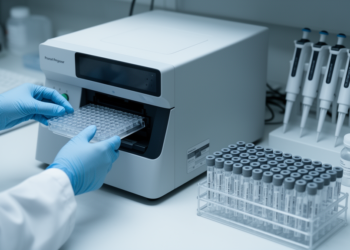
Cryptosporidium, a parasite that causes diarrhea and high mortality in young children in Africa and southern Asia, has long been difficult to study genetically because low oocyst counts in stool often prevent whole-genome sequencing from clinical samples. A new study published in Nature Communications describes a capture-based method that overcomes this barrier, enriching Cryptosporidium genomic DNA directly from stool samples.

The approach relies on a panel of 74,973 RNA baits, called CryptoCap_75K and spanning 8.2 megabases, which were derived from gene-rich areas covering the full coding capacity of the Cryptosporidium parvum genome. Using this bait set, the researchers produced genome-wide sequence data with sufficient depth and breadth of coverage from samples containing as few as 25 oocysts. The method also worked on divergent species, including Cryptosporidium ubiquitum, extending its usefulness beyond the most common clinical species.

To minimize reference bias, a common problem when sequencing reads are aligned to a single reference genome, the team used a dual-mapping strategy that integrates reads aligned to both C. parvum and C. ubiquitum. This allowed them to capture lineage-specific variation across the sampled parasites.

Phylogenetic networks, haplotype analyses, and admixture analyses identified three groups within C. ubiquitum. Groups A and B were found exclusively in humans, with group B showing evidence of admixture, whereas group C was zoonotic. Group-specific polymorphisms clustered within discrete genomic regions, suggesting that conserved haploblocks are associated with host adaptation.

The authors state that this capture-based genomics approach provides high-resolution insights into Cryptosporidium population genetics and lays the groundwork for studies of zoonotic transmission, anthroponosis, and genome-wide association studies performed directly from clinical material. Because the method works from small numbers of oocysts in stool, it could broaden genomic surveillance of this parasite in the regions where it burdens young children most.

Subject of Research: Capture-based whole-genome sequencing of Cryptosporidium directly from patient stool samples

Article Title: Phylogenomics of captured Cryptosporidium sequenced directly from patient samples identifies clade-specific genomic architecture and host-adapted lineages

Article References: Alves-Ferreira, E. V. C., Khan, A., Tettey, M. D., Ihara, F., Vogel, H., Botchie, S., Ayi, I., Pawlowic, M. C., Robinson, G., Chalmers, R. M., Lorenzi, H. A., & Grigg, M. E. (2026). Phylogenomics of captured Cryptosporidium sequenced directly from patient samples identifies clade-specific genomic architecture and host-adapted lineages. Nature Communications. https://doi.org/10.1038/s41467-026-78927-6

Image Credits: AI Generated

DOI: 10.1038/s41467-026-78927-6

Keywords: Cryptosporidium, phylogenomics, bait capture, whole-genome sequencing, host adaptation, zoonotic transmission, population genetics, stool samples, reference bias, C. ubiquitum, captured, sequenced

Cite Scienmag News

Juliet Wilcox. (October 29, 2026). Bait capture unlocks Cryptosporidium genomes directly from patient stool samples. Scienmag. https://scienmag.com/bait-capture-unlocks-cryptosporidium-genomes-directly-from-patient-stool-samples/


Juliet Wilcox. "Bait capture unlocks Cryptosporidium genomes directly from patient stool samples." Scienmag, 29 October 2026, https://scienmag.com/bait-capture-unlocks-cryptosporidium-genomes-directly-from-patient-stool-samples/. Accessed 29 October 2026.

Juliet Wilcox. "Bait capture unlocks Cryptosporidium genomes directly from patient stool samples." Scienmag. October 29, 2026. https://scienmag.com/bait-capture-unlocks-cryptosporidium-genomes-directly-from-patient-stool-samples/

Tags: bait captureC. ubiquitumcapture-based DNA enrichmentcapturedCryptosporidiumCryptosporidium genome sequencingCryptosporidium parvumCryptosporidium ubiquitumdual-mapping sequencing strategygenome-wide sequence data from clinical sampleshost adaptationlineage-specific variationlow oocyst count sequencingparasite genetic analysisparasite genomic diversityphylogenetic analysis of cryptosporidiumphylogenomicspopulation geneticsreference biassequencedstool sample genomic enrichmentstool sampleswhole genome sequencingzoonotic transmission
Share26Tweet16
Previous Post

New time-domain method reads Earth’s mantle from gapped observatory records

Next Post

Caloric Restriction Beats Time-Restricted Feeding on Metabolism in Obese Rats, but TRF Shifts Behavior

Related Posts

Aging Rewrites the Immune Landscape of the Cochlear Spiral Ganglion in Mice
Medicine

Aging Rewrites the Immune Landscape of the Cochlear Spiral Ganglion in Mice

October 29, 2026
Preoperative Anxiety Raises Propofol Needs but Not Ciprofol Doses in Pregnancy Termination Anesthesia
Medicine

Preoperative Anxiety Raises Propofol Needs but Not Ciprofol Doses in Pregnancy Termination Anesthesia

October 29, 2026
British Society of Echocardiography Sets Out How AI Should Enter the Heart Scan Workflow
Medicine

British Society of Echocardiography Sets Out How AI Should Enter the Heart Scan Workflow

October 29, 2026
New Automated qPCR Assay Shows TTV Viral Loads Fluctuate Naturally Over Time
Medicine

New Automated qPCR Assay Shows TTV Viral Loads Fluctuate Naturally Over Time

October 29, 2026
AI Reads the News: Large Language Models Decode Public Health Policy Debates
Medicine

AI Reads the News: Large Language Models Decode Public Health Policy Debates

October 29, 2026
MicroRNA miR-15b-5p linked to severe pneumonia severity and epithelial cell injury
Medicine

MicroRNA miR-15b-5p linked to severe pneumonia severity and epithelial cell injury

October 29, 2026
Next Post
Caloric Restriction Beats Time-Restricted Feeding on Metabolism in Obese Rats, but TRF Shifts Behavior

Caloric Restriction Beats Time-Restricted Feeding on Metabolism in Obese Rats, but TRF Shifts Behavior

  • Mothers who receive childcare support from maternal grandparents show more optimized

    Mothers who receive childcare support from maternal grandparents show more parental warmth, finds NTU Singapore study

    27656 shares
    Share 11059 Tweet 6912
  • University of Seville Breaks 120-Year-Old Mystery, Revises a Key Einstein Concept

    1061 shares
    Share 424 Tweet 265
  • Bee body mass, pathogens and local climate influence heat tolerance

    682 shares
    Share 273 Tweet 171
  • Researchers record first-ever images and data of a shark experiencing a boat strike

    546 shares
    Share 218 Tweet 137
  • Groundbreaking Clinical Trial Reveals Lubiprostone Enhances Kidney Function

    531 shares
    Share 212 Tweet 133
Science

Embark on a thrilling journey of discovery with Scienmag.com—your ultimate source for cutting-edge breakthroughs. Immerse yourself in a world where curiosity knows no limits and tomorrow’s possibilities become today’s reality!

RECENT NEWS

  • VrMYB80 Shapes Pollen Development in Mungbean by Activating VrLBD27 and VrWBC27
  • Aging Rewrites the Immune Landscape of the Cochlear Spiral Ganglion in Mice
  • Research report: Temperature field and system efficiency of a ground source heat pump heated tunnel drainage ditch
  • Preoperative Anxiety Raises Propofol Needs but Not Ciprofol Doses in Pregnancy Termination Anesthesia

Categories

  • Agriculture
  • Anthropology
  • Archaeology
  • Athmospheric
  • Biology
  • Biotechnology
  • Blog
  • Bussines
  • Cancer
  • Chemistry
  • Climate
  • Earth Science
  • Editorial Policy
  • Marine
  • Mathematics
  • Medicine
  • Pediatry
  • Policy
  • Psychology & Psychiatry
  • Science Education
  • Science News
  • Social Science
  • Space
  • Technology and Engineering

Subscribe to Blog via Email

Enter your email address to subscribe to this blog and receive notifications of new posts by email.

Join 5,150 other subscribers

© 2025 Scienmag - Science Magazine

Welcome Back!

Login to your account below

Forgotten Password?

Retrieve your password

Please enter your username or email address to reset your password.

Log In
No Result
View All Result
  • HOME
  • SCIENCE NEWS
  • CONTACT US

© 2025 Scienmag - Science Magazine

Discover more from Science

Subscribe now to keep reading and get access to the full archive.

Continue reading