Wednesday, November 4, 2026
Science
No Result
View All Result
  • Login
  • HOME
  • SCIENCE NEWS
  • CONTACT US
  • HOME
  • SCIENCE NEWS
  • CONTACT US
No Result
View All Result
Scienmag
No Result
View All Result
Home Science News Pediatry

Three-Day Omega-3 Course Fails to Significantly Cut Necrotizing Enterocolitis in Preterm Infants

October 29, 2026
in Medicine, Pediatry
Harold Sullivan
By Harold Sullivan Scienmag Editorial Profile - Maternal and Child Health
Reading Time: 3 mins read
0
Three-Day Omega-3 Course Fails to Significantly Cut Necrotizing Enterocolitis in Preterm Infants

Three-Day Omega-3 Course Fails to Significantly Cut Necrotizing Enterocolitis in Preterm Infants

65
SHARES
587
VIEWS
Share on FacebookShare on Twitter
ADVERTISEMENT

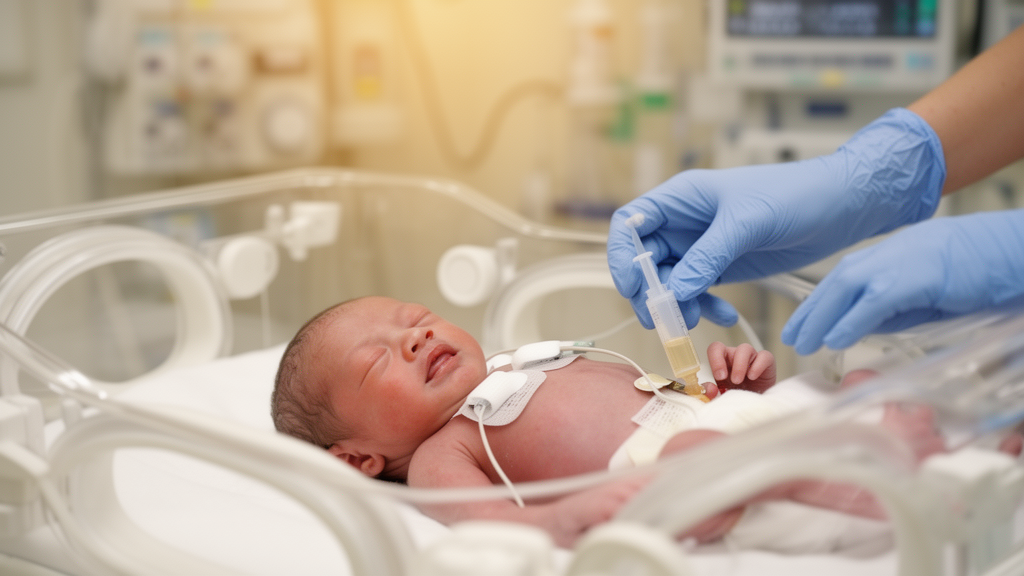
Enteral supplementation with the omega-3 fatty acid docosahexaenoic acid (DHA) did not significantly reduce the incidence of definite necrotizing enterocolitis (NEC) in preterm infants, according to an open-label, single-centre, parallel-group randomized trial published in BMC Pediatrics. The finding tempers hopes that a short course of DHA could prevent one of the most dangerous bowel diseases of premature infancy, though the trial’s small size leaves the true effect uncertain.

NEC is a major cause of death in preterm infants, and the trial was designed to test whether enteral omega-3 supplementation could prevent it. The researchers enrolled 62 preterm infants and allocated them to either enteral omega-3 supplementation (29 infants) or standard care alone (33 infants). The supplement, given at a dose of 60 milligrams of DHA per kilogram of body weight once daily, was administered for three days, beginning on the third day of tolerated oral feeding. The primary outcome was definite NEC, defined as modified Bell stage II or higher with radiographic confirmation.

Definite NEC occurred in 15 of 33 infants in the control group (45.5%) compared with 7 of 29 infants in the omega-3 group (24.1%). This corresponds to a risk ratio of 0.53 with a 95% confidence interval of 0.25 to 1.12 and a p value of 0.112, which did not reach statistical significance. When the analysis was adjusted for gestational age and delivery-room resuscitation, the odds ratio was 0.41 (95% CI 0.12 to 1.30; p = 0.135), again not statistically significant. Although the point estimates suggest a possible reduction in risk, the confidence intervals include the possibility of no effect, and no secondary outcome retained significance after Benjamini-Hochberg correction for multiple comparisons.

The trial also raised a safety signal. Neutropenia occurred in no control infant but in 6 of the 29 omega-3 infants (20.7%), a risk difference of 20.7 percentage points (95% CI 5.9 to 35.4; p = 0.008). All episodes were reported as mild. The authors describe this excess of mild neutropenia under omega-3 allocation as unexplained and note that it warrants confirmation in future trials with pre-specified haematological safety monitoring.

Mortality was 5 of 33 infants in the control group versus 1 of 29 in the omega-3 group, a difference that was not statistically significant (p = 0.201). No infant in the trial required NEC-related surgery. The trial was registered with the Iranian Registry of Clinical Trials (IRCT20250625066253N1) on 10 January 2026, and the article was published open access on 29 October 2026.

The authors conclude that a three-day course of enteral omega-3 supplementation did not significantly reduce definite NEC in this population. Because the study was open-label and conducted at a single centre with a modest sample size, the estimates of both benefit and harm carry wide uncertainty. The observed neutropenia signal, in particular, is based on a small number of events and requires independent replication before any conclusions about the haematological safety of short-course DHA supplementation in preterm infants can be drawn. Future trials, the authors suggest, should pre-specify haematological safety monitoring to clarify whether the finding is real or a chance result of the small sample.

Subject of Research: A randomized trial of enteral docosahexaenoic acid supplementation for preventing necrotizing enterocolitis in preterm infants

Article Title: Docosahexaenoic acid in preventing necrotizing enterocolitis in preterm infants: a randomized clinical trial

Article References: Sabzevari, F., Parvaz, A., Rezaei, M., Bijari, B. B., Jamali, Z., Nikvarz, M., Eslamian, M., & Hajializadeh, A. (2026). Docosahexaenoic acid in preventing necrotizing enterocolitis in preterm infants: a randomized clinical trial. BMC Pediatrics. https://doi.org/10.1186/s12887-026-07968-z

Image Credits: AI Generated

DOI: 10.1186/s12887-026-07968-z

Keywords: docosahexaenoic acid, omega-3, necrotizing enterocolitis, preterm infants, randomized clinical trial, neutropenia, neonatology, BMC Pediatrics, clinical trial safety, DHA supplementation, Docosahexaenoic, acid

Cite Scienmag News

Harold Sullivan. (October 29, 2026). Three-Day Omega-3 Course Fails to Significantly Cut Necrotizing Enterocolitis in Preterm Infants. Scienmag. https://scienmag.com/three-day-omega-3-course-fails-to-significantly-cut-necrotizing-enterocolitis-in-preterm-infants/

Harold Sullivan. "Three-Day Omega-3 Course Fails to Significantly Cut Necrotizing Enterocolitis in Preterm Infants." Scienmag, 29 October 2026, https://scienmag.com/three-day-omega-3-course-fails-to-significantly-cut-necrotizing-enterocolitis-in-preterm-infants/. Accessed 4 November 2026.

Harold Sullivan. "Three-Day Omega-3 Course Fails to Significantly Cut Necrotizing Enterocolitis in Preterm Infants." Scienmag. October 29, 2026. https://scienmag.com/three-day-omega-3-course-fails-to-significantly-cut-necrotizing-enterocolitis-in-preterm-infants/

Tags: acidBMC Pediatricsclinical trial results in neonatal careclinical trial safetyDHA impact on neonatal bowel diseaseDHA supplementationDocosahexaenoicdocosahexaenoic acidearly dietary interventions in neonateseffect of omega-3 on preterm infant mortalitylimitations of omega-3 supplementation studiesnecrotizing enterocolitisnecrotizing enterocolitis preventionneonatal nutrition and enteral feedingneonatologyneutropeniaomega-3Omega-3 fatty acid supplementation in preterm infantspreterm infantsrandomized clinical trialrandomized trial on omega-3 for NECrisk factors for necrotizing enterocolitisshort-term omega-3 intervention outcomessignificance of omega-3 in pre
Share26Tweet16
Previous Post

Personality Profiles May Shape How APOE Risk Relates to Memory in Middle-Aged Women

Next Post

Latin American Science Fiction Offers a Southern Lens on Emerging Technology Ethics

Related Posts

Men and women fare similarly after catheter clot removal for lung embolism
Medicine

Men and women fare similarly after catheter clot removal for lung embolism

November 4, 2026
Tryptanthrin from Yinhuang Gargle Emerges as Anti-Inflammatory Candidate Against Periodontitis
Medicine

Tryptanthrin from Yinhuang Gargle Emerges as Anti-Inflammatory Candidate Against Periodontitis

November 4, 2026
Engineered Bacteria Pill Cuts Bloodstream Infections in Stem Cell Transplant Patients
Cancer

Engineered Bacteria Pill Cuts Bloodstream Infections in Stem Cell Transplant Patients

November 4, 2026
NIH-Funded $4 Million Study Will Test Whether Prefilled Online Grocery Carts Improve Family Diets
Medicine

NIH-Funded $4 Million Study Will Test Whether Prefilled Online Grocery Carts Improve Family Diets

November 4, 2026
Carbon-Ion Radiotherapy Before Surgery Yields Strong Tumor Response in Advanced Pancreatic Cancer
Medicine

Carbon-Ion Radiotherapy Before Surgery Yields Strong Tumor Response in Advanced Pancreatic Cancer

November 4, 2026
Simulation setting may not shape emergency team nontechnical skills
Science Education

Simulation setting may not shape emergency team nontechnical skills

November 4, 2026
Next Post
Latin American Science Fiction Offers a Southern Lens on Emerging Technology Ethics

Latin American Science Fiction Offers a Southern Lens on Emerging Technology Ethics

  • Mothers who receive childcare support from maternal grandparents show more optimized

    Mothers who receive childcare support from maternal grandparents show more parental warmth, finds NTU Singapore study

    27656 shares
    Share 11059 Tweet 6912
  • University of Seville Breaks 120-Year-Old Mystery, Revises a Key Einstein Concept

    1061 shares
    Share 424 Tweet 265
  • Bee body mass, pathogens and local climate influence heat tolerance

    682 shares
    Share 273 Tweet 171
  • Researchers record first-ever images and data of a shark experiencing a boat strike

    546 shares
    Share 218 Tweet 137
  • Groundbreaking Clinical Trial Reveals Lubiprostone Enhances Kidney Function

    531 shares
    Share 212 Tweet 133
Science

Embark on a thrilling journey of discovery with Scienmag.com—your ultimate source for cutting-edge breakthroughs. Immerse yourself in a world where curiosity knows no limits and tomorrow’s possibilities become today’s reality!

RECENT NEWS

  • Historic redlining tied to 86% higher opioid overdose death rates in Massachusetts neighborhoods
  • Hydrogel-and-membrane patch eases ureteral scarring in rabbits after thermal injury
  • Men and women fare similarly after catheter clot removal for lung embolism
  • Microbiomes must sit at the heart of EU rules for modified microbes, scientists tell Brussels

Categories

  • Agriculture
  • Anthropology
  • Archaeology
  • Athmospheric
  • Biology
  • Biotechnology
  • Blog
  • Bussines
  • Cancer
  • Chemistry
  • Climate
  • Earth Science
  • Editorial Policy
  • Marine
  • Mathematics
  • Medicine
  • Pediatry
  • Policy
  • Psychology & Psychiatry
  • Science Education
  • Science News
  • Social Science
  • Space
  • Technology and Engineering

Subscribe to Blog via Email

Enter your email address to subscribe to this blog and receive notifications of new posts by email.

Join 5,149 other subscribers

© 2025 Scienmag - Science Magazine

Welcome Back!

Login to your account below

Forgotten Password?

Retrieve your password

Please enter your username or email address to reset your password.

Log In
No Result
View All Result
  • HOME
  • SCIENCE NEWS
  • CONTACT US

© 2025 Scienmag - Science Magazine

Discover more from Science

Subscribe now to keep reading and get access to the full archive.

Continue reading