Thursday, October 29, 2026
Science
No Result
View All Result
  • Login
  • HOME
  • SCIENCE NEWS
  • CONTACT US
  • HOME
  • SCIENCE NEWS
  • CONTACT US
No Result
View All Result
Scienmag
No Result
View All Result
Home Science News Earth Science

Plants Can Pull Carbon From Soil Through Their Roots, Tracer Study Shows

October 29, 2026
in Chemistry, Earth Science
Bethany Barker
By Bethany Barker Scienmag Editorial Profile - Catalysis
Reading Time: 3 mins read
0
Plants Can Pull Carbon From Soil Through Their Roots, Tracer Study Shows

Plants Can Pull Carbon From Soil Through Their Roots, Tracer Study Shows

65
SHARES
587
VIEWS
Share on FacebookShare on Twitter
ADVERTISEMENT

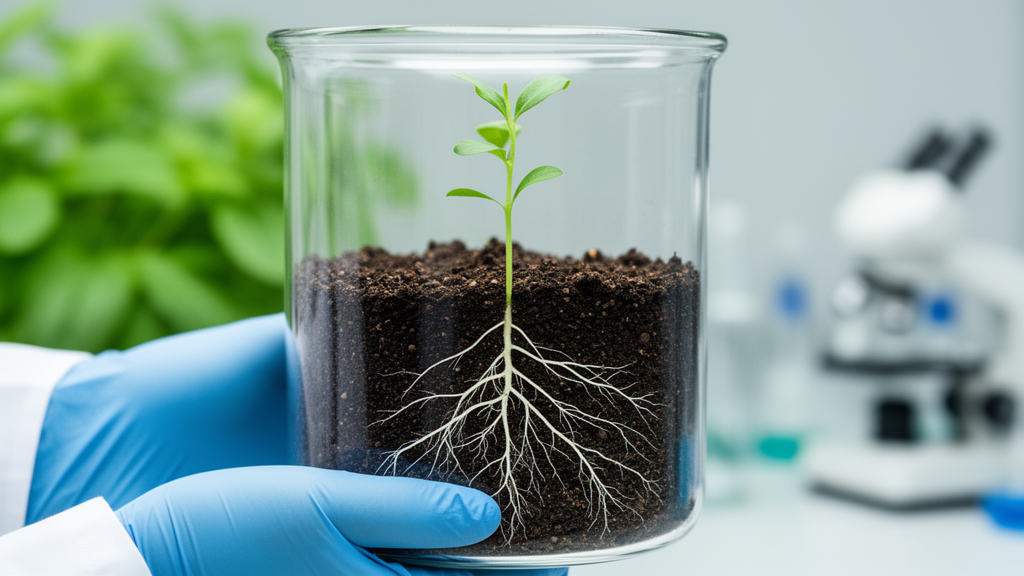
Plants are usually assumed to draw all of their carbon from the atmosphere through photosynthesis, but a new open-access study in the journal Biogeochemistry reports that seedlings of two very different species can also take up carbon from the soil through their roots. The uptake is real and measurable, yet the researchers found it is strongly constrained under realistic soil conditions, recovering only small fractions of the tracer carbon they supplied.

The team, led by Franziska B. Bucka with colleagues including Lea Giese, Kristiina Karhu, Heljä-Sisko Helmisaari and Nele Meyer, ran two complementary 13C-tracer experiments. They used ribwort plantain (Plantago lanceolata), an herbaceous species, and Norway spruce (Picea abies), a conifer, to compare how a woody and a non-woody plant handle carbon arriving at the root surface.

In the first experiment, seedlings of both species grew for four weeks in nutrient solutions containing 13C-labelled glucose or the amino acid L-lysine. After four weeks, between 2.0 and 5.5 percent of the applied 13C was recovered in plant tissues, and the isotope signature of the plants shifted dramatically, from roughly −31 per mille to values as high as +78 per mille. Tracer recovery tended to be higher when lysine, rather than glucose, was the carbon substrate.

The second experiment moved closer to real soil conditions. Both species were grown for eight weeks in two contrasting soils that had been pre-incubated with 13C-labelled glucose. Here the picture changed sharply: at most 0.74 percent of the tracer was recovered in plant tissues. The authors say this still provides evidence for root-mediated incorporation of tracer-derived carbon from soil, but the recovery was markedly lower than in nutrient solution.

Species identity mattered in soil. Tracer recovery was higher in Picea abies than in Plantago lanceolata, and in the conifer most of the recovered tracer remained in the roots. Soil texture, by contrast, had no significant effect on recovery, although the data showed a tendency toward higher recovery in the sandy soil compared with the other soil tested.

The researchers emphasize that the pathway is quantitatively small. Even in the most favourable nutrient-solution setting, less than six percent of the labelled carbon ended up in plant tissue, and under soil conditions the figure fell below one percent. The magnitude of the effect therefore depends heavily on the growth medium, with dissolved organic substrates apparently far more available to roots in solution than in a structured soil matrix.

Why does a small flux matter? The authors argue that root-mediated carbon uptake should be considered when scientists interpret tracer budgets and carbon fluxes in planted soil systems. Experiments that label soil carbon and then measure where it goes could misattribute small amounts of tracer-derived carbon if root uptake is not accounted for, potentially skewing estimates of carbon stabilization or plant-derived inputs.

The study is being shared early as open-access, peer-reviewed accepted research with a permanent DOI; the version is subject to further edits before the final Version of Record. Its scope is also limited to two species grown under controlled conditions, so the findings describe the investigated woody and herbaceous species rather than a general rule for all plants.

Nonetheless, the work adds a concrete data point to a long-standing question in plant physiology and biogeochemistry: whether roots can act as more than water and nutrient organs. The answer from these tracer experiments is that they can, detectably, take up carbon from their surroundings — but under soil conditions that contribution remains a minor, tightly constrained term in the plant carbon budget.

Subject of Research: Root-mediated uptake of carbon from soil by herbaceous and woody plant seedlings, measured with 13C tracers

Article Title: Root-mediated carbon uptake: a limited but detectable pathway in plant–soil systems

Article References: Bucka, F. B., Giese, L., Karhu, K., Helmisaari, H.-S., & Meyer, N. (2026). Root-mediated carbon uptake: a limited but detectable pathway in plant–soil systems. Biogeochemistry. https://doi.org/10.1007/s10533-026-01383-3

Image Credits: AI Generated

DOI: 10.1007/s10533-026-01383-3

Keywords: root-mediated carbon uptake, 13C tracer, Plantago lanceolata, Picea abies, soil carbon, biogeochemistry, glucose, L-lysine, soil texture, nutrient solution, carbon cycling, plant physiology

Cite Scienmag News

Bethany Barker. (October 29, 2026). Plants Can Pull Carbon From Soil Through Their Roots, Tracer Study Shows. Scienmag. https://scienmag.com/plants-can-pull-carbon-from-soil-through-their-roots-tracer-study-shows/

Bethany Barker. "Plants Can Pull Carbon From Soil Through Their Roots, Tracer Study Shows." Scienmag, 29 October 2026, https://scienmag.com/plants-can-pull-carbon-from-soil-through-their-roots-tracer-study-shows/. Accessed 29 October 2026.

Bethany Barker. "Plants Can Pull Carbon From Soil Through Their Roots, Tracer Study Shows." Scienmag. October 29, 2026. https://scienmag.com/plants-can-pull-carbon-from-soil-through-their-roots-tracer-study-shows/


Tags: 13C tracer13C tracer experiments in plant rootsbiogeochemistrybiogeochemistry of plant-soil carbon exchangecarbon cyclingcarbon flow in herbaceous and coniferous plantsexperimental methods in soil carbon researchglucoseimpact of amino acids on root carbon uptakeL-lysinenutrient solutionnutrient solutions with labeled carbon isotopesPicea abiesplant physiologyplant root interactions with soil microbesplant species differences in soil carbon uptakePlantago lanceolatarealistic soil conditions affecting carbon absorptionroot-based carbon absorption in seedlingsroot-mediated carbon uptakesoil carbonsoil carbon uptake by plantssoil texturesoil-to-plant carbon transfer
Share26Tweet16
Previous Post

Macrophages Talk to Tumor Cells Through SPP1-CD44 to Foster Chemotherapy Tolerance in Nasopharyngeal Carcinoma

Next Post

Oral health problems common during active cancer treatment, survey finds

Related Posts

Research report: Temperature field and system efficiency of a ground source heat pump heated tunnel drainage ditch
Earth Science

Research report: Temperature field and system efficiency of a ground source heat pump heated tunnel drainage ditch

October 29, 2026
Deep Drill Planned Beneath Sea of Galilee to Unlock 4.5 Million Years of Levant Climate and Quake History
Earth Science

Deep Drill Planned Beneath Sea of Galilee to Unlock 4.5 Million Years of Levant Climate and Quake History

October 29, 2026
Aliquat 336 Catalyst Streamlines Regioselective Synthesis of Trifluoromethylpyrazoles
Chemistry

Aliquat 336 Catalyst Streamlines Regioselective Synthesis of Trifluoromethylpyrazoles

October 29, 2026
Antifouling Hydrogel Biosensor Tracks Umami Signals in Fish During Storage
Chemistry

Antifouling Hydrogel Biosensor Tracks Umami Signals in Fish During Storage

October 29, 2026
Hidden Fractured-Rock Aquifers Could Ease Pakistan’s Water Crisis
Earth Science

Hidden Fractured-Rock Aquifers Could Ease Pakistan’s Water Crisis

October 29, 2026
Research report: Preparation, physicochemical characterization, and ammonia-responsive behavior of poly(lactic acid) / polypyrrole / oxidized multi-walled carbon nanotube composite films with synergistically enhanced electrical conductivity
Chemistry

Research report: Preparation, physicochemical characterization, and ammonia-responsive behavior of poly(lactic acid) / polypyrrole / oxidized multi-walled carbon nanotube composite films with synergistically enhanced electrical conductivity

October 29, 2026
Next Post
Oral health problems common during active cancer treatment, survey finds

Oral health problems common during active cancer treatment, survey finds

  • Mothers who receive childcare support from maternal grandparents show more optimized

    Mothers who receive childcare support from maternal grandparents show more parental warmth, finds NTU Singapore study

    27656 shares
    Share 11059 Tweet 6912
  • University of Seville Breaks 120-Year-Old Mystery, Revises a Key Einstein Concept

    1061 shares
    Share 424 Tweet 265
  • Bee body mass, pathogens and local climate influence heat tolerance

    682 shares
    Share 273 Tweet 171
  • Researchers record first-ever images and data of a shark experiencing a boat strike

    546 shares
    Share 218 Tweet 137
  • Groundbreaking Clinical Trial Reveals Lubiprostone Enhances Kidney Function

    531 shares
    Share 212 Tweet 133
Science

Embark on a thrilling journey of discovery with Scienmag.com—your ultimate source for cutting-edge breakthroughs. Immerse yourself in a world where curiosity knows no limits and tomorrow’s possibilities become today’s reality!

RECENT NEWS

  • VrMYB80 Shapes Pollen Development in Mungbean by Activating VrLBD27 and VrWBC27
  • Aging Rewrites the Immune Landscape of the Cochlear Spiral Ganglion in Mice
  • Research report: Temperature field and system efficiency of a ground source heat pump heated tunnel drainage ditch
  • Preoperative Anxiety Raises Propofol Needs but Not Ciprofol Doses in Pregnancy Termination Anesthesia

Categories

  • Agriculture
  • Anthropology
  • Archaeology
  • Athmospheric
  • Biology
  • Biotechnology
  • Blog
  • Bussines
  • Cancer
  • Chemistry
  • Climate
  • Earth Science
  • Editorial Policy
  • Marine
  • Mathematics
  • Medicine
  • Pediatry
  • Policy
  • Psychology & Psychiatry
  • Science Education
  • Science News
  • Social Science
  • Space
  • Technology and Engineering

Subscribe to Blog via Email

Enter your email address to subscribe to this blog and receive notifications of new posts by email.

Join 5,150 other subscribers

© 2025 Scienmag - Science Magazine

Welcome Back!

Login to your account below

Forgotten Password?

Retrieve your password

Please enter your username or email address to reset your password.

Log In
No Result
View All Result
  • HOME
  • SCIENCE NEWS
  • CONTACT US

© 2025 Scienmag - Science Magazine

Discover more from Science

Subscribe now to keep reading and get access to the full archive.

Continue reading