Saturday, October 31, 2026
Science
No Result
View All Result
  • Login
  • HOME
  • SCIENCE NEWS
  • CONTACT US
  • HOME
  • SCIENCE NEWS
  • CONTACT US
No Result
View All Result
Scienmag
No Result
View All Result
Home Science News Chemistry

Silicon Anode Drives Calendar Aging in Lithium-Ion Cells, Study Finds

October 29, 2026
in Chemistry
Beatrice Stafford
By Beatrice Stafford Scienmag Editorial Profile - Chronobiology
Reading Time: 3 mins read
0
Silicon Anode Drives Calendar Aging in Lithium-Ion Cells, Study Finds

Silicon Anode Drives Calendar Aging in Lithium-Ion Cells, Study Finds

65
SHARES
587
VIEWS
Share on FacebookShare on Twitter
ADVERTISEMENT

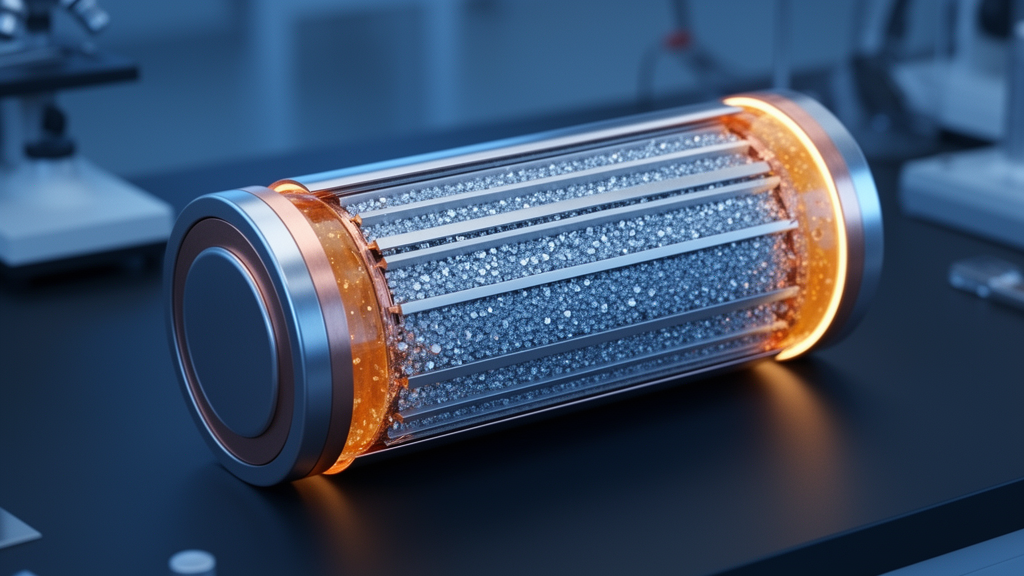
Lithium-ion batteries containing silicon anodes lose capacity even when they simply sit on the shelf, and a new study pinpoints where that degradation comes from. Researchers at Argonne National Laboratory, the University of Wisconsin-Madison, the National Laboratory of the Rockies and the University of Chicago Pritzker School of Molecular Engineering stored three-electrode cells built with lithium nickel manganese cobalt oxide (NMC811) cathodes and milled silicon anodes for 11 months, tracking how each electrode changed during open-circuit storage. Their conclusion: calendar aging in these cells is driven mainly by interfacial reactions and the resulting loss of cyclable lithium, not by extensive loss of active electrode material.

Calendar aging matters because parasitic reactions continue inside a battery even when no current flows. These side reactions consume cyclable lithium and alter electrode behavior, gradually eroding the energy a cell can deliver. To separate the contributions of the two electrodes, the team used capacity measurements, voltage-relaxation analysis, impedance evaluation and post-test characterization, monitoring the individual electrodes throughout the storage period.

The silicon anode emerged as the dominant player. It governed the full cell’s voltage relaxation and its discharge impedance throughout aging. As parasitic reactions consumed lithium inventory, the operating windows of both electrodes shifted continuously, forcing the NMC811 cathode into increasingly higher states of delithiation. In other words, the cathode had to work harder to compensate for lithium lost at the silicon interface.

Voltage-relaxation analysis proved to be the study’s key diagnostic tool. When a cell is allowed to rest after cycling or storage, its voltage does not settle instantly; it drifts as the electrodes re-equilibrate internally. The analysis revealed two kinetically distinct equilibration processes in these cells. The longer-timescale process evolved systematically within each month-long storage interval and partially reset after the cells underwent reference performance test (RPT) cycling, indicating a strong dependence on the electrochemical history of the silicon electrode.

Post-test characterization added a crucial nuance. The damage from storage, the results suggest, accumulates at interfaces rather than through bulk degradation of the electrode materials themselves.

The harvested NMC811 and Si electrodes showed only minor capacity loss, but the increase in anode impedance pointed to evolution of the SEI and the silicon interfacial environment.

The study also highlights the value of voltage-relaxation analysis as a non-destructive diagnostic. The authors note that the approach can distinguish the two equilibration processes and follow how the slower one changes with storage time and cycling history.

The work, published as an original research article in Frontiers in Batteries and Electrochemistry, was led by Hrishikesh Tupkar with correspondence from Daniel P. Abraham, and included contributions from Pavan Badami, Ankit Verma, Avi Gargye, Marco-Tulio Fonseca Rodrigues, Andrew Colclasure, Matthew Gebbie and Ilya Shkrob. For designers of silicon-containing lithium-ion cells, the message is that the silent chemistry occurring during storage, concentrated at the silicon interface and expressed as lithium inventory loss, is what ultimately limits how well these batteries hold their capacity over time.

Subject of Research: Calendar aging mechanisms in three-electrode lithium-ion cells with NMC811 cathodes and silicon anodes

Article Title: Mechanisms governing calendar aging in three-electrode lithium-ion cells with layered oxide cathode and milled silicon anode

Article References: Tupkar, H., Badami, P., Verma, A., Gargye, A., Rodrigues, M.-T. F., Colclasure, A., Gebbie, M. A., Shkrob, I., & Abraham, D. P. (2026). Mechanisms governing calendar aging in three-electrode lithium-ion cells with layered oxide cathode and milled silicon anode. Frontiers in Batteries and Electrochemistry, 5, Article 1995764. https://doi.org/10.3389/fbael.2026.1995764

Image Credits: AI Generated

DOI: 10.3389/fbael.2026.1995764

Keywords: calendar aging, lithium-ion batteries, silicon anode, NMC811 cathode, loss of lithium inventory, SEI, voltage relaxation, impedance, three-electrode cells, battery degradation, Mechanisms, governing

Cite Scienmag News

Beatrice Stafford. (October 29, 2026). Silicon Anode Drives Calendar Aging in Lithium-Ion Cells, Study Finds. Scienmag. https://scienmag.com/silicon-anode-drives-calendar-aging-in-lithium-ion-cells-study-finds/

Beatrice Stafford. "Silicon Anode Drives Calendar Aging in Lithium-Ion Cells, Study Finds." Scienmag, 29 October 2026, https://scienmag.com/silicon-anode-drives-calendar-aging-in-lithium-ion-cells-study-finds/. Accessed 31 October 2026.

Beatrice Stafford. "Silicon Anode Drives Calendar Aging in Lithium-Ion Cells, Study Finds." Scienmag. October 29, 2026. https://scienmag.com/silicon-anode-drives-calendar-aging-in-lithium-ion-cells-study-finds/

Tags: battery degradationcalendar agingcalendar aging in lithium-ion cellscapacity fading mechanisms in lithium-ion batterieselectrode behavior during calendar agingGoverningimpact of silicon anodes on battery lifespanimpedanceimpedance analysis of aged batteriesinterfacial reactions in lithium-ion batterieslithium inventory loss in batterieslithium nickel manganese cobalt oxide cathodeslithium-ion batteriesloss of lithium inventorymechanismsNMC811 cathodeopen-circuit storage effects on battery capacityparasitic side reactions in lithium-ion cellspost-test characterization of battery electrodesSEIsilicon anodeSilicon anode battery degradationthree-electrode cellsvoltage relaxation
Share26Tweet16
Previous Post

Smoking Patterns in the Six Years Before Diagnosis Predict Vascular Disease Risk

Next Post

Research report: Fatty acid metabolism in glioma: a review of novel targets and therapeutic strategies

Related Posts

Computational screen flags five natural compounds that bind a tuberculosis virulence enzyme
Chemistry

Computational screen flags five natural compounds that bind a tuberculosis virulence enzyme

October 30, 2026
Gut bacterium Blautia sp. MRG-PMF1 cleaves bulkier isoflavone ether bonds
Chemistry

Gut bacterium Blautia sp. MRG-PMF1 cleaves bulkier isoflavone ether bonds

October 30, 2026
Fluorine–silicon acrylate sizing agent boosts specialty paper strength and water resistance
Chemistry

Fluorine–silicon acrylate sizing agent boosts specialty paper strength and water resistance

October 30, 2026
Filamentous fungi reshape kombu chemistry and aroma in solid-state fermentation study
Chemistry

Filamentous fungi reshape kombu chemistry and aroma in solid-state fermentation study

October 30, 2026
Microbes That Mine: Bacteria Take On Metal Recovery and Surface Engineering
Chemistry

Microbes That Mine: Bacteria Take On Metal Recovery and Surface Engineering

October 30, 2026
Two-dimensional ferroelectric TlGaS2 shows dual polarization behavior
Chemistry

Two-dimensional ferroelectric TlGaS2 shows dual polarization behavior

October 30, 2026
Next Post
Research report: Fatty acid metabolism in glioma: a review of novel targets and therapeutic strategies

Research report: Fatty acid metabolism in glioma: a review of novel targets and therapeutic strategies

  • Mothers who receive childcare support from maternal grandparents show more optimized

    Mothers who receive childcare support from maternal grandparents show more parental warmth, finds NTU Singapore study

    27656 shares
    Share 11059 Tweet 6912
  • University of Seville Breaks 120-Year-Old Mystery, Revises a Key Einstein Concept

    1061 shares
    Share 424 Tweet 265
  • Bee body mass, pathogens and local climate influence heat tolerance

    682 shares
    Share 273 Tweet 171
  • Researchers record first-ever images and data of a shark experiencing a boat strike

    546 shares
    Share 218 Tweet 137
  • Groundbreaking Clinical Trial Reveals Lubiprostone Enhances Kidney Function

    531 shares
    Share 212 Tweet 133
Science

Embark on a thrilling journey of discovery with Scienmag.com—your ultimate source for cutting-edge breakthroughs. Immerse yourself in a world where curiosity knows no limits and tomorrow’s possibilities become today’s reality!

RECENT NEWS

  • Trademarks Meet Patents in New Method to Spot Technology Opportunities
  • Reddit self-declarations offer auditable labels for demographic inference
  • Scots pine needles map trace element pollution in Polish industrial town
  • Dual-blockchain scheme secures vehicle handovers without pre-shared keys

Categories

  • Agriculture
  • Anthropology
  • Archaeology
  • Athmospheric
  • Biology
  • Biotechnology
  • Blog
  • Bussines
  • Cancer
  • Chemistry
  • Climate
  • Earth Science
  • Editorial Policy
  • Marine
  • Mathematics
  • Medicine
  • Pediatry
  • Policy
  • Psychology & Psychiatry
  • Science Education
  • Science News
  • Social Science
  • Space
  • Technology and Engineering

Subscribe to Blog via Email

Enter your email address to subscribe to this blog and receive notifications of new posts by email.

Join 5,150 other subscribers

© 2025 Scienmag - Science Magazine

Welcome Back!

Login to your account below

Forgotten Password?

Retrieve your password

Please enter your username or email address to reset your password.

Log In
No Result
View All Result
  • HOME
  • SCIENCE NEWS
  • CONTACT US

© 2025 Scienmag - Science Magazine

Discover more from Science

Subscribe now to keep reading and get access to the full archive.

Continue reading