Friday, October 30, 2026
Science
No Result
View All Result
  • Login
  • HOME
  • SCIENCE NEWS
  • CONTACT US
  • HOME
  • SCIENCE NEWS
  • CONTACT US
No Result
View All Result
Scienmag
No Result
View All Result
Home Science News Biology

Four Simulation Tools Put Astrocyte Calcium Signaling to the Test

October 28, 2026
in Biology
Cassandra Pierce
By Cassandra Pierce Scienmag Editorial Profile - Systems Neuroscience
Reading Time: 2 mins read
0
Four Simulation Tools Put Astrocyte Calcium Signaling to the Test

Four Simulation Tools Put Astrocyte Calcium Signaling to the Test

65
SHARES
587
VIEWS
Share on FacebookShare on Twitter
ADVERTISEMENT

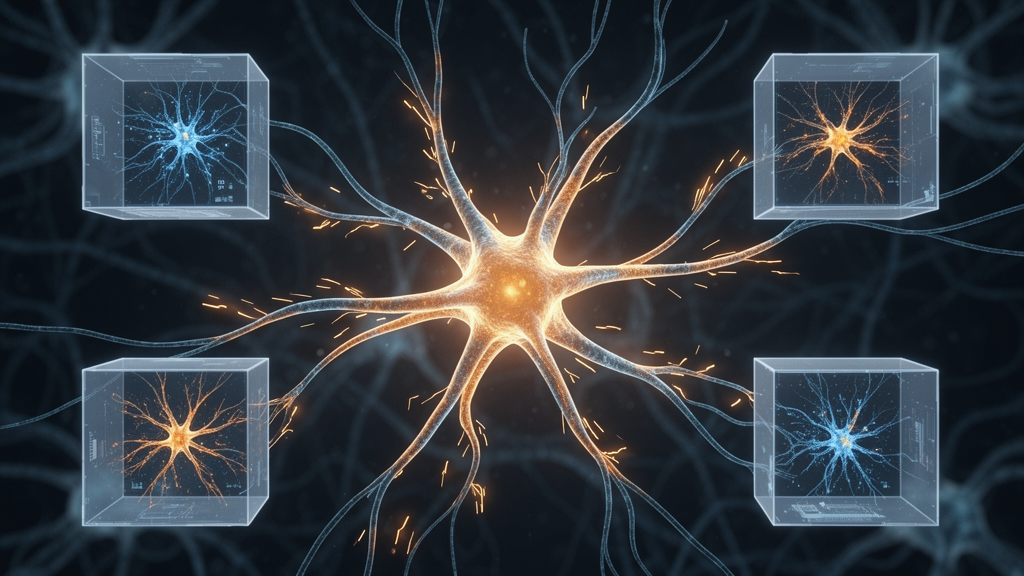
A new study in PLOS Computational Biology systematically compares four open-access simulation platforms—MCell, STEPS, NeuroRD, and NEURON—originally built for modeling neurons, to see how well they handle reaction–diffusion processes in glial cell geometries.

Researchers led by Laura Keto and Tiina Manninen implemented equivalent calcium diffusion and calcium–calmodulin reaction–diffusion models across a range of spatial domains in each tool. The test cases spanned simple shapes such as cylinders and rectangular cuboids, as well as biologically realistic astroglial morphologies reconstructed from electron microscopy data, including mouse Bergmann glia and cortical astrocytes from both mouse and human tissue. Matching kinetic parameters and diffusion constants were used across all platforms so that differences in output could be attributed to the tools and the geometries rather than to inconsistent model setups.

The central result is reassuring for the field: all four simulators produced overall consistent results for the systems examined, indicating that each can reliably capture diffusion and reaction–diffusion dynamics in both simplified and complex geometries. This means modelers can, in principle, trust the core physics as implemented in any of these environments when studying intracellular signaling.

But the study also delivered a striking biological insight. The structural heterogeneity of branchlets from human astrocytes and mouse Bergmann glia gave rise to distinct calcium signaling patterns, demonstrating that fine-scale morphology critically shapes astroglial dynamics. In other words, the detailed branching architecture of these cells is not just decorative—it actively determines how calcium signals propagate, so simulation frameworks must capture it accurately.

Beyond the biology, the comparison revealed notable differences among the tools in geometry representation, implementation strategies, computational cost, and usability. By highlighting the trade-offs between geometric fidelity, flexibility, and computational expense, the authors offer practical guidance for researchers choosing a platform for modeling intracellular biochemical processes.

Subject of Research: Comparing simulation platforms for modeling calcium reaction–diffusion dynamics in astroglial cell geometries

Article Title: Modeling reaction–diffusion processes in simplified to complex astroglial branchlet geometries using different simulation tools

Article References: Keto, L., Seppälä, S., Ndubuaku, D., Mäki, A., Mäki-Marttunen, T., Linne, M.-L., & Manninen, T. (2026). Modeling reaction–diffusion processes in simplified to complex astroglial branchlet geometries using different simulation tools. PLOS Computational Biology, 22(10), e1014878. https://doi.org/10.1371/journal.pcbi.1014878

Image Credits: AI Generated

DOI: 10.1371/journal.pcbi.1014878

Keywords: astrocytes, calcium signaling, reaction–diffusion, computational modeling, MCell, STEPS, NeuroRD, NEURON, Bergmann glia, electron microscopy, simulation tools, neuroscience

Cite Scienmag News

Cassandra Pierce. (October 28, 2026). Four Simulation Tools Put Astrocyte Calcium Signaling to the Test. Scienmag. https://scienmag.com/four-simulation-tools-put-astrocyte-calcium-signaling-to-the-test/

Cassandra Pierce. "Four Simulation Tools Put Astrocyte Calcium Signaling to the Test." Scienmag, 28 October 2026, https://scienmag.com/four-simulation-tools-put-astrocyte-calcium-signaling-to-the-test/. Accessed 30 October 2026.

Cassandra Pierce. "Four Simulation Tools Put Astrocyte Calcium Signaling to the Test." Scienmag. October 28, 2026. https://scienmag.com/four-simulation-tools-put-astrocyte-calcium-signaling-to-the-test/

Tags: astrocyte calcium signaling simulationastrocytesBergmann gliacalcium signalingcomputational modelingeffects of cellular geometry on calcium signaling dynamicselectron microscopyevaluating reaction–diffusion platforms for neuron and gliaMCellMCell STEPS NeuroRD NEURON comparisonmodeling calcium diffusion in astrocytesmodeling intracellular signaling pathways in astrocytesNEURONNeuroRDNeuroscienceopen-access computational biology tools for neurosciencereaction-diffusion modeling in glial cellsreaction–diffusionreconstructing astroglial morphologies from electron microscopysimulation of calcium-calmodulin reactions in gliasimulation toolsSTEPSvalidation of simulation tools
Share26Tweet16
Previous Post

Newly identified soluble SIRPα ligand SERPINA3 dampens inflammation and shields tumors

Next Post

MRI radiomics models show promise but limited stability in predicting breast cancer response to chemotherapy

Related Posts

Microbial Sources and Stress Shape the Hidden Endophytes of an Invasive Plant
Biology

Microbial Sources and Stress Shape the Hidden Endophytes of an Invasive Plant

October 30, 2026
Firebreaks Leave Lasting Scars in Grasslands While Wildfire Heals Fast
Biology

Firebreaks Leave Lasting Scars in Grasslands While Wildfire Heals Fast

October 30, 2026
Hidden Peptides in Non-Coding RNAs Reshape Cardiovascular Biology
Biology

Hidden Peptides in Non-Coding RNAs Reshape Cardiovascular Biology

October 30, 2026
Phage K Holin’s C-Terminal Region Shapes Antibacterial Activity, Study Finds
Biotechnology

Phage K Holin’s C-Terminal Region Shapes Antibacterial Activity, Study Finds

October 30, 2026
Computational screen flags five natural compounds that bind a tuberculosis virulence enzyme
Chemistry

Computational screen flags five natural compounds that bind a tuberculosis virulence enzyme

October 30, 2026
Antifungal liver injury study pinpoints KDR as shared hepatotoxicity target
Biology

Antifungal liver injury study pinpoints KDR as shared hepatotoxicity target

October 30, 2026
Next Post
MRI radiomics models show promise but limited stability in predicting breast cancer response to chemotherapy

MRI radiomics models show promise but limited stability in predicting breast cancer response to chemotherapy

  • Mothers who receive childcare support from maternal grandparents show more optimized

    Mothers who receive childcare support from maternal grandparents show more parental warmth, finds NTU Singapore study

    27656 shares
    Share 11059 Tweet 6912
  • University of Seville Breaks 120-Year-Old Mystery, Revises a Key Einstein Concept

    1061 shares
    Share 424 Tweet 265
  • Bee body mass, pathogens and local climate influence heat tolerance

    682 shares
    Share 273 Tweet 171
  • Researchers record first-ever images and data of a shark experiencing a boat strike

    546 shares
    Share 218 Tweet 137
  • Groundbreaking Clinical Trial Reveals Lubiprostone Enhances Kidney Function

    531 shares
    Share 212 Tweet 133
Science

Embark on a thrilling journey of discovery with Scienmag.com—your ultimate source for cutting-edge breakthroughs. Immerse yourself in a world where curiosity knows no limits and tomorrow’s possibilities become today’s reality!

RECENT NEWS

  • Microbial Sources and Stress Shape the Hidden Endophytes of an Invasive Plant
  • Firebreaks Leave Lasting Scars in Grasslands While Wildfire Heals Fast
  • Regularisation and voluntary return reproduce precarity for irregularised migrants in Spain and the UK
  • ZNF207 shields glutamine transporter ASCT2 from degradation to fuel liver cancer growth

Categories

  • Agriculture
  • Anthropology
  • Archaeology
  • Athmospheric
  • Biology
  • Biotechnology
  • Blog
  • Bussines
  • Cancer
  • Chemistry
  • Climate
  • Earth Science
  • Editorial Policy
  • Marine
  • Mathematics
  • Medicine
  • Pediatry
  • Policy
  • Psychology & Psychiatry
  • Science Education
  • Science News
  • Social Science
  • Space
  • Technology and Engineering

Subscribe to Blog via Email

Enter your email address to subscribe to this blog and receive notifications of new posts by email.

Join 5,151 other subscribers

© 2025 Scienmag - Science Magazine

Welcome Back!

Login to your account below

Forgotten Password?

Retrieve your password

Please enter your username or email address to reset your password.

Log In
No Result
View All Result
  • HOME
  • SCIENCE NEWS
  • CONTACT US

© 2025 Scienmag - Science Magazine

Discover more from Science

Subscribe now to keep reading and get access to the full archive.

Continue reading