

Wednesday, November 4, 2026
Science
No Result
View All Result
  • Login
  • HOME
  • SCIENCE NEWS
  • CONTACT US
  • HOME
  • SCIENCE NEWS
  • CONTACT US
No Result
View All Result
Scienmag
No Result
View All Result
Home Science News Technology and Engineering

Corn Cob Ash and Ferric Chloride Stabilize Expansive Soil, RSM Study Finds

October 28, 2026
in Technology and Engineering
Denise Maddox
By Denise Maddox Scienmag Editorial Profile - Mechanical Engineering
Reading Time: 2 mins read
0
Corn Cob Ash and Ferric Chloride Stabilize Expansive Soil, RSM Study Finds

Corn Cob Ash and Ferric Chloride Stabilize Expansive Soil, RSM Study Finds

65
SHARES
587
VIEWS
Share on FacebookShare on Twitter
ADVERTISEMENT

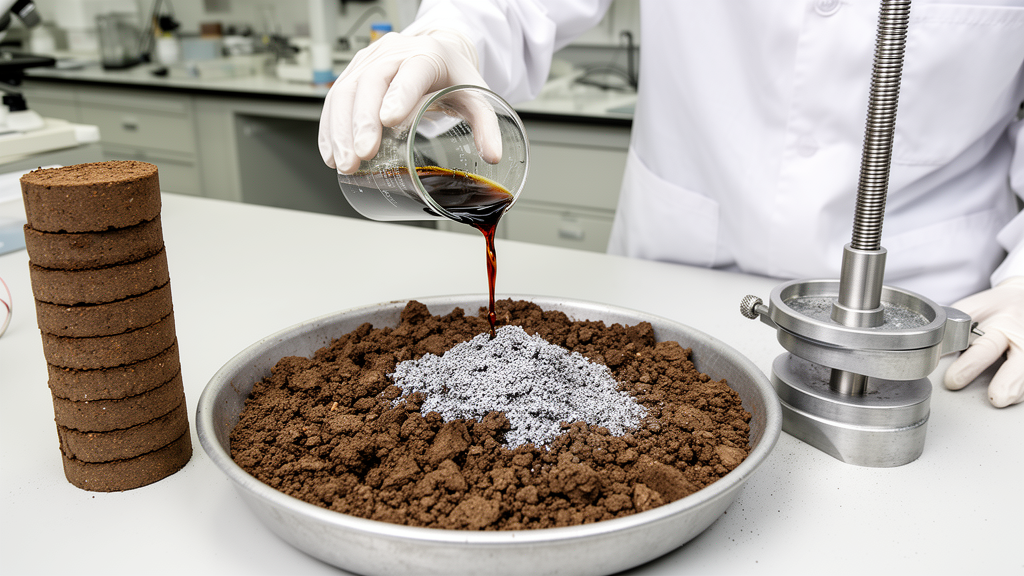
Expansive soils, which swell and shrink markedly with moisture changes, pose a persistent threat to pavements, foundations and other civil infrastructure. A new peer-reviewed study, published open access in Discover Applied Sciences on 28 October 2026, reports that combining Corn Cob Ash (CCA), a waste agricultural product, with the chemical additive ferric chloride (FeCl3) can substantially improve the engineering behaviour of these difficult geomaterials.

The research team, led by Thaneti Lilly Rani and Chappidi Hanumantha Rao with Anuja Charpe and N. Venkata Sairam Kumar, adopted a historical data design within the Response Surface Methodology (RSM) framework. The experimental matrix consisted of 36 predefined mixtures in which CCA content ranged from 0 to 15 percent, FeCl3 dosage from 0 to 2 percent, and soaking duration was set at 0, 7 or 28 days.

Four responses were used to evaluate the stabilized soil: the Plasticity Index (PI), the Free Swell Index (FSI), the Maximum Dry Density (MDD) and the California Bearing Ratio (CBR). According to the abstract, PI and FSI were significantly reduced, while MDD and CBR improved significantly, as the content of the stabilizers and the length of the soaking duration increased.

The optimum stabilization condition identified by the models was approximately 13.14 percent CCA, 1.43 percent FeCl3 and 22.82 days of soaking. This combination yielded a Plasticity Index of 15.57 percent, a Free Swell Index of 51.81 percent, a Maximum Dry Density of 1.71 g/cm3 and a California Bearing Ratio of 6.93 percent, with a desirability value of 0.958.

The predictive quality of the developed quadratic models was reported as very good, with R2 values greater than 0.95. The models were validated against three independent experimental mixtures, and the agreement between predicted and experimental responses was described as good, with prediction errors of less than 5 percent, which the authors say indicates the reliability and predictive capability of the models.

Beyond the laboratory results, the study frames the approach as a sustainability measure. Using agricultural waste derived CCA alongside FeCl3 is described as an effective method of stabilization for expansive soils, one that can be sustainable in terms of utilizing agricultural wastes and reducing the use of conventional stabilizing materials.

Readers should note that the article is being shared early to provide faster access to peer-reviewed, accepted research; it is citable and carries a permanent DOI, but this version is subject to further edits and will be replaced by the final Version of Record. The reported findings come from laboratory testing of a single soil treated with specified dosages, and the abstract does not report field trials or long-term performance data.

Subject of Research: Stabilization of expansive soil using Corn Cob Ash and ferric chloride optimized with Response Surface Methodology

Article Title: Sustainable stabilization of expansive soil using Corn Cob Ash and Ferric chloride through experimental investigation and RSM optimization

Article References: Rani, T. L., Rao, C. H., Charpe, A., & Kumar, N. V. S. (2026). Sustainable stabilization of expansive soil using Corn Cob Ash and Ferric chloride through experimental investigation and RSM optimization. Discover Applied Sciences. https://doi.org/10.1007/s42452-026-09728-1

Image Credits: AI Generated

DOI: 10.1007/s42452-026-09728-1

Keywords: expansive soil, soil stabilization, Corn Cob Ash, ferric chloride, Response Surface Methodology, California Bearing Ratio, Plasticity Index, Free Swell Index, Maximum Dry Density, agricultural waste, geotechnical engineering, Sustainable

Cite Scienmag News

Denise Maddox. (October 28, 2026). Corn Cob Ash and Ferric Chloride Stabilize Expansive Soil, RSM Study Finds. Scienmag. https://scienmag.com/corn-cob-ash-and-ferric-chloride-stabilize-expansive-soil-rsm-study-finds/

Denise Maddox. "Corn Cob Ash and Ferric Chloride Stabilize Expansive Soil, RSM Study Finds." Scienmag, 28 October 2026, https://scienmag.com/corn-cob-ash-and-ferric-chloride-stabilize-expansive-soil-rsm-study-finds/. Accessed 4 November 2026.

Denise Maddox. "Corn Cob Ash and Ferric Chloride Stabilize Expansive Soil, RSM Study Finds." Scienmag. October 28, 2026. https://scienmag.com/corn-cob-ash-and-ferric-chloride-stabilize-expansive-soil-rsm-study-finds/

Tags: agricultural wasteCalifornia Bearing RatioCorn Cob AshCorn Cob Ash as agricultural wasteexpansive soilExpansive soil stabilizationexperimental design for soil treatmentferric chlorideferric chloride chemical additiveFree Swell Indexgeotechnical engineeringinfrastructure stability with waste materialsMaximum Dry DensityPlasticity Indexresponse surface methodologyResponse Surface Methodology in geotechnical researchsoil compressibility improvementsoil engineering properties evaluationsoil plasticity reduction techniquessoil stabilizationsoil strength enhancementsoil swell-shrink behavior mitigationsustainablesustainable soil stabilization methods
Share26Tweet16
Previous Post

Eight-week emotion regulation program shows early feasibility for autistic adults

Next Post

Instagram posts and comments reveal a gap in HPV vaccine messaging in Türkiye

Related Posts

AI Spots Rice Disease and Lodging Before Eyes Can
Agriculture

AI Spots Rice Disease and Lodging Before Eyes Can

November 4, 2026
Nanoparticles Made From Korean Citrus Peel Kill HeLa Cancer Cells in Lab Tests
Technology and Engineering

Nanoparticles Made From Korean Citrus Peel Kill HeLa Cancer Cells in Lab Tests

November 4, 2026
Brazilian Automotive Experts Map Which Industry 4.0 Technologies Could Rebuild Post-COVID Supply Chains
Technology and Engineering

Brazilian Automotive Experts Map Which Industry 4.0 Technologies Could Rebuild Post-COVID Supply Chains

November 4, 2026
Partial updates bring faster 3D Gaussian Splatting scene changes
Technology and Engineering

Partial updates bring faster 3D Gaussian Splatting scene changes

November 4, 2026
Antihistamine-inspired lipid nanoparticles ferry mRNA and gene-editing tools into the brain
Technology and Engineering

Antihistamine-inspired lipid nanoparticles ferry mRNA and gene-editing tools into the brain

November 3, 2026
Narrowing insulation gaps in dry-type transformers raises simulated dielectric loss by 52.5%
Technology and Engineering

Narrowing insulation gaps in dry-type transformers raises simulated dielectric loss by 52.5%

November 3, 2026
Next Post
Instagram posts and comments reveal a gap in HPV vaccine messaging in Türkiye

Instagram posts and comments reveal a gap in HPV vaccine messaging in Türkiye

  • Mothers who receive childcare support from maternal grandparents show more optimized

    Mothers who receive childcare support from maternal grandparents show more parental warmth, finds NTU Singapore study

    27656 shares
    Share 11059 Tweet 6912
  • University of Seville Breaks 120-Year-Old Mystery, Revises a Key Einstein Concept

    1061 shares
    Share 424 Tweet 265
  • Bee body mass, pathogens and local climate influence heat tolerance

    682 shares
    Share 273 Tweet 171
  • Researchers record first-ever images and data of a shark experiencing a boat strike

    546 shares
    Share 218 Tweet 137
  • Groundbreaking Clinical Trial Reveals Lubiprostone Enhances Kidney Function

    531 shares
    Share 212 Tweet 133
Science

Embark on a thrilling journey of discovery with Scienmag.com—your ultimate source for cutting-edge breakthroughs. Immerse yourself in a world where curiosity knows no limits and tomorrow’s possibilities become today’s reality!

RECENT NEWS

  • Cattle linked to forced labor slip through Brazil beef supply chains via ranch-to-ranch rerouting
  • AI Spots Rice Disease and Lodging Before Eyes Can
  • Constellations of Hope: 90 authors document learning transformation in 25 countries
  • Nanoparticles Made From Korean Citrus Peel Kill HeLa Cancer Cells in Lab Tests

Categories

  • Agriculture
  • Anthropology
  • Archaeology
  • Athmospheric
  • Biology
  • Biotechnology
  • Blog
  • Bussines
  • Cancer
  • Chemistry
  • Climate
  • Earth Science
  • Editorial Policy
  • Marine
  • Mathematics
  • Medicine
  • Pediatry
  • Policy
  • Psychology & Psychiatry
  • Science Education
  • Science News
  • Social Science
  • Space
  • Technology and Engineering

Subscribe to Blog via Email

Enter your email address to subscribe to this blog and receive notifications of new posts by email.

Join 5,150 other subscribers

© 2025 Scienmag - Science Magazine

Welcome Back!

Login to your account below

Forgotten Password?

Retrieve your password

Please enter your username or email address to reset your password.

Log In
No Result
View All Result
  • HOME
  • SCIENCE NEWS
  • CONTACT US

© 2025 Scienmag - Science Magazine

Discover more from Science

Subscribe now to keep reading and get access to the full archive.

Continue reading

