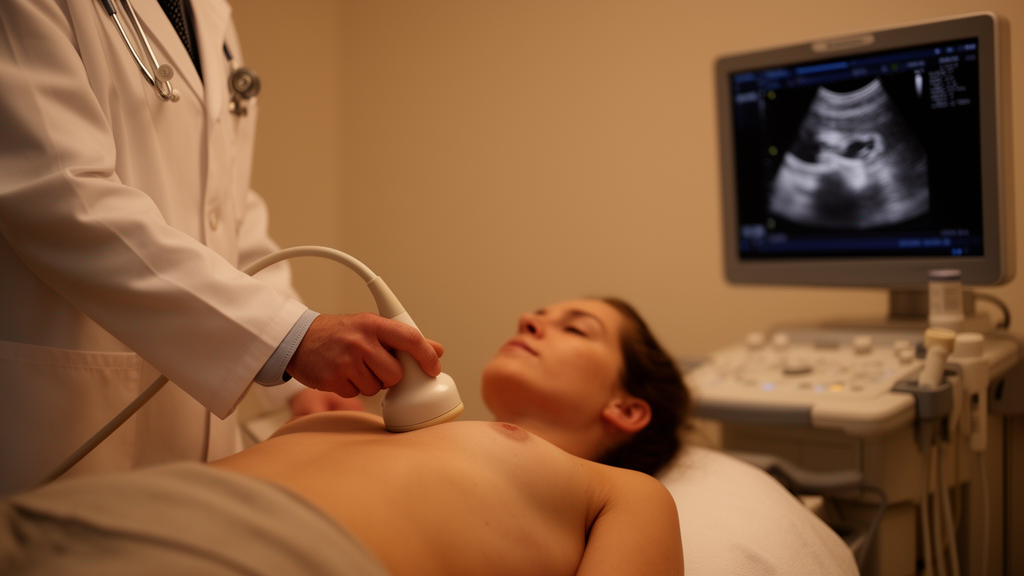
Echocardiography sits at the centre of almost every suspected case of pulmonary hypertension, yet the way its many measurements are interpreted has long been left to individual judgement. A new narrative review published in Echo Research & Practice argues that the problem in routine laboratories is not a shortage of useful parameters but the sheer difficulty of integrating them, and it proposes a hierarchical, decision-oriented framework that organises echocardiographic findings according to the clinical question being asked. The review, led by Aditya Shrivastav with colleagues including Ranjana Lanjewar, was published on 28 September 2026 as an open-access article in volume 13 of the journal.
Pulmonary hypertension is a progressive haemodynamic disorder associated with substantial morbidity and mortality, and delayed recognition remains a persistent clinical challenge. Many patients first present with non-specific symptoms such as unexplained dyspnoea or exercise intolerance, which makes early identification difficult and typically requires combining clinical assessment with multimodality investigations. Echocardiography is frequently requested as the first-line imaging investigation when the disease is suspected or when unexplained right-heart abnormalities surface during routine cardiovascular assessment. Crucially, however, the review stresses that echocardiography cannot establish the diagnosis on its own: current American and European guidelines insist that echocardiographic findings be interpreted alongside clinical history, physical examination, laboratory investigations, cross-sectional imaging where appropriate, and confirmation by right heart catheterisation when indicated.
The core interpretive challenge, the authors argue, is that the growing number of available echocardiographic parameters has increased complexity rather than clarity. Doppler-derived tricuspid regurgitation velocity, right ventricular morphology and function, interventricular septal configuration, right atrial pressure surrogates and deformation imaging each provide valuable but incomplete information, and each is influenced by loading conditions, image quality and technical acquisition. Individual measurements should therefore never be read in isolation but integrated within the broader clinical context and the specific diagnostic question at hand. International guidance from the European Society of Cardiology and European Respiratory Society, the British Society of Echocardiography, the American Society of Echocardiography and the European Association of Cardiovascular Imaging already provides robust recommendations for probability-based assessment and standardised acquisition, and the review positions its framework as a complement to, not a replacement for, those algorithms.
At the foundation of any echocardiographic assessment lies the estimation of pulmonary artery pressure. Tricuspid regurgitation velocity remains the cornerstone of non-invasive pressure estimation: applying the modified Bernoulli equation yields an estimate of the right ventricular-to-right atrial pressure gradient, from which pulmonary artery systolic pressure can be estimated when right atrial pressure is also considered. Its strengths include wide availability, non-invasiveness and the ability to provide an initial estimate of disease probability in appropriately acquired studies. But accurate measurement depends on an adequate regurgitant jet, optimal Doppler alignment and careful signal acquisition. Failure to obtain a measurable jet does not exclude pulmonary hypertension, particularly in early disease or technically limited examinations, and even modest deviations from parallel alignment can underestimate peak velocity and lower the estimated pressure.
Physiology can confound the picture as much as technique. Elevated tricuspid regurgitation velocity may occur in high-output states such as anaemia or fever, or in patients with significant tricuspid regurgitation, without reflecting primary pulmonary vascular disease. Conversely, severe regurgitation or advanced right ventricular systolic dysfunction may underestimate pulmonary artery pressure, because rapid pressure equalisation limits peak jet velocity despite markedly elevated pulmonary vascular resistance. The review also revisits the long-recognised imperfect agreement between echocardiographic pressure estimates and invasive haemodynamics, tracing the issue back to the seminal work of Yock and Popp, who first showed that Doppler-derived estimates of right ventricular systolic pressure may differ substantially from simultaneously measured invasive values despite technically satisfactory examinations. Discrepancies arise from technical acquisition, estimation of right atrial pressure, temporal separation between examinations, changes in loading conditions and physiological variability rather than systematic failure of echocardiography itself. Importantly, the authors note, echocardiographic pressure estimates are surrogates that contribute to probability assessment, not direct measurements of pulmonary vascular resistance or mean pulmonary artery pressure.
Beyond pressures, the review devotes detailed attention to the right ventricle, whose complex geometry, marked load dependence and heterogeneous adaptation to pressure overload make it one of the most difficult chambers to assess. No single parameter adequately characterises right ventricular performance. Chamber enlargement signals chronic pressure overload and adverse remodelling but remains influenced by imaging plane, foreshortening and observer variability, and early disease may be present despite normal dimensions. Tricuspid annular plane systolic excursion and tissue Doppler systolic velocity are simple and reproducible but sample motion at a single point of the annulus, offering only a partial view of global performance and being affected by loading conditions, regional dysfunction, pacing and significant regurgitation. Right ventricular fractional area change incorporates both longitudinal and radial contraction, with current American and British recommendations advising measurement from the right-ventricle-focused apical four-chamber view to improve cavity visualisation and reproducibility, though prominent trabeculations, poor apical visualisation and respiratory motion can still undermine reliability.
Speckle-tracking deformation imaging adds a further layer. Current evidence supports right ventricular free-wall longitudinal strain as the preferred deformation parameter, because septal strain is heavily influenced by left ventricular mechanics and ventricular interdependence, reducing the specificity of global strain for intrinsic right ventricular dysfunction. Free-wall strain evaluates deformation across the entire free wall and may detect subclinical impairment before overt deterioration in annular motion becomes evident. Yet strain imaging remains limited by vendor-specific software, frame-rate dependency, image quality and variability in endocardial tracking, and strain measurements remain load-dependent and should not be read as direct measures of myocardial contractility. The review’s message across all these domains is consistent: each parameter interrogates a distinct component of right ventricular adaptation, and clinically meaningful interpretation depends on integration rather than prioritisation of any single measurement.
The proposed framework itself is organised into four tiers. Tier one covers screening and probability assessment, aligning directly with guideline recommendations and relying on multiparametric integration of tricuspid regurgitation velocity, right ventricular size, right atrial dimensions, septal configuration and other supportive findings; its principal value in routine laboratories is communicating the overall level of suspicion rather than establishing a diagnosis. Tier two shifts to functional characterisation of right ventricular adaptation when probability is intermediate or high, integrating dimensions, excursion, tissue Doppler velocity, fractional area change and, where feasible, free-wall strain to describe structural remodelling rather than assign prognostic labels. Tier three addresses longitudinal assessment after diagnosis, where progressive right ventricular dilatation, deteriorating systolic performance, rising right atrial pressure surrogates and pericardial effusion reflect an evolving haemodynamic burden, and where consistent trends over serial examinations are frequently more informative than isolated values. Tier four integrates findings with the patient’s overall clinical context, distinguishing patterns suggestive of pre-capillary disease, such as disproportionate right ventricular remodelling with preserved left ventricular systolic function, from post-capillary patterns associated with left atrial enlargement, diastolic dysfunction or significant mitral valve disease, while acknowledging that comorbidities such as hypertension, atrial fibrillation and ageing-related diastolic dysfunction frequently blur the boundaries.
The review is candid about its own limits. It was conducted as a structured, non-systematic narrative synthesis guided by the SANRA principles, prioritising echocardiography-focused studies, consensus documents and multicentre observational evidence rather than exhaustive inclusion. The proposed framework has not been prospectively validated and should be regarded as an interpretive model designed to complement existing guideline recommendations, with future multicentre studies needed to evaluate its reproducibility, clinical utility and impact on reporting consistency. Looking forward, the authors highlight emerging data suggesting that right ventricular free-wall strain and three-dimensional echocardiography may improve detection of early or subclinical dysfunction before conventional indices become abnormal, and note that additional markers, including the myocardial performance index, right atrial functional assessment, Doppler envelope morphology and right ventricular systolic reserve, have shown promising prognostic value in selected studies but require further standardisation before routine implementation. Automated and semi-automated measurement tools may help reduce observer variability, though they remain dependent on image quality and operator oversight. Ultimately, the review concludes, the principal challenge is not acquiring additional measurements but interpreting existing information appropriately within its clinical context, with echocardiography positioned as a staged, complementary component of the pulmonary hypertension pathway rather than a standalone diagnostic test.
Subject of Research: A proposed hierarchical interpretive framework for echocardiographic assessment of pulmonary hypertension
Article Title: Echocardiographic assessment of pulmonary hypertension: a hierarchical interpretive framework for clinical decision-making and echo laboratory practice
Article References: Shrivastav, A., Tivaskar, S., Luharia, A., Gomase, S., & Lanjewar, R. (2026). Echocardiographic assessment of pulmonary hypertension: a hierarchical interpretive framework for clinical decision-making and echo laboratory practice. Echo Research & Practice, 13(1), Article 35. https://doi.org/10.1186/s44156-026-00138-y
Image Credits: AI Generated
DOI: 10.1186/s44156-026-00138-y
Keywords: pulmonary hypertension, echocardiography, right ventricle, tricuspid regurgitation velocity, right heart catheterisation, guidelines, RV strain, risk stratification, narrative review, diagnostic uncertainty, echo laboratory practice, Echocardiographic
Cite Scienmag News
Ophelia Keating. (October 28, 2026). New hierarchical framework rethinks echocardiography in pulmonary hypertension. Scienmag. https://scienmag.com/new-hierarchical-framework-rethinks-echocardiography-in-pulmonary-hypertension/
Ophelia Keating. "New hierarchical framework rethinks echocardiography in pulmonary hypertension." Scienmag, 28 October 2026, https://scienmag.com/new-hierarchical-framework-rethinks-echocardiography-in-pulmonary-hypertension/. Accessed 31 October 2026.
Ophelia Keating. "New hierarchical framework rethinks echocardiography in pulmonary hypertension." Scienmag. October 28, 2026. https://scienmag.com/new-hierarchical-framework-rethinks-echocardiography-in-pulmonary-hypertension/