Thursday, October 29, 2026
Science
No Result
View All Result
  • Login
  • HOME
  • SCIENCE NEWS
  • CONTACT US
  • HOME
  • SCIENCE NEWS
  • CONTACT US
No Result
View All Result
Scienmag
No Result
View All Result
Home Science News Mathematics

Model probes COVID-19 control after policy relaxation, with breakthrough infection and immune failure

October 28, 2026
in Mathematics
Kristina Jarvis
By Kristina Jarvis Scienmag Editorial Profile - Infectious Disease Medicine
Reading Time: 2 mins read
0
Model probes COVID-19 control after policy relaxation, with breakthrough infection and immune failure

Model probes COVID-19 control after policy relaxation, with breakthrough infection and immune failure

65
SHARES
587
VIEWS
Share on FacebookShare on Twitter
ADVERTISEMENT

Researchers have built a mathematical model of COVID-19 transmission that explicitly includes two features that shaped the pandemic’s later phases: breakthrough infection in vaccinated people and immune failure in those whose protection has waned. The study, published in Advances in Continuous and Discrete Models, uses the framework to explore how the disease evolves and how control measures should be adjusted after epidemic restrictions are relaxed.

The team, led by Ya Chen and Juping Zhang, first carried out a dynamical analysis of the model. They also proved the global stability of the disease-free equilibrium, establishing the conditions under which transmission can be eliminated and remain eliminated.

To ground the model in reality, the researchers fitted its parameters to actual case data from the fifth wave of COVID-19 in Hong Kong, drawing on records from both before and after the policy relaxation.

A local sensitivity analysis followed, in which the authors used elasticity indices to probe how the basic reproduction number and other quantities respond to changes in individual parameters. According to the abstract, the results suggest that minimizing the infection rate in the early stages after a policy relaxation, and promptly isolating individuals as soon as symptoms appear, can quickly bring the spread of the epidemic under control.

The authors proved the existence of an optimal solution for the control problem, giving the analysis a rigorous mathematical footing, and used simulations to compare different control strategies side by side.

The simulation results point to a specific sequencing of measures. To prevent a resurgence of the disease as quickly as possible once a policy is relaxed, the model indicates that vaccination coverage should be rapidly raised across all doses before the relaxation takes effect. Once the policy is in place, infected individuals should be promptly isolated and treated upon developing symptoms, while transmission should simultaneously be reduced through measures such as wearing masks and cutting back on outdoor activities.

According to the authors, following this combined strategy would allow the spread of the disease to be quickly controlled and economic life to return to normal. The findings are presented as model-based simulation results calibrated to a single epidemic wave in Hong Kong, and the abstract does not report validation against other settings or populations.

As an open-access article published on 8 October 2026, the paper is being shared early as a peer-reviewed, accepted version that is citable and carries a permanent DOI, subject to further edits before the final Version of Record appears. Readers can consult the full dynamical analysis, sensitivity results and optimal-control simulations in the complete article.

Subject of Research: Optimal control strategies for a COVID-19 transmission model incorporating breakthrough infection and immune failure

Article Title: Optimal control of COVID-19 transmission model with breakthrough infection and immune failure

Article References: Chen, Y., & Zhang, J. (2026). Optimal control of COVID-19 transmission model with breakthrough infection and immune failure. Advances in Continuous and Discrete Models. https://doi.org/10.1186/s13662-026-04136-6

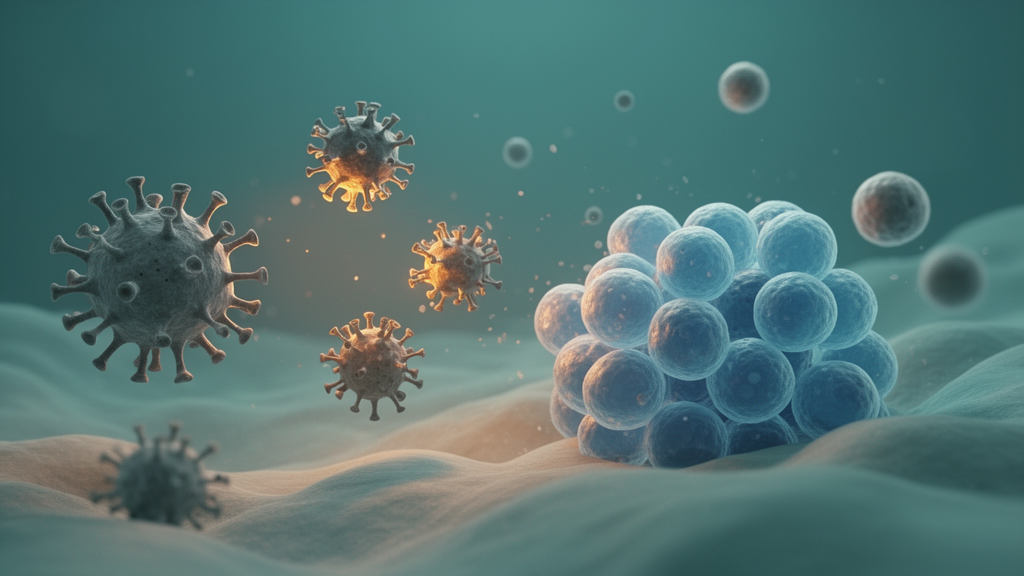
Image Credits: AI Generated

DOI: 10.1186/s13662-026-04136-6

Keywords: COVID-19, mathematical modeling, optimal control, Bang-Bang control, basic reproduction number, vaccination, breakthrough infection, immune failure, Hong Kong, policy relaxation, sensitivity analysis, epidemiology

Cite Scienmag News

Kristina Jarvis. (October 28, 2026). Model probes COVID-19 control after policy relaxation, with breakthrough infection and immune failure. Scienmag. https://scienmag.com/model-probes-covid-19-control-after-policy-relaxation-with-breakthrough-infection-and-immune-failure/


Kristina Jarvis. "Model probes COVID-19 control after policy relaxation, with breakthrough infection and immune failure." Scienmag, 28 October 2026, https://scienmag.com/model-probes-covid-19-control-after-policy-relaxation-with-breakthrough-infection-and-immune-failure/. Accessed 29 October 2026.

Kristina Jarvis. "Model probes COVID-19 control after policy relaxation, with breakthrough infection and immune failure." Scienmag. October 28, 2026. https://scienmag.com/model-probes-covid-19-control-after-policy-relaxation-with-breakthrough-infection-and-immune-failure/

Tags: Bang-Bang controlbasic reproduction numberbreakthrough COVID-19 infectionsbreakthrough infectioncontrol strategies after COVID-19 restrictionsCOVID-19COVID-19 transmission modelingdisease-free equilibrium stabilityeffects of waning immunity on pandemic dynamicsepidemic wave analysis in Hong KongepidemiologyHong Kongimmune failureimmune failure in vaccinated individualsimpact of policy relaxation on COVID-19 spreadimportance of early isolation and infection rate reductionmathematical analysis of COVID-19 control measuresmathematical modelingmodeling COVID-19 transmission post-policy relaxationoptimal controlpolicy relaxationsensitivity analysissensitivity analysis of COVID-19 parametersvaccination
Share26Tweet16
Previous Post

Research report: State and county approaches to data centers: patterns in the first generation

Next Post

AI Agents Are Joining Clinical Teams and Simulation Must Catch Up, Researchers Argue

Related Posts

New Quantile Regression Model Tames Bounded Data from Body Fat to Sleep
Mathematics

New Quantile Regression Model Tames Bounded Data from Body Fat to Sleep

October 29, 2026
Bounded Feedback Control Tames Antidamping in the Benney-Lin Equation
Mathematics

Bounded Feedback Control Tames Antidamping in the Benney-Lin Equation

October 29, 2026
Mathematicians Prove New Stability Results for Thermoelastic Bresse System with Thermal Damping
Mathematics

Mathematicians Prove New Stability Results for Thermoelastic Bresse System with Thermal Damping

October 29, 2026
Memory-dependent immune feedback offers reduced-order model of within-host viral dynamics
Mathematics

Memory-dependent immune feedback offers reduced-order model of within-host viral dynamics

October 29, 2026
Distributed Intracellular Memory Stabilizes a Diffusive Virus-Immune Model
Mathematics

Distributed Intracellular Memory Stabilizes a Diffusive Virus-Immune Model

October 29, 2026
Mathematical model shows sterile male technique can globally control mosquito populations
Mathematics

Mathematical model shows sterile male technique can globally control mosquito populations

October 29, 2026
Next Post
AI Agents Are Joining Clinical Teams and Simulation Must Catch Up, Researchers Argue

AI Agents Are Joining Clinical Teams and Simulation Must Catch Up, Researchers Argue

  • Mothers who receive childcare support from maternal grandparents show more optimized

    Mothers who receive childcare support from maternal grandparents show more parental warmth, finds NTU Singapore study

    27656 shares
    Share 11059 Tweet 6912
  • University of Seville Breaks 120-Year-Old Mystery, Revises a Key Einstein Concept

    1061 shares
    Share 424 Tweet 265
  • Bee body mass, pathogens and local climate influence heat tolerance

    682 shares
    Share 273 Tweet 171
  • Researchers record first-ever images and data of a shark experiencing a boat strike

    546 shares
    Share 218 Tweet 137
  • Groundbreaking Clinical Trial Reveals Lubiprostone Enhances Kidney Function

    531 shares
    Share 212 Tweet 133
Science

Embark on a thrilling journey of discovery with Scienmag.com—your ultimate source for cutting-edge breakthroughs. Immerse yourself in a world where curiosity knows no limits and tomorrow’s possibilities become today’s reality!

RECENT NEWS

  • AI Chatbots Show an Accuracy-Practicality Trade-off in Anesthesia Crisis Scenarios
  • Optical Encryption Evolves Beyond Double Random Phase Encoding, Review Finds
  • Swim Exercise and Scent Leaf Extract Reverse Cardiometabolic Changes in Obese Rats
  • Water Dilution of Raw Milk Rises Along Ethiopian Supply Chain, Study Finds

Categories

  • Agriculture
  • Anthropology
  • Archaeology
  • Athmospheric
  • Biology
  • Biotechnology
  • Blog
  • Bussines
  • Cancer
  • Chemistry
  • Climate
  • Earth Science
  • Editorial Policy
  • Marine
  • Mathematics
  • Medicine
  • Pediatry
  • Policy
  • Psychology & Psychiatry
  • Science Education
  • Science News
  • Social Science
  • Space
  • Technology and Engineering

Subscribe to Blog via Email

Enter your email address to subscribe to this blog and receive notifications of new posts by email.

Join 5,150 other subscribers

© 2025 Scienmag - Science Magazine

Welcome Back!

Login to your account below

Forgotten Password?

Retrieve your password

Please enter your username or email address to reset your password.

Log In
No Result
View All Result
  • HOME
  • SCIENCE NEWS
  • CONTACT US

© 2025 Scienmag - Science Magazine

Discover more from Science

Subscribe now to keep reading and get access to the full archive.

Continue reading