Friday, October 30, 2026
Science
No Result
View All Result
  • Login
  • HOME
  • SCIENCE NEWS
  • CONTACT US
  • HOME
  • SCIENCE NEWS
  • CONTACT US
No Result
View All Result
Scienmag
No Result
View All Result
Home Science News Biology

Male Painted Turtles Call More Variably Than Females, Study Finds

October 28, 2026
in Biology
Drew Townsend
By Drew Townsend Scienmag Editorial Profile - Cell Biology
Reading Time: 3 mins read
0
Male Painted Turtles Call More Variably Than Females, Study Finds

Male Painted Turtles Call More Variably Than Females, Study Finds

65
SHARES
587
VIEWS
Share on FacebookShare on Twitter
ADVERTISEMENT

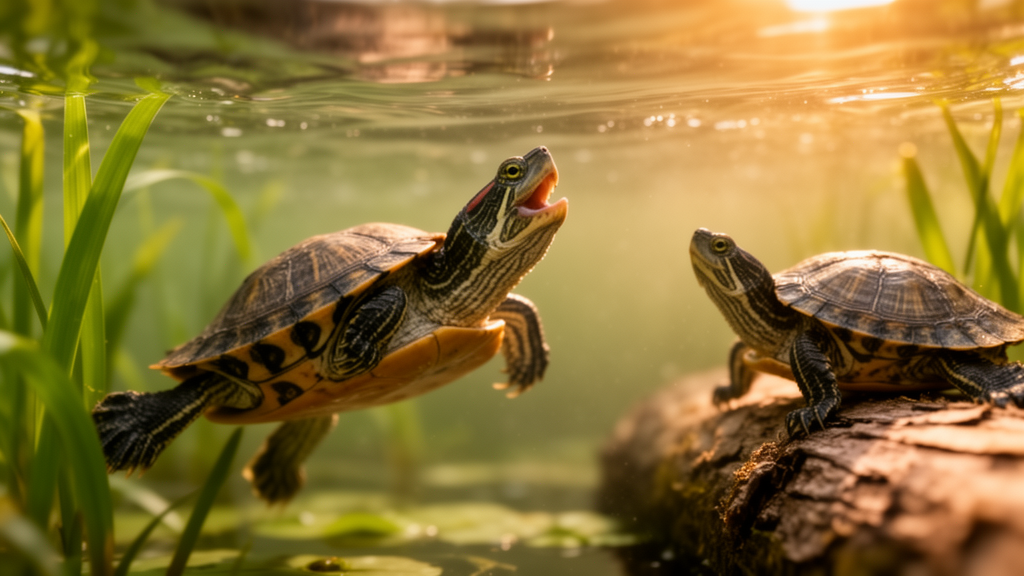
Turtles, long thought of as silent animals that rely on visual and chemical signals, may be doing more talking than scientists realized. A new study of the Midland Painted Turtle (Chrysemys picta marginata) documents five distinct call types in adult turtles and reveals that males and females use these sounds differently depending on who else is nearby.

Researchers recorded turtle behavior and vocalizations during 35 hours of one-hour trials. The experimental setup included solitary individuals as well as paired interactions between two males, two females, and mixed-sex pairs.

Acoustic traits varied across social contexts, meaning that the same turtle did not sound the same in every situation. Most striking was the discovery of one call type produced exclusively by males, a pattern that hints at a sex-specific signaling function. Males also showed greater within-individual variance in their acoustic traits than females did, meaning a given male’s calls were less consistent from one instance to the next than a female’s.

That variability matters because signaling theory offers a specific prediction about it. Under intrasexual selection, in which members of one sex compete with each other for access to mates, signals can evolve to be condition-dependent: their expression flexes with the signaler’s physical state, fighting ability, or motivation. The authors caution that they cannot definitively identify the function of turtle vocalizations, but they note that the greater within-male variation they observed is consistent with this condition-dependent signaling hypothesis.

The study also comes with an important caveat about its own design. Some of the males in the experiment experienced different pre-treatment conditions before the trials began, and the researchers acknowledge that these differences may have affected the vocalization patterns they recorded.

Perhaps the most unexpected finding came from counting interactions. Vocalization rates were negatively correlated with the number of close social interactions between turtles. In other words, the more time animals spent in tight, close-range contact, the less they vocalized. The researchers interpret this as evidence that vocalizations are used at a distance, while visual, tactile, or potentially chemical cues take over when turtles are within touching range.

The findings add to a growing recognition that acoustic communication is far more widespread in animals than classic textbooks once suggested. Although turtle signaling has been considered primarily visual and chemical, many species are now known to vocalize across multiple life stages, from embryos inside eggs to hatchlings and adults.

Why does this matter beyond turtles? Understanding how acoustic traits vary with context is a first step toward decoding function.

The researchers frame their results as an opening move rather than a conclusion. Because the study could not definitively establish function, the authors are careful to present their interpretations as theory-guided possibilities rather than proven mechanisms.

Each of these findings gives researchers a testable target in a group where vocal behavior has been largely overlooked, and each brings the field a step closer to understanding what turtles are actually saying to one another beneath the water’s surface.

Subject of Research: Sex differences and social context effects in the vocalizations of adult Midland Painted Turtles

Article Title: Sex differences in turtle vocalizations: social context and behavioural roles

Article References: Voss, C., Rollinson, N., & Lacroix, C. (2026). Sex differences in turtle vocalizations: social context and behavioural roles. BMC Ecology and Evolution. https://doi.org/10.1186/s12862-026-02602-z

Image Credits: AI Generated

DOI: 10.1186/s12862-026-02602-z

Keywords: turtle vocalizations, acoustic communication, Midland Painted Turtle, social context, condition-dependent signaling, intrasexual selection, animal behavior, Chrysemys picta, sex differences, freshwater turtles, call types, behavioral ecology

Cite Scienmag News

Drew Townsend. (October 28, 2026). Male Painted Turtles Call More Variably Than Females, Study Finds. Scienmag. https://scienmag.com/male-painted-turtles-call-more-variably-than-females-study-finds/

Drew Townsend. "Male Painted Turtles Call More Variably Than Females, Study Finds." Scienmag, 28 October 2026, https://scienmag.com/male-painted-turtles-call-more-variably-than-females-study-finds/. Accessed 30 October 2026.

Drew Townsend. "Male Painted Turtles Call More Variably Than Females, Study Finds." Scienmag. October 28, 2026. https://scienmag.com/male-painted-turtles-call-more-variably-than-females-study-finds/
Tags: acoustic communicationacoustic traits in reptilesAnimal Behavioranimal vocalization variabilityBehavioral Ecologycall typesChrysemys pictacondition-dependent signalingfreshwater turtlesintrasexual selectionintrasexual selection in turtleslong-term turtle behavior observationsmale versus female turtle callsMidland Painted TurtlePainted turtle vocalizationsreptile communication studiessex differencessex-specific acoustic signaling in turtlessocial contextsocial context and turtle vocalizationsturtle communication behaviorturtle signaling functionsturtle vocalizationsvariability in turtle calls
Share26Tweet16
Previous Post

Scorpion Technique Shows Edge in MRI and Biomechanical Outcomes After Meniscus Root Repair

Next Post

Leukemia Subtype Once Deemed High Risk Gets a Genomic Reclassification

Related Posts

Hidden Enzymes That Erase Protein Palmitoylation Emerge as Disease Drivers
Biology

Hidden Enzymes That Erase Protein Palmitoylation Emerge as Disease Drivers

October 30, 2026
Pre-fire fertilization fails to save young ponderosa pines from fire mortality
Biology

Pre-fire fertilization fails to save young ponderosa pines from fire mortality

October 30, 2026
Biologgers could sharpen forecasts of animal movement and range shifts
Biology

Biologgers could sharpen forecasts of animal movement and range shifts

October 30, 2026
New ensemble tool sharpens chromatin interaction calls in 4C-seq data
Biotechnology

New ensemble tool sharpens chromatin interaction calls in 4C-seq data

October 30, 2026
Almond shells turned into prebiotic sugars and a valuable acid without added enzymes
Biotechnology

Almond shells turned into prebiotic sugars and a valuable acid without added enzymes

October 30, 2026
Traditional Chinese Formula Zhizhu Decoction Eases IBS-Like Symptoms in Rats
Biotechnology

Traditional Chinese Formula Zhizhu Decoction Eases IBS-Like Symptoms in Rats

October 30, 2026
Next Post
Leukemia Subtype Once Deemed High Risk Gets a Genomic Reclassification

Leukemia Subtype Once Deemed High Risk Gets a Genomic Reclassification

  • Mothers who receive childcare support from maternal grandparents show more optimized

    Mothers who receive childcare support from maternal grandparents show more parental warmth, finds NTU Singapore study

    27656 shares
    Share 11059 Tweet 6912
  • University of Seville Breaks 120-Year-Old Mystery, Revises a Key Einstein Concept

    1061 shares
    Share 424 Tweet 265
  • Bee body mass, pathogens and local climate influence heat tolerance

    682 shares
    Share 273 Tweet 171
  • Researchers record first-ever images and data of a shark experiencing a boat strike

    546 shares
    Share 218 Tweet 137
  • Groundbreaking Clinical Trial Reveals Lubiprostone Enhances Kidney Function

    531 shares
    Share 212 Tweet 133
Science

Embark on a thrilling journey of discovery with Scienmag.com—your ultimate source for cutting-edge breakthroughs. Immerse yourself in a world where curiosity knows no limits and tomorrow’s possibilities become today’s reality!

RECENT NEWS

  • Household Conditions Tied to Screen Time in Japanese Preschoolers
  • SWOT analysis mapped to accreditation standards reveals what shapes quality at a Turkish intensive English program
  • Federated learning hides failing clients behind strong average accuracy
  • Nomogram flags which depressed teens on school leave plan to return to class

Categories

  • Agriculture
  • Anthropology
  • Archaeology
  • Athmospheric
  • Biology
  • Biotechnology
  • Blog
  • Bussines
  • Cancer
  • Chemistry
  • Climate
  • Earth Science
  • Editorial Policy
  • Marine
  • Mathematics
  • Medicine
  • Pediatry
  • Policy
  • Psychology & Psychiatry
  • Science Education
  • Science News
  • Social Science
  • Space
  • Technology and Engineering

Subscribe to Blog via Email

Enter your email address to subscribe to this blog and receive notifications of new posts by email.

Join 5,151 other subscribers

© 2025 Scienmag - Science Magazine

Welcome Back!

Login to your account below

Forgotten Password?

Retrieve your password

Please enter your username or email address to reset your password.

Log In
No Result
View All Result
  • HOME
  • SCIENCE NEWS
  • CONTACT US

© 2025 Scienmag - Science Magazine

Discover more from Science

Subscribe now to keep reading and get access to the full archive.

Continue reading