Friday, October 30, 2026
Science
No Result
View All Result
  • Login
  • HOME
  • SCIENCE NEWS
  • CONTACT US
  • HOME
  • SCIENCE NEWS
  • CONTACT US
No Result
View All Result
Scienmag
No Result
View All Result
Home Science News Earth Science

New graph-based framework cuts disaster recovery time in simulation study

October 28, 2026
in Earth Science
Violet Maxwell
By Violet Maxwell Scienmag Editorial Profile - Natural Hazards
Reading Time: 2 mins read
0
New graph-based framework cuts disaster recovery time in simulation study

New graph-based framework cuts disaster recovery time in simulation study

65
SHARES
587
VIEWS
Share on FacebookShare on Twitter
ADVERTISEMENT

Scheduling repair crews, medical teams, transport units and shelter supplies after a major disaster is one of the hardest problems in emergency management, and most existing tools rely on deterministic models or static heuristics that struggle with the dynamic, uncertain and spatially uneven conditions of real disaster zones. A new study addresses this gap with STGR-DRS, a Spatiotemporal Graph-based Robust Disaster Recovery Scheduling framework that coordinates heterogeneous resources using large-scale, multi-source open data.

The framework operates in four stages. First, a data fusion pipeline builds a dynamic spatiotemporal recovery graph from OpenStreetMap, Humanitarian Data Exchange, Shelter Cluster and Copernicus datasets. Second, a gradient boosting module estimates demand urgency, with SHAP values providing interpretability of the predictions. Third, a multi-objective robust mixed-integer linear programming formulation jointly minimizes recovery time, transportation cost and unmet demand while enforcing fairness constraints. Finally, a rolling-horizon re-optimization mechanism updates schedules dynamically as new disruptions emerge, rather than committing to a single fixed plan.

The researchers evaluated the framework on a case study of the 2023 Türkiye–Syria earthquake. Under nominal conditions, STGR-DRS reduced total recovery time by 13.4% compared with the best-performing baseline, and under severe disruption scenarios it achieved a robustness advantage of 15.2%. Ablation studies showed the contribution of each framework component, and scalability analysis confirmed that the approach remains computationally tractable for networks with more than 5,000 nodes.

The authors are explicit about the limitations of their work. The framework depends on centralized coordination, which could be challenged by communication failures in an actual disaster, and the disruption scenarios used in testing are synthetic, so they may not fully replicate the complexity of real-time operations. Future directions include decentralized multi-agent scheduling, integration of predictive aftershock models, and field validation with humanitarian organizations.

Despite these caveats, the study offers a reproducible, open-data experimental pipeline for disaster recovery scheduling research and provides a decision-support tool that emergency management agencies could adapt. By combining open geospatial and humanitarian datasets with robust optimization and rolling-horizon replanning, the framework illustrates how data-driven methods can move post-disaster resource allocation beyond static heuristics while remaining transparent about where model-based schedules still fall short of field reality.

Subject of Research: Robust optimization and spatiotemporal graph scheduling for post-disaster resource recovery

Article Title: A spatiotemporal graph-based robust optimization framework for data-driven disaster recovery scheduling

Article References: Li, B., Tan, Z., Fu, G., Liu, Z., Jin, R., & Yang, C. (2026). A spatiotemporal graph-based robust optimization framework for data-driven disaster recovery scheduling. Frontiers in Earth Science, 14, 1872550. https://doi.org/10.3389/feart.2026.1872550

Image Credits: AI Generated

DOI: 10.3389/feart.2026.1872550

Keywords: disaster recovery, robust optimization, spatiotemporal graph, scheduling, Türkiye–Syria earthquake, rolling horizon, mixed-integer programming, open data, humanitarian logistics, gradient boosting, spatiotemporal, graph-based

Cite Scienmag News

Violet Maxwell. (October 28, 2026). New graph-based framework cuts disaster recovery time in simulation study. Scienmag. https://scienmag.com/new-graph-based-framework-cuts-disaster-recovery-time-in-simulation-study/

Violet Maxwell. "New graph-based framework cuts disaster recovery time in simulation study." Scienmag, 28 October 2026, https://scienmag.com/new-graph-based-framework-cuts-disaster-recovery-time-in-simulation-study/. Accessed 30 October 2026.

Violet Maxwell. "New graph-based framework cuts disaster recovery time in simulation study." Scienmag. October 28, 2026. https://scienmag.com/new-graph-based-framework-cuts-disaster-recovery-time-in-simulation-study/


Tags: case study of Türkiye–Syria earthquake recoverydemand urgency estimation in disaster zonesdisaster recoverydisaster recovery schedulingdynamic resource coordination in emergency responseemergency management simulation and optimizationfairness constraints in disaster resource allocationgradient boostinggraph-basedhumanitarian logisticsmixed-integer programmingmulti-source open data integration for disaster recoveryopen datareducing disaster recovery time with data-driven frameworksrobust mixed-integer linear programming for emergency logisticsrobust optimizationrobustness in disaster recovery planningrolling horizonrolling-horizon re-optimization for disaster responseschedulingspatiotemporalspatiotemporal graphspatiotemporal graph-based disaster managementTürkiye–Syria earthquake
Share26Tweet16
Previous Post

Female Age and Sperm DNA Fragmentation Linked to Embryo Euploidy, but Predictive Power Is Weak

Next Post

Game-Based Module Boosts Pre-Service Teachers’ Creative Competence, Study Finds

Related Posts

Microbial Sources and Stress Shape the Hidden Endophytes of an Invasive Plant
Biology

Microbial Sources and Stress Shape the Hidden Endophytes of an Invasive Plant

October 30, 2026
Sea level rise risk along Portugal’s coast is driven mainly by exposure
Earth Science

Sea level rise risk along Portugal’s coast is driven mainly by exposure

October 30, 2026
Fewer Than Half of Ethiopian Households Tap Climate Information, Survey Finds
Earth Science

Fewer Than Half of Ethiopian Households Tap Climate Information, Survey Finds

October 30, 2026
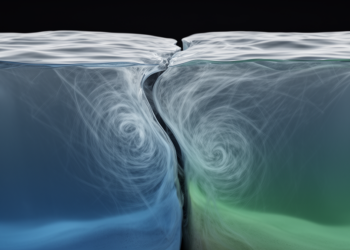
Two ocean models converge on coastal submesoscale fronts in idealized tests
Earth Science

Two ocean models converge on coastal submesoscale fronts in idealized tests

October 30, 2026
Ethiopian Experts Map Eight Ways to Shield Water and SDGs from Climate Shocks
Earth Science

Ethiopian Experts Map Eight Ways to Shield Water and SDGs from Climate Shocks

October 30, 2026
Physicists Pin Down the Hidden Voltage Source Behind Geomagnetically Induced Currents
Space

Physicists Pin Down the Hidden Voltage Source Behind Geomagnetically Induced Currents

October 30, 2026
Next Post
Game-Based Module Boosts Pre-Service Teachers’ Creative Competence, Study Finds

Game-Based Module Boosts Pre-Service Teachers' Creative Competence, Study Finds

  • Mothers who receive childcare support from maternal grandparents show more optimized

    Mothers who receive childcare support from maternal grandparents show more parental warmth, finds NTU Singapore study

    27656 shares
    Share 11059 Tweet 6912
  • University of Seville Breaks 120-Year-Old Mystery, Revises a Key Einstein Concept

    1061 shares
    Share 424 Tweet 265
  • Bee body mass, pathogens and local climate influence heat tolerance

    682 shares
    Share 273 Tweet 171
  • Researchers record first-ever images and data of a shark experiencing a boat strike

    546 shares
    Share 218 Tweet 137
  • Groundbreaking Clinical Trial Reveals Lubiprostone Enhances Kidney Function

    531 shares
    Share 212 Tweet 133
Science

Embark on a thrilling journey of discovery with Scienmag.com—your ultimate source for cutting-edge breakthroughs. Immerse yourself in a world where curiosity knows no limits and tomorrow’s possibilities become today’s reality!

RECENT NEWS

  • Microbial Sources and Stress Shape the Hidden Endophytes of an Invasive Plant
  • Firebreaks Leave Lasting Scars in Grasslands While Wildfire Heals Fast
  • Regularisation and voluntary return reproduce precarity for irregularised migrants in Spain and the UK
  • ZNF207 shields glutamine transporter ASCT2 from degradation to fuel liver cancer growth

Categories

  • Agriculture
  • Anthropology
  • Archaeology
  • Athmospheric
  • Biology
  • Biotechnology
  • Blog
  • Bussines
  • Cancer
  • Chemistry
  • Climate
  • Earth Science
  • Editorial Policy
  • Marine
  • Mathematics
  • Medicine
  • Pediatry
  • Policy
  • Psychology & Psychiatry
  • Science Education
  • Science News
  • Social Science
  • Space
  • Technology and Engineering

Subscribe to Blog via Email

Enter your email address to subscribe to this blog and receive notifications of new posts by email.

Join 5,150 other subscribers

© 2025 Scienmag - Science Magazine

Welcome Back!

Login to your account below

Forgotten Password?

Retrieve your password

Please enter your username or email address to reset your password.

Log In
No Result
View All Result
  • HOME
  • SCIENCE NEWS
  • CONTACT US

© 2025 Scienmag - Science Magazine

Discover more from Science

Subscribe now to keep reading and get access to the full archive.

Continue reading