Thursday, October 29, 2026
Science
No Result
View All Result
  • Login
  • HOME
  • SCIENCE NEWS
  • CONTACT US
  • HOME
  • SCIENCE NEWS
  • CONTACT US
No Result
View All Result
Scienmag
No Result
View All Result
Home Science News Biology

Multi-trait index framework pinpoints stable soybean genotypes across environments

October 28, 2026
in Biology
Drew Townsend
By Drew Townsend Scienmag Editorial Profile - Cell Biology
Reading Time: 2 mins read
0
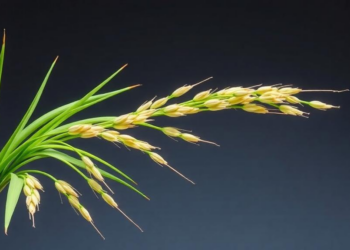
Multi-trait index framework pinpoints stable soybean genotypes across environments

Multi-trait index framework pinpoints stable soybean genotypes across environments

65
SHARES
587
VIEWS
Share on FacebookShare on Twitter
ADVERTISEMENT

Soybean breeders face a persistent problem: a genotype that excels in one field may falter in another. A new study of 20 Indonesian soybean genotypes, evaluated across three contrasting environments representing upland and lowland production systems, offers a structured way to separate environment-specific adaptation from broad, dependable performance.

Combined analysis of variance showed significant effects of genotype, environment, and genotype-by-environment interaction for most agronomic traits, confirming that both genetic and environmental factors substantially shape soybean productivity in this population.

To move beyond conventional selection approaches, the researchers integrated two complementary indices. The Multi-Trait Genotype–Ideotype Distance Index (MGIDI) identifies genotypes closest to an ideal within each environment, while the Multi-Trait Stability Index (MTSI) ranks genotypes for stability across environments. MGIDI highlighted K17, K18, and K5 as closest to the ideotype in their respective environments, whereas MTSI identified K1, K12, and K5 as the most stable across all three settings.

Within the MTSI framework, factor analysis explained 87 percent of total variation and indicated that productivity-related traits—including yield, 100-seed weight, and seed filling period—contributed substantially to multi-trait performance and stability.

Trait association and network analyses further revealed strong positive linkages among yield component traits, suggesting synergistic relationships that could be targeted jointly in breeding programs.

The study’s practical conclusion is that the combined MGIDI–MTSI framework provides complementary insight into both environment-specific adaptation and broad stability, and it singled out genotype K5 as promising parental material for breeding programs targeting heterogeneous production environments.

Because the analysis rests on 20 genotypes in three environments, the findings describe this population and setting rather than universal rules; the authors present the framework as a selection tool to strengthen efficiency, not as a demonstration of commercial performance.

The work appears in BMC Plant Biology as an open-access research article published on 21 October 2026.

Subject of Research: A multi-trait index framework for evaluating genotype stability and adaptability in soybean across contrasting environments

Article Title: A multi-trait index framework for dissecting genotype stability and adaptability in soybean across environments

Article References: Ridara, F., Ustari, D., Wicaksono, A. A., Anggoro Susanto, G. W., Amien, S., Concibido, V., & Karuniawan, A. (2026). A multi-trait index framework for dissecting genotype stability and adaptability in soybean across environments. BMC Plant Biology. https://doi.org/10.1186/s12870-026-10172-x

Image Credits: AI Generated

DOI: 10.1186/s12870-026-10172-x

Keywords: soybean, genotype-by-environment interaction, MGIDI, MTSI, stability analysis, plant breeding, multi-trait selection, factor analysis, Indonesia, yield components, multi-trait, index

Cite Scienmag News

Drew Townsend. (October 28, 2026). Multi-trait index framework pinpoints stable soybean genotypes across environments. Scienmag. https://scienmag.com/multi-trait-index-framework-pinpoints-stable-soybean-genotypes-across-environments/

Drew Townsend. "Multi-trait index framework pinpoints stable soybean genotypes across environments." Scienmag, 28 October 2026, https://scienmag.com/multi-trait-index-framework-pinpoints-stable-soybean-genotypes-across-environments/. Accessed 29 October 2026.

Drew Townsend. "Multi-trait index framework pinpoints stable soybean genotypes across environments." Scienmag. October 28, 2026. https://scienmag.com/multi-trait-index-framework-pinpoints-stable-soybean-genotypes-across-environments/

Tags: breeding for stable soybean varietiesenvironment-specific soybean performancefactor analysisfactor analysis in soybean trait assessmentgenotype by environment interactiongenotype-by-environment interaction in soybeansindexIndonesiaIndonesian soybean genotype evaluationMGIDIMTSImulti-environment soybean evaluationmulti-traitmulti-trait genotype-ideotype distance indexmulti-trait index for soybean breedingmulti-trait selectionmulti-trait stability index in plant breedingplant breedingsoybeansoybean genotype stability analysissoybean yield component trait relationshipsstability analysissynergy of soybean agronomic traitsyield components
Share26Tweet16
Previous Post

Mitochondrial Protein SYNJ2BP Emerges as Candidate Driver of Muscle Wasting in Experimental Models

Next Post

Research report: Beyond functional disability: longitudinal joint trajectories of muscle strength and walking speed and their association with new-onset diabetes risk among older adults without ADL impairment

Related Posts

Scientists Map Wildfire Fuels Across Czech Republic at 30-Meter Resolution
Biology

Scientists Map Wildfire Fuels Across Czech Republic at 30-Meter Resolution

October 29, 2026
Four-Gene Signature Predicts Prostate Cancer Recurrence and Flags SPAG5 as Drug Target
Biology

Four-Gene Signature Predicts Prostate Cancer Recurrence and Flags SPAG5 as Drug Target

October 29, 2026
How regulators keep cancer-causing traces out of your medicines
Biology

How regulators keep cancer-causing traces out of your medicines

October 29, 2026
Lab Screen Finds Fast-Acting Biocides That Kill Dairy Pathogens
Biology

Lab Screen Finds Fast-Acting Biocides That Kill Dairy Pathogens

October 29, 2026
Rice Breeders Stack Seven Disease and Pest Resistance Genes in One Line
Biology

Rice Breeders Stack Seven Disease and Pest Resistance Genes in One Line

October 29, 2026
Early FVRCP Vaccination Tied to Lower Mortality in Shelter Kittens
Biology

Early FVRCP Vaccination Tied to Lower Mortality in Shelter Kittens

October 29, 2026
Next Post
Research report: Beyond functional disability: longitudinal joint trajectories of muscle strength and walking speed and their association with new-onset diabetes risk among older adults without ADL impairment

Research report: Beyond functional disability: longitudinal joint trajectories of muscle strength and walking speed and their association with new-onset diabetes risk among older adults without ADL impairment

  • Mothers who receive childcare support from maternal grandparents show more optimized

    Mothers who receive childcare support from maternal grandparents show more parental warmth, finds NTU Singapore study

    27656 shares
    Share 11059 Tweet 6912
  • University of Seville Breaks 120-Year-Old Mystery, Revises a Key Einstein Concept

    1061 shares
    Share 424 Tweet 265
  • Bee body mass, pathogens and local climate influence heat tolerance

    682 shares
    Share 273 Tweet 171
  • Researchers record first-ever images and data of a shark experiencing a boat strike

    546 shares
    Share 218 Tweet 137
  • Groundbreaking Clinical Trial Reveals Lubiprostone Enhances Kidney Function

    531 shares
    Share 212 Tweet 133
Science

Embark on a thrilling journey of discovery with Scienmag.com—your ultimate source for cutting-edge breakthroughs. Immerse yourself in a world where curiosity knows no limits and tomorrow’s possibilities become today’s reality!

RECENT NEWS

  • Hidden Cavities Drive Uneven Heating in Large Bridge Cables Under Fire
  • From PTZ to Brain Organoids: How Scientists Choose the Right Epilepsy Model
  • Perovskite Nanoparticles Deliver Near-Perfect Triazole Yields in Water
  • Low-Cost Air Sensors Hold Up in China’s Smog, but Dust Exposes Their Weak Spot

Categories

  • Agriculture
  • Anthropology
  • Archaeology
  • Athmospheric
  • Biology
  • Biotechnology
  • Blog
  • Bussines
  • Cancer
  • Chemistry
  • Climate
  • Earth Science
  • Editorial Policy
  • Marine
  • Mathematics
  • Medicine
  • Pediatry
  • Policy
  • Psychology & Psychiatry
  • Science Education
  • Science News
  • Social Science
  • Space
  • Technology and Engineering

Subscribe to Blog via Email

Enter your email address to subscribe to this blog and receive notifications of new posts by email.

Join 5,150 other subscribers

© 2025 Scienmag - Science Magazine

Welcome Back!

Login to your account below

Forgotten Password?

Retrieve your password

Please enter your username or email address to reset your password.

Log In
No Result
View All Result
  • HOME
  • SCIENCE NEWS
  • CONTACT US

© 2025 Scienmag - Science Magazine

Discover more from Science

Subscribe now to keep reading and get access to the full archive.

Continue reading