A mycotoxin that quietly contaminates grain stores around the world may have met an unexpected counterweight: the essential oils of three common kitchen plants, delivered in a microscopic edible shell. In a study published in Discover Molecules, researchers report that microcapsules loaded with equal parts fennel, clove and ajowan essential oils partially protected mice from the damaging effects of a zearalenone-contaminated diet, improving weight gain, liver enzyme profiles, antioxidant defenses and intestinal structure over a 35-day feeding trial.
Zearalenone is a non-steroidal mycotoxin produced by several Fusarium species and is commonly found in grains and animal feed. According to the study’s authors, it disrupts endocrine function, induces reproductive toxicity and generates oxidative stress, in which reactive oxygen species overwhelm antioxidant defense systems and damage lipids, proteins and DNA. Because contaminated feed can pass risks along the food chain, the toxin raises concerns not only for livestock but also for humans who consume animal-derived products, and its estrogenic properties have drawn particular scrutiny from food safety researchers.
The research team, led by Mohammdamin Bozorgi Kasgari with colleagues including Ehsan Karimi and Ehsan Oskoueian, extracted the essential oils from fennel, clove and ajowan using a Soxhlet apparatus, combining 200 grams of each dried plant with ethanol at 78 degrees Celsius for two hours. The three oils were then mixed in a 1:1:1 ratio and encapsulated by spray-drying, using a wall formulation of 70 percent maltodextrin, 20 percent modified starch and 10 percent whey protein concentrate. The resulting microcapsules, designated MLFCA, showed a particle size of 625.6 nanometers by dynamic light scattering, a spherical morphology confirmed by field emission scanning electron microscopy, and an encapsulation efficiency of approximately 94.3 percent.
Gas chromatography-mass spectrometry revealed the chemical cargo inside the capsules. The predominant volatile compounds were anethole at 24.2 percent, oleic acid at 22.3 percent and thymol at 13.2 percent. Anethole, a phenylpropene found in fennel, is described in the paper as having antioxidant, anti-inflammatory, antimicrobial and anticancer activities, while thymol, the primary bioactive constituent of ajowan, is a monoterpene phenol with antioxidant and anti-inflammatory properties. The authors note that unencapsulated essential oils suffer from volatility and low bioavailability, which the encapsulation process is designed to address by protecting the compounds during storage and digestion and enabling controlled release in the gastrointestinal tract.
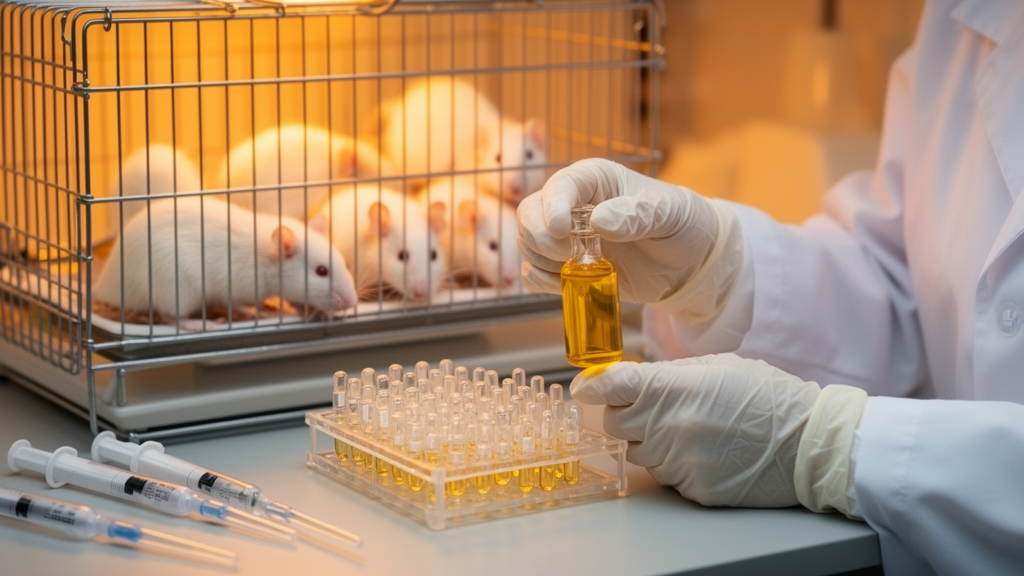
To test the formulation, the researchers procured 28 female BALB/c mice weighing 20 to 25 grams and, after a one-week acclimation period, randomly divided them into four groups. A control group received a normal diet, while a second group received a diet contaminated with 10 micrograms of zearalenone per gram of feed. The remaining two groups ate the contaminated diet supplemented with MLFCA at either 100 or 200 milligrams per kilogram of body weight. After 35 days the mice were euthanized, and blood, liver tissue and intestinal samples were collected for biochemical, histological and molecular analyses. The study was reported in accordance with ARRIVE guidelines.
The contaminated diet took a measurable toll. Average daily weight gain fell from 120.7 milligrams per day in controls to 67.1 milligrams per day in the zearalenone-only group, and average daily feed intake dropped from 7.8 to 5.3 grams per day, both statistically significant differences. Supplementation with MLFCA at both doses significantly enhanced feed intake and weight gain despite ongoing toxin exposure. The mice receiving zearalenone alone also showed marked elevations in the liver enzymes ALT, AST and ALP, a pattern the authors interpret as indicating possible hepatic damage, whereas both supplemented groups showed significantly reduced levels of these enzymes.
Antioxidant and hormonal markers shifted in parallel. The zearalenone-only group showed depressed levels of the antioxidant enzymes glutathione peroxidase, superoxide dismutase and catalase, along with significant decreases in luteinizing hormone, follicle-stimulating hormone and estradiol compared with controls. Both MLFCA doses were associated with the highest recorded levels of the antioxidant enzymes among all treatment groups and considerable increases in the three hormones. Lipid peroxidation in liver tissue rose significantly under zearalenone exposure but fell to 142 percent and 129 percent of control levels in the 100 and 200 milligram per kilogram groups, respectively, all differences reaching statistical significance.
Under the microscope, the story was subtler. Histopathological evaluation of liver and jejunum tissues found no significant structural alterations, which the authors attribute to the toxin concentration and exposure duration being insufficient to induce considerable histological changes. Morphometric analysis, however, told a different story: zearalenone significantly reduced villus height and width in the jejunum while increasing crypt depth, and dietary inclusion of the oil-loaded microcapsules significantly enhanced villus height and width while reducing crypt depth. Gene expression analysis in liver tissue completed the picture, showing that zearalenone significantly decreased SOD expression and increased iNOS expression, changes that were reversed in both supplemented groups, suggesting boosted antioxidant defenses and reduced inflammatory signaling.
The authors conclude that MLFCA attenuates zearalenone-induced oxidative stress and associated biochemical alterations in mice, positioning the formulation as a potential natural strategy for mitigating mycotoxin exposure in animal feed. They are careful to flag the limits of the work: the doses were chosen from preliminary investigations, a comprehensive toxicological evaluation of MLFCA was beyond the scope of the study, and additional research is needed to establish its safety profile, optimal dosage and long-term effects before practical application. The findings come from a single small mouse trial, and the authors themselves call for future studies of molecular mechanisms and for testing efficacy and safety in larger animal models under different production and environmental conditions before any dietary supplement reaches the farm.
Subject of Research: Protective effects of encapsulated essential oils against zearalenone-induced oxidative stress in mice
Article Title: Efficacy of encapsulated phytogenic compounds from fennel, clove, and ajowan in alleviating oxidative stress in mice on a zearalenone-contaminated diet
Article References: Kasgari, M. B., Ghafaripour, H., Karimi, E., Litvinov, O. B., & Oskoueian, E. (2026). Efficacy of encapsulated phytogenic compounds from fennel, clove, and ajowan in alleviating oxidative stress in mice on a zearalenone-contaminated diet. Discover Molecules, 3(1), Article 34. https://doi.org/10.1007/s44345-026-00077-5
Image Credits: AI Generated
DOI: 10.1007/s44345-026-00077-5
Keywords: zearalenone, mycotoxin, essential oils, microencapsulation, oxidative stress, mice, antioxidant enzymes, liver enzymes, gut morphology, fennel, clove, ajowan
Cite Scienmag News
Bethany Barker. (October 28, 2026). Encapsulated Fennel, Clove and Ajowan Oils Ease Zearalenone Damage in Mice. Scienmag. https://scienmag.com/encapsulated-fennel-clove-and-ajowan-oils-ease-zearalenone-damage-in-mice/
Bethany Barker. "Encapsulated Fennel, Clove and Ajowan Oils Ease Zearalenone Damage in Mice." Scienmag, 28 October 2026, https://scienmag.com/encapsulated-fennel-clove-and-ajowan-oils-ease-zearalenone-damage-in-mice/. Accessed 28 October 2026.
Bethany Barker. "Encapsulated Fennel, Clove and Ajowan Oils Ease Zearalenone Damage in Mice." Scienmag. October 28, 2026. https://scienmag.com/encapsulated-fennel-clove-and-ajowan-oils-ease-zearalenone-damage-in-mice/