Friday, October 30, 2026
Science
No Result
View All Result
  • Login
  • HOME
  • SCIENCE NEWS
  • CONTACT US
  • HOME
  • SCIENCE NEWS
  • CONTACT US
No Result
View All Result
Scienmag
No Result
View All Result
Home Science News Cancer

Keratin 18 linked to aggressive head and neck cancer and lymph node spread

October 27, 2026
in Cancer, Medicine
Nathaniel Bowman
By Nathaniel Bowman Scienmag Editorial Profile - Precision Oncology
Reading Time: 3 mins read
0
Keratin 18 linked to aggressive head and neck cancer and lymph node spread

Keratin 18 linked to aggressive head and neck cancer and lymph node spread

65
SHARES
587
VIEWS
Share on FacebookShare on Twitter
ADVERTISEMENT

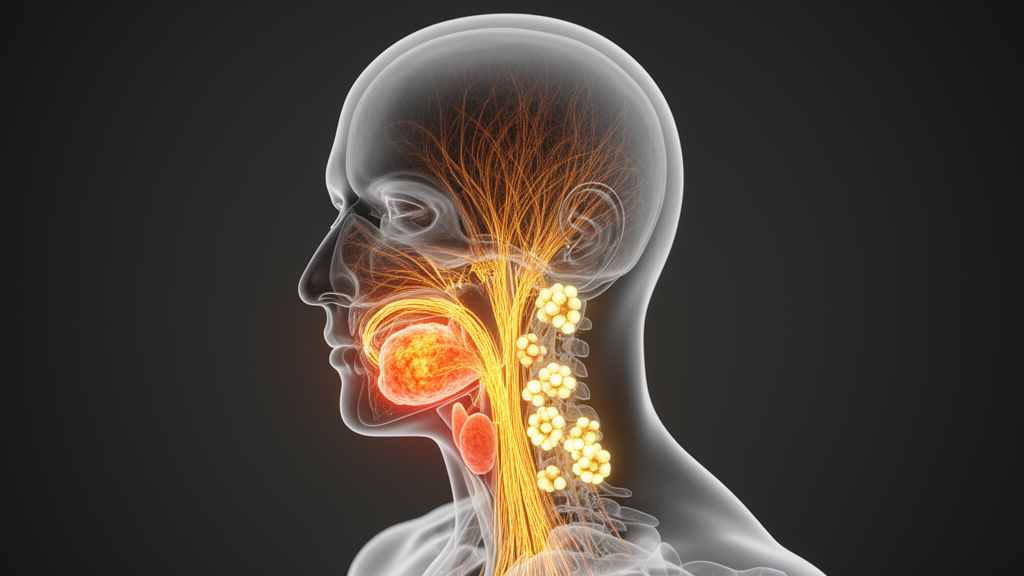
The research links KRT18 not only to tumor aggressiveness but also to the remodeling of blood and lymphatic vessels that accompanies cervical lymph node metastasis, a major determinant of prognosis and treatment planning in this cancer.

The research team, led by Xiaojia Zheng and Jiaxin Zhang with senior author Yong Xu, combined single-cell transcriptomic datasets, TCGA and GEO cohorts, and 154 clinical HNSCC specimens to map where KRT18 is expressed and how its levels relate to disease features. They found that KRT18 is expressed predominantly in malignant epithelial cells and is upregulated in HNSCC tissues compared with non-malignant tissue.

Clinically, high KRT18 expression was associated with advanced T stage, advanced clinical stage, nodal metastasis, and poorer survival. These associations position KRT18 as a marker of aggressive disease, although the study design establishes correlations in patient cohorts rather than proving that the protein causes worse outcomes in humans.

To probe function, the researchers generated stable KRT18-knockdown HNSCC cell lines and ran a battery of assays. Reducing KRT18 lowered cell proliferation and clonogenicity, and it impaired migration and invasion. Knockdown also altered epithelial–mesenchymal transition (EMT)-associated marker remodeling, a process by which cancer cells gain motile, invasive properties.

The vascular–lymphatic connection emerged from experiments on how tumor cells interact with the lymphatic system. KRT18-deficient cells were less able to migrate across monolayers of lymphatic endothelial cells in trans-lymphatic endothelial migration assays, a laboratory model of the step by which tumor cells enter lymphatic vessels. In addition, conditioned medium from KRT18-knockdown tumor cells showed attenuated angiogenic and lymphangiogenic activity, meaning the cells stimulated fewer new blood and lymphatic vessels.

In vivo work supported these observations. In a 4-nitroquinoline-1-oxide (4NQO)-induced tongue carcinogenesis model, increasing KRT18 expression paralleled vascular and lymphatic remodeling as tumors developed. In an orthotopic tongue tumor model, KRT18 knockdown was accompanied by reduced primary tumor growth, attenuated vascular and lymphatic remodeling, and a lower proportion of metastatic cervical lymph nodes.

Matrigel plug assays provided further in vivo validation of the vessel-forming activity associated with KRT18-expressing tumor cells. Together, the cell-based and animal experiments suggest that KRT18 may contribute to disease progression by linking tumor-intrinsic malignant behavior with the vascular and lymphatic changes that facilitate spread.

The authors conclude that KRT18 is associated with aggressive HNSCC and nodal metastasis and may contribute to progression through this dual mechanism. Because cervical lymph node metastasis strongly influences both prognosis and treatment decisions in HNSCC, a molecule that connects tumor cell behavior to lymphatic remodeling is of considerable clinical interest.

Several caveats apply. The clinical findings are associative, and the mechanistic results come from cell lines and animal models, including chemically induced and orthotopic tongue tumors, which may not fully recapitulate human disease. The article was published as an accepted, peer-reviewed manuscript shared early with a permanent DOI and remains subject to further edits before the final Version of Record.

Subject of Research: The role of keratin 18 in head and neck squamous cell carcinoma progression and lymph node metastasis

Article Title: KRT18 promotes HNSCC progression through tumor aggressiveness and vascular–lymphatic remodeling

Article References: Zheng, X., Zhang, J., Su, H., Bao, W., Rong, C., Xin, H., Wang, Y., Li, B., & Xu, Y. (2026). KRT18 promotes HNSCC progression through tumor aggressiveness and vascular–lymphatic remodeling. Cellular Oncology. https://doi.org/10.1007/s13402-026-01317-z

Image Credits: AI Generated

DOI: 10.1007/s13402-026-01317-z

Keywords: KRT18, head and neck squamous cell carcinoma, lymph node metastasis, lymphangiogenesis, angiogenesis, epithelial-mesenchymal transition, tumor progression, biomarker, Cellular Oncology, cancer research, promotes, HNSCC

Cite Scienmag News

Nathaniel Bowman. (October 27, 2026). Keratin 18 linked to aggressive head and neck cancer and lymph node spread. Scienmag. https://scienmag.com/keratin-18-linked-to-aggressive-head-and-neck-cancer-and-lymph-node-spread/

Nathaniel Bowman. "Keratin 18 linked to aggressive head and neck cancer and lymph node spread." Scienmag, 27 October 2026, https://scienmag.com/keratin-18-linked-to-aggressive-head-and-neck-cancer-and-lymph-node-spread/. Accessed 30 October 2026.

Nathaniel Bowman. "Keratin 18 linked to aggressive head and neck cancer and lymph node spread." Scienmag. October 27, 2026. https://scienmag.com/keratin-18-linked-to-aggressive-head-and-neck-cancer-and-lymph-node-spread/

Tags: angiogenesisbiomarkerblood and lymphatic vessel remodeling in cancercancer researchCellular Oncologyepithelial-mesenchymal transitionepithelial-mesenchymal transition in head and neck cancergene knockdown studies in cancer cellshead and neck squamous cell carcinomaHNSCCKeratin 18 in head and neck squamous cell carcinomaKRT18KRT18 expression in malignant epithelial cellslymph node metastasislymph node metastasis mechanismslymphangiogenesismolecularprognostic significance of KRT18 in cancer progressionPromotessingle-cell transcriptomic analysis in oncologytumor aggressiveness biomarkerstumor cell migration and invasion pathwaystumor progressionvascular–lymphatic interactions in tumor metastasis
Share26Tweet16
Previous Post

Female Bornean frogs have bigger ears, but males own the vocal gear

Next Post

Editors Retract 2018 ClC-2 Cerebrovascular Study Over Image Concerns

Related Posts

Inflammatory blood markers sharpen machine learning detection of mild frailty
Medicine

Inflammatory blood markers sharpen machine learning detection of mild frailty

October 30, 2026
Six in Ten Clinicians at Ethiopian Hospital Show Good Pediatric Pain Care
Medicine

Six in Ten Clinicians at Ethiopian Hospital Show Good Pediatric Pain Care

October 30, 2026
Polynesian genomes reveal rare variants shaping gout, diabetes and blood lipids
Medicine

Polynesian genomes reveal rare variants shaping gout, diabetes and blood lipids

October 30, 2026
Bioelectronic Medicine Summit Charts Neurotechnologies for Patients and Communities
Medicine

Bioelectronic Medicine Summit Charts Neurotechnologies for Patients and Communities

October 30, 2026
Hydrogel Beads Could Change How Rheumatoid Arthritis Drugs Reach the Joint
Medicine

Hydrogel Beads Could Change How Rheumatoid Arthritis Drugs Reach the Joint

October 30, 2026
Pressure Support Beats CPAP at Easing Breathing Effort After Extubation in Obesity
Medicine

Pressure Support Beats CPAP at Easing Breathing Effort After Extubation in Obesity

October 30, 2026
Next Post
Editors Retract 2018 ClC-2 Cerebrovascular Study Over Image Concerns

Editors Retract 2018 ClC-2 Cerebrovascular Study Over Image Concerns

  • Mothers who receive childcare support from maternal grandparents show more optimized

    Mothers who receive childcare support from maternal grandparents show more parental warmth, finds NTU Singapore study

    27656 shares
    Share 11059 Tweet 6912
  • University of Seville Breaks 120-Year-Old Mystery, Revises a Key Einstein Concept

    1061 shares
    Share 424 Tweet 265
  • Bee body mass, pathogens and local climate influence heat tolerance

    682 shares
    Share 273 Tweet 171
  • Researchers record first-ever images and data of a shark experiencing a boat strike

    546 shares
    Share 218 Tweet 137
  • Groundbreaking Clinical Trial Reveals Lubiprostone Enhances Kidney Function

    531 shares
    Share 212 Tweet 133
Science

Embark on a thrilling journey of discovery with Scienmag.com—your ultimate source for cutting-edge breakthroughs. Immerse yourself in a world where curiosity knows no limits and tomorrow’s possibilities become today’s reality!

RECENT NEWS

  • m6A RNA tags may shape chronic wound healing phase by phase, review finds
  • Inflammatory blood markers sharpen machine learning detection of mild frailty
  • Six in Ten Clinicians at Ethiopian Hospital Show Good Pediatric Pain Care
  • Silicon Chips That Process Light With Light Push Optical Networks Toward 800 Gb/s

Categories

  • Agriculture
  • Anthropology
  • Archaeology
  • Athmospheric
  • Biology
  • Biotechnology
  • Blog
  • Bussines
  • Cancer
  • Chemistry
  • Climate
  • Earth Science
  • Editorial Policy
  • Marine
  • Mathematics
  • Medicine
  • Pediatry
  • Policy
  • Psychology & Psychiatry
  • Science Education
  • Science News
  • Social Science
  • Space
  • Technology and Engineering

Subscribe to Blog via Email

Enter your email address to subscribe to this blog and receive notifications of new posts by email.

Join 5,151 other subscribers

© 2025 Scienmag - Science Magazine

Welcome Back!

Login to your account below

Forgotten Password?

Retrieve your password

Please enter your username or email address to reset your password.

Log In
No Result
View All Result
  • HOME
  • SCIENCE NEWS
  • CONTACT US

© 2025 Scienmag - Science Magazine

Discover more from Science

Subscribe now to keep reading and get access to the full archive.

Continue reading