

Tuesday, October 27, 2026
Science
No Result
View All Result
  • Login
  • HOME
  • SCIENCE NEWS
  • CONTACT US
  • HOME
  • SCIENCE NEWS
  • CONTACT US
No Result
View All Result
Scienmag
No Result
View All Result
Home Science News Biology

Centromeres may explain suppressed recombination in sex chromosome evolution

October 27, 2026
in Biology, Biotechnology
Juliet Wilcox
By Juliet Wilcox Scienmag Editorial Profile - Human Genetics
Reading Time: 2 mins read
0
Centromeres may explain suppressed recombination in sex chromosome evolution

Centromeres may explain suppressed recombination in sex chromosome evolution

65
SHARES
587
VIEWS
Share on FacebookShare on Twitter
ADVERTISEMENT

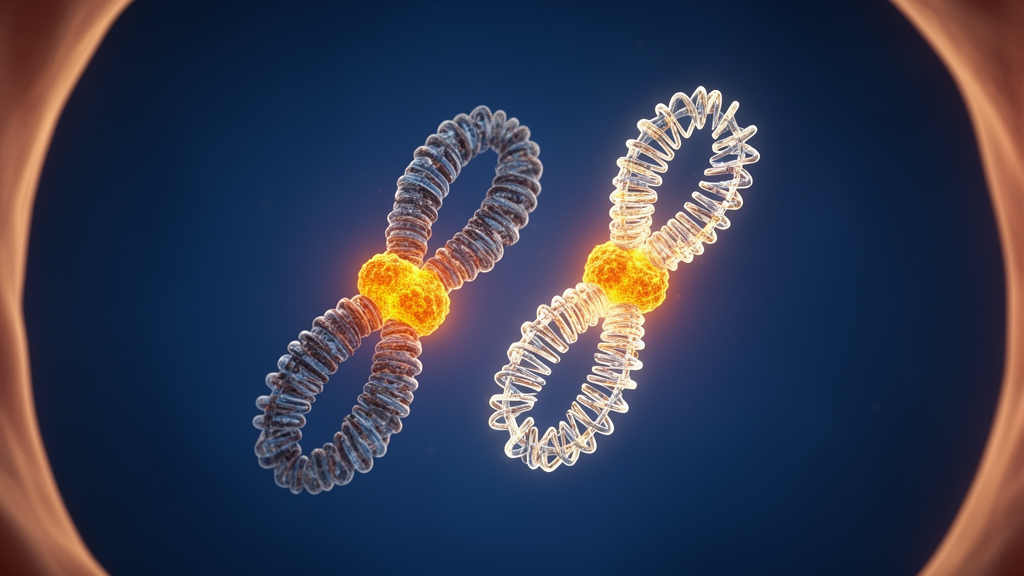
Recent genome sequences lend support to a long-debated idea in sex chromosome evolution: the extensive sex-linked regions seen in some species may not require any active recombination suppression process at all. Instead, according to a review by Deborah Charlesworth published in PLOS Genetics, the sex-determining locus may simply sit near a centromere, where the well-known “centromere effect” keeps recombination rates low.

Centromere-proximal regions of chromosomes recombine rarely as a general property of genomes. If a sex-determining gene lies in or near such a pericentromeric region, the surrounding stretch of DNA can become sex-linked without invoking any special evolutionary mechanism. On this view, debates about which types of selection might drive the spread of recombination suppression become unnecessary, because the low recombination is a pre-existing feature of the genome region itself.

The review outlines the properties of genome regions that recombine rarely, including pericentromeric regions, and examines sex-linked regions that overlap with them. Charlesworth notes that it is difficult to distinguish special features of such sex-linked regions that would indicate they have undergone an active recombination suppression process. One property most likely to be specific to completely sex-linked regions is major gene loss from Y- or W-linked regions of genes that are still present in their X- or Z-linked counterparts, an asymmetry observed in many species.

However, if pericentromeric regions are characterised by ephemeral gene content and low gene expression, asymmetry between the sex chromosomes in pericentromeric sex-linked regions might be less pronounced than in sex-linked regions elsewhere in the genome. The review reports that similar levels of Y and X degeneration are indeed documented in several species, consistent with this expectation. In addition, some sex-linked regions overlapping pericentromeres may not be completely sex-linked, which could explain findings of extensive sex-linked regions showing low Y-X or W-Z divergence. The work suggests that where a sex-determining locus lies near a centromere, genome geography alone may shape the evolution of sex chromosomes.

Subject of Research: The role of pericentromeric genome regions and the centromere effect in sex chromosome evolution

Article Title: The peculiar properties of pericentromeric regions of genomes and their influence on sex chromosome evolution

Article References: Charlesworth, D. (2026). The peculiar properties of pericentromeric regions of genomes and their influence on sex chromosome evolution. PLOS Genetics, 22(10), e1012333. https://doi.org/10.1371/journal.pgen.1012333

Image Credits: AI Generated

DOI: 10.1371/journal.pgen.1012333

Keywords: sex chromosomes, pericentromeric regions, centromere effect, recombination suppression, sex-linked regions, Y chromosome degeneration, genome evolution, PLOS Genetics, Deborah Charlesworth, Y-X divergence, peculiar, properties

Cite Scienmag News

Juliet Wilcox. (October 27, 2026). Centromeres may explain suppressed recombination in sex chromosome evolution. Scienmag. https://scienmag.com/centromeres-may-explain-suppressed-recombination-in-sex-chromosome-evolution/


Juliet Wilcox. "Centromeres may explain suppressed recombination in sex chromosome evolution." Scienmag, 27 October 2026, https://scienmag.com/centromeres-may-explain-suppressed-recombination-in-sex-chromosome-evolution/. Accessed 27 October 2026.

Juliet Wilcox. "Centromeres may explain suppressed recombination in sex chromosome evolution." Scienmag. October 27, 2026. https://scienmag.com/centromeres-may-explain-suppressed-recombination-in-sex-chromosome-evolution/

Tags: centromere effectDeborah Charlesworthevolution of sex chromosomesgene loss in sex chromosomesgenome evolutiongenome sequencing insightsgenomic regions near centromereslow recombination regionspeculiarpericentromeric regionsPLOS Geneticspropertiesrecombination suppressionsex chromosome differentiationsex chromosome evolutionsex chromosomessex-determining locisex-linked genomic regionssex-linked regionsY chromosome degenerationY-X divergence
Share26Tweet16
Previous Post

Machine Learning Forecasts Weight Loss and App Engagement in Real-World Digital Obesity Care

Next Post

Sea slug study reveals tRNA modifications shift during habituation learning

Related Posts

Bacteria Turn Phage Immune Evasion Into a Deadly Self-Destruct Signal
Biology

Bacteria Turn Phage Immune Evasion Into a Deadly Self-Destruct Signal

October 27, 2026
Genomic Surveillance Reveals Hidden Transmission and Rising Drug Resistance in C. difficile
Biology

Genomic Surveillance Reveals Hidden Transmission and Rising Drug Resistance in C. difficile

October 27, 2026
New Wingless Rove Beetle Species Described from High Elevations in the Colombian Andes
Biology

New Wingless Rove Beetle Species Described from High Elevations in the Colombian Andes

October 27, 2026
CDK1 acts as a sensitive regulator of embryonic muscle growth in goats
Biology

CDK1 acts as a sensitive regulator of embryonic muscle growth in goats

October 27, 2026
Three New Parasitoid Wasp Species Discovered in Borneo, Marking the Genus Wroughtonia’s First Record on the Island
Biology

Three New Parasitoid Wasp Species Discovered in Borneo, Marking the Genus Wroughtonia’s First Record on the Island

October 27, 2026
Italy’s Wetland Plants: A 70-Year Review Reveals 1,265 Studies and Big Gaps
Biology

Italy’s Wetland Plants: A 70-Year Review Reveals 1,265 Studies and Big Gaps

October 27, 2026
Next Post
Sea slug study reveals tRNA modifications shift during habituation learning

Sea slug study reveals tRNA modifications shift during habituation learning

  • Mothers who receive childcare support from maternal grandparents show more optimized

    Mothers who receive childcare support from maternal grandparents show more parental warmth, finds NTU Singapore study

    27656 shares
    Share 11059 Tweet 6912
  • University of Seville Breaks 120-Year-Old Mystery, Revises a Key Einstein Concept

    1061 shares
    Share 424 Tweet 265
  • Bee body mass, pathogens and local climate influence heat tolerance

    682 shares
    Share 273 Tweet 171
  • Researchers record first-ever images and data of a shark experiencing a boat strike

    546 shares
    Share 218 Tweet 137
  • Groundbreaking Clinical Trial Reveals Lubiprostone Enhances Kidney Function

    531 shares
    Share 212 Tweet 133
Science

Embark on a thrilling journey of discovery with Scienmag.com—your ultimate source for cutting-edge breakthroughs. Immerse yourself in a world where curiosity knows no limits and tomorrow’s possibilities become today’s reality!

RECENT NEWS

  • Sea slug study reveals tRNA modifications shift during habituation learning
  • Centromeres may explain suppressed recombination in sex chromosome evolution
  • Machine Learning Forecasts Weight Loss and App Engagement in Real-World Digital Obesity Care
  • Psychiatric comorbidities linked to self-harm and suicide risk in seizure-like disorder study

Categories

  • Agriculture
  • Anthropology
  • Archaeology
  • Athmospheric
  • Biology
  • Biotechnology
  • Blog
  • Bussines
  • Cancer
  • Chemistry
  • Climate
  • Earth Science
  • Editorial Policy
  • Marine
  • Mathematics
  • Medicine
  • Pediatry
  • Policy
  • Psychology & Psychiatry
  • Science Education
  • Science News
  • Social Science
  • Space
  • Technology and Engineering

Subscribe to Blog via Email

Enter your email address to subscribe to this blog and receive notifications of new posts by email.

Join 5,151 other subscribers

© 2025 Scienmag - Science Magazine

Welcome Back!

Login to your account below

Forgotten Password?

Retrieve your password

Please enter your username or email address to reset your password.

Log In
No Result
View All Result
  • HOME
  • SCIENCE NEWS
  • CONTACT US

© 2025 Scienmag - Science Magazine

Discover more from Science

Subscribe now to keep reading and get access to the full archive.

Continue reading