


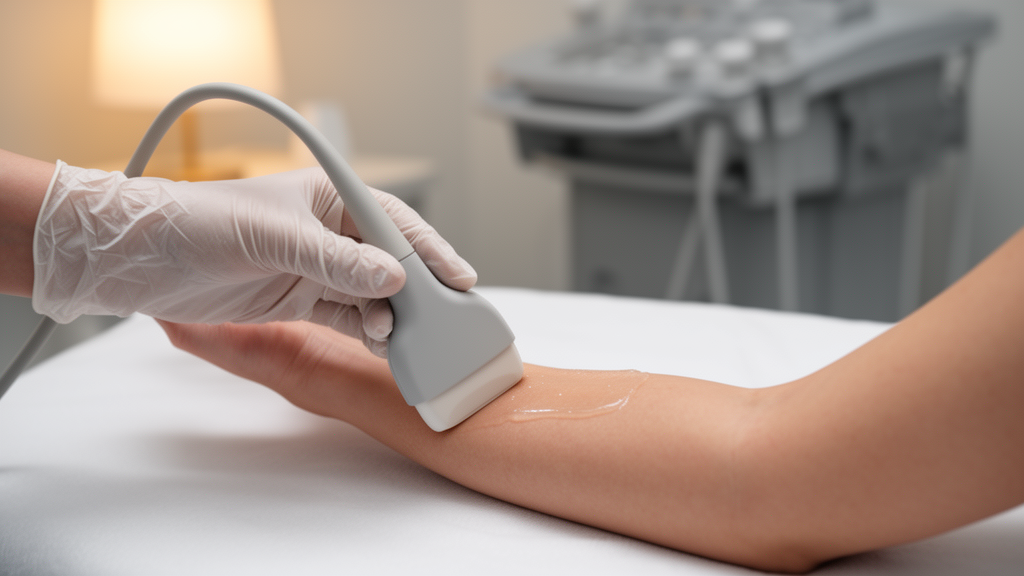
A new review published in Frontiers in Physiology on 27 October 2026 by researchers at the First Affiliated Hospital of China Medical University synthesizes the acoustic fundamentals, mechanobiological pathways, and translational progress of therapeutic ultrasound across wound healing, scar intervention, skin remodeling, and appendage regeneration.
The biological power of ultrasound stems from two broad physical effects. Thermal effects arise when tissue absorbs acoustic energy and heats locally; high-intensity focused ultrasound, or HIFU, exploits this by depositing energy at precise depths to create thermal coagulation zones. This triggers collagen denaturation, immediate contraction, and subsequent tissue remodeling, which is why HIFU has found clinical use in skin tightening, tissue ablation, and certain scar therapies. Mechanical effects, by contrast, do not require heating. Acoustic radiation force transfers momentum to tissues, and acoustic streaming produces fluid motion and shear stress even without bubbles. Cavitation—the oscillation, expansion, or collapse of microscopic bubbles under alternating sound pressure—generates microstreaming and shear stress in its stable form, and microjets and shock waves in its more violent inertial form.
These mechanical actions can be harnessed to open the skin’s most stubborn barrier. Low-frequency ultrasound temporarily alters the arrangement of lipids in the stratum corneum, creating transient hyperpermeable regions that allow drugs to diffuse from the skin surface into the epidermis and dermis. Combining low- and high-frequency ultrasound in sequence enhances transdermal delivery of macromolecules, and adding microbubbles further augments local drug transport. The review stresses, however, that the goal of phonophoresis research is not to maximize permeability at any cost: enhanced cavitation also raises the risk of erythema, barrier damage, and local inflammation, so the real challenge is balancing delivery efficiency against reversible barrier recovery.
At the cellular level, ultrasound’s mechanical stimulation is converted into biochemical signals through well-known mechanobiological machinery. Cyclic mechanical loading is sensed by integrin adhesion complexes, the cytoskeleton, and mechanosensitive ion channels. In human skin fibroblasts, low-intensity pulsed ultrasound (LIPUS) activates β1 integrin, the Rho/ROCK pathway, Src, and ERK1/2; blocking β1 integrin or inhibiting ROCK, Src, or MEK abolishes these effects, and LIPUS-induced DNA synthesis in these cells depends on that same β1 integrin–Rho/ROCK/Src/ERK axis. High-intensity ultrasound applied to human dermal fibroblasts has been reported to alter p38 and ERK1/2 expression and enhance cell migration.
Among mechanosensitive ion channels, Piezo1 has attracted particular attention. In studies using patient-derived keloid fibroblasts, 110 kHz low-frequency ultrasound inhibited fibroblast migration and promoted apoptosis through Piezo1 activation—a finding the review emphasizes concerns pathological fibroblast suppression rather than general promotion of skin regeneration. Separately, low-intensity ultrasound induces redistribution of intracellular calcium in keratinocytes and increases basement membrane permeability, and LIPUS modulates keratinocyte migration through calcium-dependent signaling, with calcium-free medium and channel blockers abolishing the responses. The authors caution that these findings support model-dependent mechanosensitive responses rather than a universally established regenerative pathway.
Translational evidence is strongest but still limited in wound care. A Cochrane review concluded that studies on venous leg ulcers are of limited quality with inconsistent results, leaving it uncertain whether therapeutic ultrasound adds healing benefit beyond standard compression therapy. A 2024 meta-analysis of 11 randomized controlled trials covering 696 patients reported higher healing rates with ultrasound-assisted therapy, but with high heterogeneity in healing-time analysis and no significant differences in wound perfusion or transcutaneous oxygen pressure. A 40-patient randomized trial showed only accelerated early healing, with no significant difference in six-month healing rates. Most studies of diabetic foot ulcers have examined ultrasound-assisted debridement rather than direct LIPUS stimulation of the wound bed, and current evidence is insufficient to determine any impact on amputation, hospitalization, or recurrence risk.
Animal models tell a more encouraging story. In diabetic mice, 1 MHz pulsed ultrasound increased granulation tissue formation and re-epithelialization at 0.4 MPa after two weeks, with effects that were sound pressure- and time-dependent though individual responses varied. Ultrasound combined with microbubbles improved closure, granulation, and angiogenesis in diabetic rat wounds, accompanied by changes in macrophage markers and inflammatory signaling, and shifted macrophage polarization while alleviating persistent pro-inflammatory responses. In a rat model of acute wounds, diagnostic ultrasound with microbubbles improved re-epithelialization and collagen deposition alongside downregulation of miR-26b-5p and altered GSK3β-related signaling. Therapeutic ultrasound also promoted fibroblast migration and wound healing in diabetic and aged mice via the Ca²⁺/CaMKII/Tiam1/Rac1 pathway. In a small 20-patient clinical series, HIFU thermotherapy improved scar size, pigmentation, pain, and pruritus.
Vascular and inflammatory effects recur across settings. LIPUS increased tissue perfusion, vascular density, and expression of VEGF and basic fibroblast growth factor in a rabbit capsule tissue model, promoted angiogenesis in human umbilical vein endothelial cells with concurrent AKT-pathway and DNA methylation changes, and improved some vascular function and skin perfusion parameters in patients with chronic limb-threatening ischemia. LIPUS also enhanced uptake of adipose-derived stem cell exosomes by target cells, augmenting their pro-angiogenic effects in diabetic wounds, and increased release of anti-inflammatory extracellular vesicles from bone marrow mesenchymal stem cells in vitro and in allogeneic skin transplantation models. In UV-induced skin aging mice, LIPUS enhanced recruitment of monocytes and macrophages and promoted clearance of senescent cells. The review is careful to note that these vascular findings in capsules, endothelial cells, and limb ischemia do not establish the same causal pathway in ultrasound-treated skin wounds.
A rapidly growing branch of the field couples ultrasound with responsive biomaterials. LIPUS-responsive piezoelectric nanofiber membranes convert acoustic mechanical energy into local electrical stimulation, promoting wound healing, collagen remodeling, angiogenesis, and restoration of skin appendage-like structures in full-thickness skin defect models, while flexible piezoelectric patches promoted restoration of sweat gland structure and secretory function. BaTiO₃ piezocatalytic composite hydrogels generate reactive oxygen species under ultrasound triggering, exerting local antibacterial effects while promoting healing in infected full-thickness wounds. Piezoelectric-driven microneedle arrays enhanced transdermal delivery of methotrexate in psoriasis models, and carbon dot-loaded microbubbles provided an oxygen source under acoustic cavitation, enhancing sonodynamic therapy with both antibacterial and wound-healing effects in animal models of infected diabetic wounds. Focused ultrasound has also shown efficacy in improving laxity and contour of the face, neck, and selected body regions—changes the authors classify as tissue remodeling rather than complete regeneration of epidermis, dermis, and appendages.
The review’s verdict is measured. The integrin–focal adhesion–cytoskeleton axis, mechanosensitive ion channels, and calcium signaling provide a reasonable framework for ultrasound’s mechanobiological effects, and pathways such as MAPK/ERK, PI3K/Akt, TGF-β/Smad, and NF-κB may participate in proliferation and inflammatory responses—but the specific molecular mechanisms remain unclear, and predicted miRNA targets or coincident methylation changes alone do not demonstrate that any pathway is required. Major barriers to clinical translation include inconsistent acoustic parameters and outcome measures and insufficient long-term safety data. The authors call for standardized reporting of transducer geometry, calibrated intensities with explicit spatial and temporal averaging, pulse parameters, and temperature and cavitation monitoring, alongside ultrasound-only, material-only, and inactive-material controls. Regenerative claims, they argue, must be supported by functional outcomes such as barrier recovery or appendage activity rather than wound closure or collagen deposition alone.
Subject of Research: Therapeutic ultrasound mechanisms and applications in skin repair and regeneration
Article Title: Applications and mechanisms of therapeutic ultrasound in skin repair and regeneration
Article References: He, Z., Shao, S., Fang, Y., Xu, X., & Zhang, G. (2026). Applications and mechanisms of therapeutic ultrasound in skin repair and regeneration. Frontiers in Physiology, 17, 1981431. https://doi.org/10.3389/fphys.2026.1981431
Image Credits: AI Generated
DOI: 10.3389/fphys.2026.1981431
Keywords: therapeutic ultrasound, skin regeneration, wound healing, LIPUS, HIFU, cavitation, mechanotransduction, Piezo1, microbubbles, piezoelectric biomaterials, transdermal delivery, scar therapy
Cite Scienmag News
Matthew Wilson. (October 27, 2026). Therapeutic Ultrasound Shows Promise for Skin Repair, But Evidence Gaps Persist. Scienmag. https://scienmag.com/therapeutic-ultrasound-shows-promise-for-skin-repair-but-evidence-gaps-persist/
Matthew Wilson. "Therapeutic Ultrasound Shows Promise for Skin Repair, But Evidence Gaps Persist." Scienmag, 27 October 2026, https://scienmag.com/therapeutic-ultrasound-shows-promise-for-skin-repair-but-evidence-gaps-persist/. Accessed 27 October 2026.
Matthew Wilson. "Therapeutic Ultrasound Shows Promise for Skin Repair, But Evidence Gaps Persist." Scienmag. October 27, 2026. https://scienmag.com/therapeutic-ultrasound-shows-promise-for-skin-repair-but-evidence-gaps-persist/


