

Tuesday, October 27, 2026
Science
No Result
View All Result
  • Login
  • HOME
  • SCIENCE NEWS
  • CONTACT US
  • HOME
  • SCIENCE NEWS
  • CONTACT US
No Result
View All Result
Scienmag
No Result
View All Result
Home Science News Chemistry

Iridium Catalyst Achieves Elusive para-C–H Activation of Free Aromatic Carboxylic Acids

October 27, 2026
in Chemistry
Bethany Barker
By Bethany Barker Scienmag Editorial Profile - Catalysis
Reading Time: 3 mins read
0
Iridium Catalyst Achieves Elusive para-C–H Activation of Free Aromatic Carboxylic Acids

Iridium Catalyst Achieves Elusive para-C–H Activation of Free Aromatic Carboxylic Acids

65
SHARES
587
VIEWS
Share on FacebookShare on Twitter
ADVERTISEMENT

Chemists have reported a method for directly activating and borylating para C–H bonds in free aromatic carboxylic acids, a transformation that has long resisted selective control. The work, published in Nature Catalysis, describes an iridium-based catalytic system designed to exploit the combined action of multiple noncovalent interactions, allowing the catalyst to reach a position on the aromatic ring that is remote from the carboxylic acid group without the aid of attached directing groups.

Direct and regioselective functionalization of remote C–H bonds in aromatic systems remains one of the foremost challenges in organic synthesis. The difficulty is sharpest when the substrate carries native functional groups that lack exogenous directing motifs, because the catalyst has no built-in handle to guide it to a specific position on the ring. Carboxylic acids are among the most synthetically versatile and pharmaceutically relevant of such groups, serving as indispensable building blocks across many disciplines, yet achieving para-C–H activation of the free acids has remained an elusive goal.

The new study reports a successful method for para-C–H activation and borylation of free aromatic carboxylic acids. According to the authors, the selectivity arises from a strategically designed iridium-based catalytic system that leverages the synergistic effect of multi-noncovalent interactions. Rather than relying on a covalently tethered directing group, the catalyst engages the substrate through several weak interactions at once, positioning the iridium center near the para C–H bond.

The method operates under mild reaction conditions, offers broad substrate scope and achieves exceptional para selectivity, the researchers state. These attributes matter practically: reactions that tolerate free carboxylic acids without prior derivatization can be applied directly to molecules that already carry the acid group, including scaffolds common in pharmaceutical chemistry.

The products of the reaction, para-borylated carboxylic acids, are described as versatile bifunctional synthons. Because the boryl group can be carried forward into further transformations while the carboxylic acid remains available for its own chemistry, the products enable sequential functionalization and streamlined access to diverse molecular scaffolds. The authors present this dual functionality as the synthetic payoff of the method.

The publication is accompanied by figures outlining the significance of carboxylic acids and prior developments in the field, the reaction development for para borylation, and the substrate scope covering substituted benzoic acids and heteroaromatic carboxylic acids. Additional figures document synthetic applications of the para-C–H activation and density functional theory computations aimed at understanding the origin of the para selectivity, along with an investigation of the para-selective borylation itself.

The computational component is notable because it addresses the central mechanistic question: why the catalyst selects the para position over other available C–H bonds.

By overcoming this longstanding challenge in C–H functionalization, the study adds a route to para-functionalized carboxylic acids and their derivatives directly from the free acids. The work was published on 27 October 2026 in Nature Catalysis by researchers including Sayan Dey, Jaitri Das, Li-Li Wang, Rong-Lin Zhong and Buddhadeb Chattopadhyay.

Subject of Research: Iridium-catalysed para-C–H activation and borylation of free aromatic carboxylic acids

Article Title: Iridium-catalysed para-C–H activation and borylation of native aromatic carboxylic acids

Article References: Dey, S., Das, J., Wang, L.-L., Zhong, R.-L., & Chattopadhyay, B. (2026). Iridium-catalysed para-C–H activation and borylation of native aromatic carboxylic acids. Nature Catalysis. https://doi.org/10.1038/s41929-026-01622-8

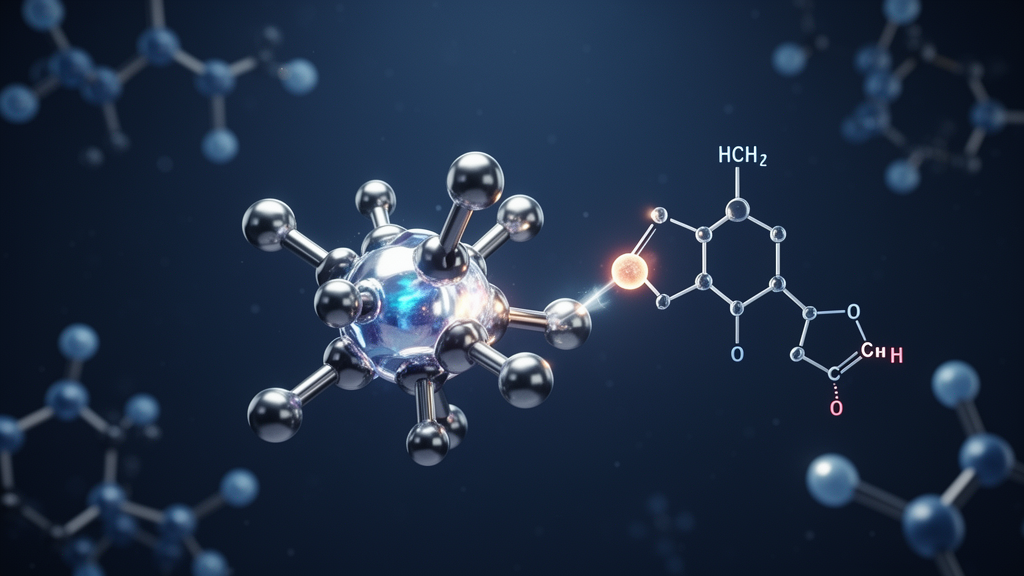
Image Credits: AI Generated

DOI: 10.1038/s41929-026-01622-8

Keywords: C–H activation, borylation, iridium catalysis, carboxylic acids, para selectivity, noncovalent interactions, regioselectivity, organic synthesis, Nature Catalysis, bifunctional synthons, Iridium-catalysed, para-C

Cite Scienmag News

Bethany Barker. (October 27, 2026). Iridium Catalyst Achieves Elusive para-C–H Activation of Free Aromatic Carboxylic Acids. Scienmag. https://scienmag.com/iridium-catalyst-achieves-elusive-para-c-h-activation-of-free-aromatic-carboxylic-acids/


Bethany Barker. "Iridium Catalyst Achieves Elusive para-C–H Activation of Free Aromatic Carboxylic Acids." Scienmag, 27 October 2026, https://scienmag.com/iridium-catalyst-achieves-elusive-para-c-h-activation-of-free-aromatic-carboxylic-acids/. Accessed 27 October 2026.

Bethany Barker. "Iridium Catalyst Achieves Elusive para-C–H Activation of Free Aromatic Carboxylic Acids." Scienmag. October 27, 2026. https://scienmag.com/iridium-catalyst-achieves-elusive-para-c-h-activation-of-free-aromatic-carboxylic-acids/

Tags: bifunctional synthonsborylationborylation of free aromatic acidsC–H activationcarboxylic acidscatalytic system design for para-position activationchallenges in direct aromatic C–H functionalizationIridium catalysisIridium-catalysedIridium-catalyzed para-C–H activation of aromatic carboxylic acidsNature CatalysisNature Catalysis publication on C–H activationnoncovalent interactionsnoncovalent interactions in catalysisorganic synthesisovercoming directing group limitations in organic synthesispara selectivitypara-Cpharmaceutical relevance of aromatic carboxylic acidsregioselective aromatic C–H bond activationregioselectivityselective remote C–H functionalization
Share26Tweet16
Previous Post

Mitofusin-blocking peptides shrink heart attack damage in mice

Next Post

III-nitride sensor-memristor uses interfacial polarization for in-sensor computing

Related Posts

Stable Free Oxoboranes Isolated via CO-Triggered Transformation of Heterocumulenes
Chemistry

Stable Free Oxoboranes Isolated via CO-Triggered Transformation of Heterocumulenes

October 27, 2026
Nickel catalyst pairs anionic and neutral ligands to steer cyclohexane stereochemistry
Chemistry

Nickel catalyst pairs anionic and neutral ligands to steer cyclohexane stereochemistry

October 27, 2026
Self-regenerating platinum catalyst keeps ammonia hydrogen production running for 500 hours
Chemistry

Self-regenerating platinum catalyst keeps ammonia hydrogen production running for 500 hours

October 27, 2026
Seed-confined alloying unlocks immiscible W–Bi–Pt catalysts for methanol oxidation
Chemistry

Seed-confined alloying unlocks immiscible W–Bi–Pt catalysts for methanol oxidation

October 27, 2026
Paris plume study shows aerosols change as they drift downwind
Athmospheric

Paris plume study shows aerosols change as they drift downwind

October 27, 2026
Chemists finally isolate long-sought stable oxoboranes at room temperature
Chemistry

Chemists finally isolate long-sought stable oxoboranes at room temperature

October 27, 2026
Next Post
III-nitride sensor-memristor uses interfacial polarization for in-sensor computing

III-nitride sensor-memristor uses interfacial polarization for in-sensor computing

  • Mothers who receive childcare support from maternal grandparents show more optimized

    Mothers who receive childcare support from maternal grandparents show more parental warmth, finds NTU Singapore study

    27656 shares
    Share 11059 Tweet 6912
  • University of Seville Breaks 120-Year-Old Mystery, Revises a Key Einstein Concept

    1061 shares
    Share 424 Tweet 265
  • Bee body mass, pathogens and local climate influence heat tolerance

    682 shares
    Share 273 Tweet 171
  • Researchers record first-ever images and data of a shark experiencing a boat strike

    546 shares
    Share 218 Tweet 137
  • Groundbreaking Clinical Trial Reveals Lubiprostone Enhances Kidney Function

    531 shares
    Share 212 Tweet 133
Science

Embark on a thrilling journey of discovery with Scienmag.com—your ultimate source for cutting-edge breakthroughs. Immerse yourself in a world where curiosity knows no limits and tomorrow’s possibilities become today’s reality!

RECENT NEWS

  • III-nitride sensor-memristor uses interfacial polarization for in-sensor computing
  • Iridium Catalyst Achieves Elusive para-C–H Activation of Free Aromatic Carboxylic Acids
  • Mitofusin-blocking peptides shrink heart attack damage in mice
  • Mid-Cretaceous amber reveals a flourishing island cradle of Southeast Asian plants

Categories

  • Agriculture
  • Anthropology
  • Archaeology
  • Athmospheric
  • Biology
  • Biotechnology
  • Blog
  • Bussines
  • Cancer
  • Chemistry
  • Climate
  • Earth Science
  • Editorial Policy
  • Marine
  • Mathematics
  • Medicine
  • Pediatry
  • Policy
  • Psychology & Psychiatry
  • Science Education
  • Science News
  • Social Science
  • Space
  • Technology and Engineering

Subscribe to Blog via Email

Enter your email address to subscribe to this blog and receive notifications of new posts by email.

Join 5,151 other subscribers

© 2025 Scienmag - Science Magazine

Welcome Back!

Login to your account below

Forgotten Password?

Retrieve your password

Please enter your username or email address to reset your password.

Log In
No Result
View All Result
  • HOME
  • SCIENCE NEWS
  • CONTACT US

© 2025 Scienmag - Science Magazine

Discover more from Science

Subscribe now to keep reading and get access to the full archive.

Continue reading