


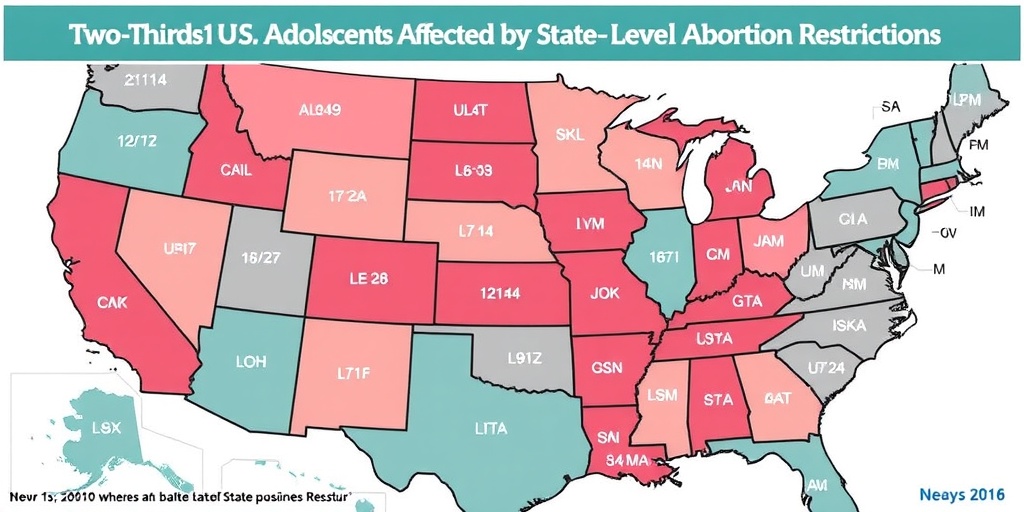
In the wake of the 2022 Supreme Court decision in Dobbs v. Jackson Women’s Health Organization, a significant shift in the landscape of abortion access has unfolded across the United States, particularly impacting adolescent girls aged 13 to 17. According to recently published research by Rutgers Health, over 7 million young girls now reside in states that have enacted strict abortion bans, imposed rigid gestational limits, or instituted requirements for parental involvement in the decision-making process regarding abortion. This alarming statistic underscores the profound implications of these legal changes for the future of reproductive health for minors in the U.S.
The research, which appears in JAMA Pediatrics, serves as the first comprehensive exploration of the experiences faced by adolescent girls following the tightening of abortion access. Comments from Laura Lindberg, a key author of the study, offer a stark picture of the current predicament: "As a result of Dobbs, two-thirds of girls ages 13 to 17 now live in states that ban or severely restrict their abortion access." This statement captures a critical dimension of the current socio-legal landscape, one that disproportionately affects minors who often lack the means to navigate the complex terrain of reproductive healthcare options available to adults.
Minors, in particular, face unique obstacles when it comes to accessing abortion services. Unlike adults, who may consider traveling to another state or utilize telehealth options, adolescent girls are frequently hindered by their age and the accompanying legal requirements. Lindberg highlights this disparity, asserting that the existing policies disproportionately impact young females, rendering them powerless in situations that demand autonomy and agency over their own bodies. Without the ability to make informed choices about reproductive health, these young individuals are stripped of control over their lives and futures, raising ethical concerns about their welfare and rights.
As of December 2023, the landscape of abortion access continues to grapple with an alarming reality: 12 states have implemented total abortion bans, and an additional 10 maintain restrictive gestational limits. The current reality demonstrates a bleak intersection of public policy and healthcare for minors. The researchers found that among these 24 states, a staggering 42% of adolescent girls are subject to regulations demanding parental consent or notification before any abortion procedure can be undertaken. Such requirements not only complicate a minor’s access to essential healthcare but also add layers of difficulty that may deter them entirely from seeking help.
The research further reveals that 66% of the approximately 10.6 million adolescent girls in the U.S. live in jurisdictions characterized by abortion bans or stringent regulations surrounding the procedure. These numbers reflect a concerning trend in the ongoing battle over reproductive rights in America, signaling a retreat from previously established healthcare tenets that prioritize the needs and rights of younger populations. The research thus highlights an urgent need for advocacy and interventions aimed at safeguarding the reproductive health rights of minors.
New Jersey stands in stark contrast to many other states by providing a protective environment for minors seeking abortion services, as it does not impose parental involvement requirements. This distinction points to a broader conversation about the variations in state policies and their subsequent implications for access to reproductive healthcare. In states where minors are forced to involve parents in critical healthcare decisions, unnecessary hurdles are created that may deter girls from accessing services they urgently need.
The study’s reliance on population estimates from the Centers for Disease Control and Prevention illustrates the far-reaching impact of policy decisions on real lives. By drawing on data reflective of the U.S. 2020 Census, the researchers illuminate the significance of existing legal frameworks and their tangible effects on adolescent populations. This perspective casts a light on the intersections of healthcare, law, and adolescent development, revealing how legislation can shape not only access to essential services but also the overall well-being and autonomy of young individuals.
Policy analysts and advocates alike must carefully consider these findings, especially as ongoing debates about reproductive rights continue to unfold. The landscape is changing, and the voices of those most affected—adolescent girls—must be forefront in discussions surrounding healthcare reform. Without a commitment to ensuring that minors have equitable access to reproductive healthcare, a generation of young women risks being left without the necessary support to navigate their reproductive choices safely.
In addition to addressing direct access to abortion services, it is critical to engage in holistic discussions about the broader implications of these restrictions. Access to education, counseling, and support systems that empower young girls to make informed decisions about their reproductive health is essential. Policymakers are urged to consider the multifaceted aspects of adolescent health, advocating for a framework that prioritizes comprehensive healthcare access rather than punitive measures that further marginalize young populations.
Given the current landscape of reproductive health politics, it is incumbent upon legislators, health professionals, and advocates to unite in a concerted effort to mitigate the adverse effects of these restrictive policies. By championing the rights of young girls, we can forge a path that fosters autonomy, empowerment, and access to safe reproductive care—allowing adolescents to navigate their futures without the ominous shadow of legislative constraints limiting their choices.
In conclusion, the alarming findings emerging from this research reflect an urgent call to action. As more states move towards restrictive abortion policies in response to the Dobbs decision, the need for advocacy and legislative reform becomes ever more critical. Protecting the reproductive rights of adolescent girls must be a paramount concern as we strive to create an environment that respects their autonomy and ensures their ability to access essential healthcare services.
Cite Scienmag News
Ophelia Keating. (April 7, 2025). Two-Thirds of U.S. Adolescents Affected by State-Level Abortion Restrictions. Scienmag. https://scienmag.com/two-thirds-of-u-s-adolescents-affected-by-state-level-abortion-restrictions/
Ophelia Keating. "Two-Thirds of U.S. Adolescents Affected by State-Level Abortion Restrictions." Scienmag, 7 April 2025, https://scienmag.com/two-thirds-of-u-s-adolescents-affected-by-state-level-abortion-restrictions/. Accessed 7 September 2026.
Ophelia Keating. "Two-Thirds of U.S. Adolescents Affected by State-Level Abortion Restrictions." Scienmag. April 7, 2025. https://scienmag.com/two-thirds-of-u-s-adolescents-affected-by-state-level-abortion-restrictions/


