


A single blood protein measured the morning after hospital admission may reveal which older adults are most likely to die within three years of hip fracture surgery, according to a new observational study from China. Researchers at Nanyang Central Hospital found that patients with elevated preoperative levels of P-selectin, a cell adhesion molecule released by activated platelets and blood vessel linings, faced more than three times the hazard of death over three years compared with patients whose levels fell below a study-derived threshold. The finding, published in Frontiers in Medicine, offers one of the first detailed looks at how the selectin family of adhesion molecules behaves in the aftermath of orthopedic trauma in the elderly, a population in which hip fractures remain one of the most devastating and common injuries of aging.
Hip fractures are a defining public health challenge of aging societies. Beyond the immediate trauma of the break itself, many older patients experience a steep and often permanent decline in mobility, independence, and quality of life even after the fracture is surgically repaired. Identifying reliable prognostic factors is therefore essential for clinical risk stratification, and exploring novel biomarkers could provide valuable insight into the biological mechanisms associated with postoperative recovery, helping clinicians predict long-term outcomes such as mortality and independent ambulation in order to better tailor early interventions and rehabilitation strategies. The team behind the new study hypothesized that molecules reflecting the body’s inflammatory and metabolic derangements after hip fracture might carry exactly this kind of prognostic information, providing a biological window on the processes that determine whether a patient survives and walks independently years later.
Selectins are a family of calcium-dependent, transmembrane cell adhesion molecules with distinct and complementary roles in inflammation, hematopoiesis, and immune responses. The family has three principal members, each with a different cellular home. E-selectin is expressed exclusively on endothelial cells, the cells lining blood vessels, and its expression is induced by inflammatory cytokines and oxidative stress rather than being constitutively present. P-selectin is prestored in the alpha-granules of platelets and in the Weibel-Palade bodies of endothelial cells, from which it is rapidly shuttled to the cell surface upon activation, making it a sensitive marker of platelet and vascular activation. L-selectin is primarily expressed on circulating leukocytes and mediates the initial tethering and rolling of these immune cells along the vascular endothelium during inflammatory cascades. Emerging evidence also suggests selectins and their ligands can directly influence bone metabolism, with E-selectin ligand-1 acting as a critical regulator of bone remodeling by limiting bioactive transforming growth factor-beta in the bone microenvironment, while high P-selectin concentrations have been positively correlated with the incidence of sarcopenia, the age-related loss of muscle mass and physical performance that impairs postural stability and recovery after fracture.
The study enrolled consecutive patients older than 60 years who underwent surgery for a primary, low-energy hip fracture, either a femoral neck or intertrochanteric fracture, between June 2019 and June 2022. Patients with pathological fractures caused by malignancy or metabolic bone disease, severe multiple trauma, conservative non-surgical management, or incomplete records were excluded. Fasting peripheral venous blood was drawn on the first morning after admission, and serum was stored at minus 80 degrees Celsius without freeze-thaw cycles until analysis. Concentrations of E-, L-, and P-selectin were quantified with enzyme-linked immunosorbent assays run in duplicate by operators blinded to clinical outcomes, with intra- and inter-assay coefficients of variation consistently below 12 percent, and a post-hoc analysis confirmed no significant correlation between storage duration and measured concentrations. Of 761 patients initially screened, 473 were enrolled for biomarker measurement and 431 completed the full three-year follow-up, forming the final analytical cohort of 302 long-term survivors and 129 patients who died within three years.
The researchers followed all participants for 36 months after surgery, with evaluations at 3, 6, 12, 24, and 36 months through clinic visits or standardized telephone interviews. The primary outcome was three-year all-cause mortality, defined as the time from surgery to death from any cause, with patients alive at the end of follow-up treated as censored observations. The secondary outcome was independent ambulation at three years, defined as the ability to perform routine daily walking indoors and outdoors without physical assistance, accompaniment, or supervision from another person, with the use of a single cane or walker permitted. Patients who had died were counted as not having regained independent ambulation, a decision that would later prove analytically important. Baseline characteristics, including age, body mass index, comorbidity burden measured by the Charlson Comorbidity Index, fracture location, surgical procedure, anesthesia type, and routine laboratory parameters such as hemoglobin, albumin, platelet count, and C-reactive protein, were extracted from the hospital’s electronic medical records.
The central result was striking. In the fully adjusted multivariable Cox model, which accounted for age, sex, comorbidity index, body mass index, hemoglobin, albumin, platelet count, C-reactive protein, fracture location, surgical procedure, and time from injury to surgery, above-cutoff P-selectin remained an independent predictor of three-year mortality with a hazard ratio of 3.167, a 95 percent confidence interval spanning 2.170 to 4.622, and a p value below 0.001. In a 1:1 propensity-score-matched case-control subset of 232 patients, in which baseline covariates were balanced so that all standardized mean differences fell below 0.15, patients who died within three years still exhibited significantly higher preoperative P-selectin levels than survivors, with median values of 4.18 versus 1.32 nanograms per milliliter. This persistence of the signal after rigorous balancing strengthens the argument that P-selectin carries prognostic information beyond what routine clinical variables capture.
Risk stratification using receiver operating characteristic curves reinforced the pattern. Using optimal cutoffs derived from the three-year survival curve, the above-cutoff P-selectin group, which comprised 75 of the 431 patients, showed a three-year mortality rate of 58.67 percent compared with 23.88 percent in the below-cutoff group, a risk ratio of 2.46. Elevated mortality in the high P-selectin group was already visible at three months, where mortality was 14.67 percent versus 4.49 percent, and at twelve months, where it reached 28.00 percent versus 11.24 percent. The same group had a markedly lower three-year independent ambulation rate, 38.67 percent versus 65.73 percent, and above-cutoff P-selectin was an independent predictor of reduced likelihood of independent ambulation in the full-cohort logistic models, with an odds ratio of 0.346. By contrast, above-cutoff E-selectin was associated with higher three-year mortality in unadjusted comparisons, a risk ratio of 1.46, but this association weakened and lost statistical significance after multivariable adjustment, with an adjusted hazard ratio of 1.397 and a p value of 0.072. L-selectin showed no significant association with any endpoint at any time point.
The authors are careful to note important caveats, particularly regarding functional recovery. Because death precludes the observation of walking ability, the full-cohort ambulation figures represent a composite of death or dependence. When the analysis was restricted to the 302 patients who survived the full three years, 87.09 percent had regained independent ambulation, and the difference between P-selectin groups was no longer statistically significant. This indicates that the apparent link between P-selectin and poor functional recovery is largely driven by the competing risk of death rather than by an independent effect on mobility among survivors. The team also acknowledges that the absolute predictive accuracy of P-selectin as a standalone marker was modest, with areas under the ROC curve peaking at approximately 0.625 in the full cohort and 0.656 in the time-dependent analysis, values that fall well short of the discrimination needed for standalone clinical decision-making. The cutoffs were derived and applied within the same dataset, which can inflate effect estimates, and the high-cutoff group was relatively small.
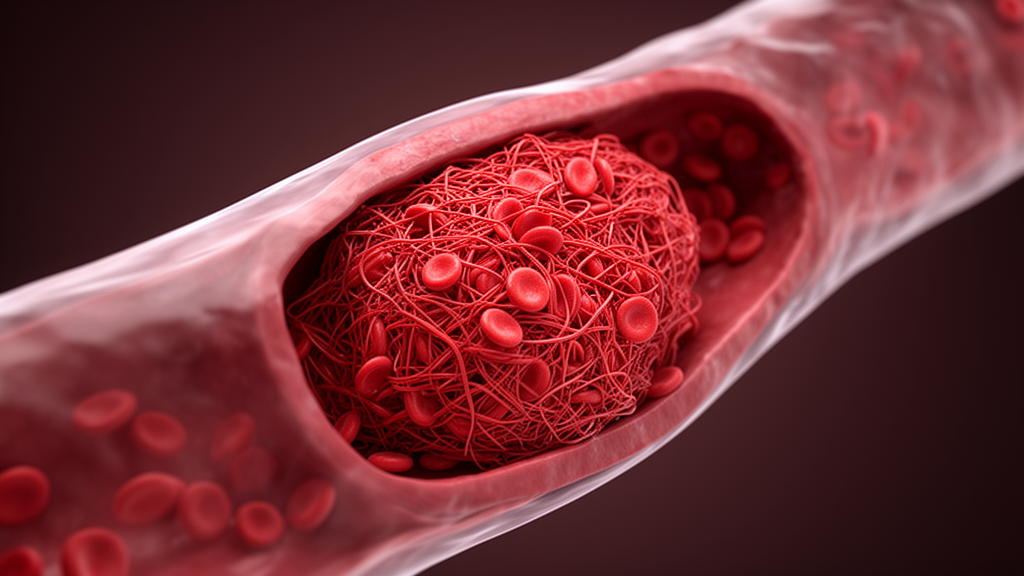
Why might P-selectin carry such prognostic weight? The researchers offer a hypothesis-generating mechanistic framework, emphasizing that none of the proposed pathways was directly measured. P-selectin sits at the intersection of thromboinflammation, the intertwined activation of blood clotting and inflammation. Upon surgical stress in osteoporotic fracture, platelet P-selectin interacts with P-selectin glycoprotein ligand-1 on monocytes to form platelet-monocyte aggregates, which are thought to promote vascular dysfunction, microvascular thrombosis, and systemic immune dysregulation. P-selectin also enhances fibrin deposition and plays a recognized role in venous thromboembolism, a frequent and serious complication of major orthopedic surgery in the elderly. Separately, the correlation between high P-selectin concentrations and sarcopenia links the systemic inflammatory burden heralded by elevated levels to the compromised long-term functional recovery observed in the above-cutoff group. Together, these mechanisms offer a plausible biological rationale for the roughly threefold increase in long-term mortality observed among patients with high admission levels.
The study’s limitations frame how far its conclusions can travel. It was a single-center observational cohort, so causality cannot be established and generalizability is uncertain. Causes of death were not categorized, which limits mechanistic interpretation. Selectins were measured only once, on the morning after admission, missing the dynamic postoperative trajectory of inflammation, and the interval from injury to admission was not recorded. Pre-fracture ambulatory status and cognitive function, among the strongest known predictors of postoperative mobility, were not included in the models. Ambulation was assessed with a locally defined binary criterion rather than a validated instrument, serum rather than citrated plasma was used for measurement, and the specific numerical cutoffs are platform-dependent and cannot be extrapolated to other assay systems. With 129 deaths across twelve model parameters, precision was near the conventional minimum. The authors call for larger, multicenter cohorts to validate P-selectin-based risk models, ideally integrated with established clinical parameters such as patient age and the Charlson Comorbidity Index, before such a biomarker can guide personalized care for older adults recovering from hip fractures.
Subject of Research: Prognostic value of serum selectin levels for mortality and ambulation after hip fracture surgery in older adults
Article Title: Association of serum selectins with outcomes in older adults following hip fracture surgery: a 3-year follow-up study
Article References: Wang, S., Li, S., Chen, D., Gao, F., & Song, X. (2026). Association of serum selectins with outcomes in older adults following hip fracture surgery: a 3-year follow-up study. Frontiers in Medicine, 13, 1932543. https://doi.org/10.3389/fmed.2026.1932543
Image Credits: AI Generated
DOI: 10.3389/fmed.2026.1932543
Keywords: P-selectin, E-selectin, L-selectin, hip fracture, older adults, mortality, independent ambulation, biomarker, thromboinflammation, geriatric surgery, cohort study, ELISA
Cite Scienmag News
Ophelia Keating. (October 27, 2026). Blood Clot Molecule Predicts Three-Year Death Risk After Hip Fracture Surgery. Scienmag. https://scienmag.com/blood-clot-molecule-predicts-three-year-death-risk-after-hip-fracture-surgery/
Ophelia Keating. "Blood Clot Molecule Predicts Three-Year Death Risk After Hip Fracture Surgery." Scienmag, 27 October 2026, https://scienmag.com/blood-clot-molecule-predicts-three-year-death-risk-after-hip-fracture-surgery/. Accessed 27 October 2026.
Ophelia Keating. "Blood Clot Molecule Predicts Three-Year Death Risk After Hip Fracture Surgery." Scienmag. October 27, 2026. https://scienmag.com/blood-clot-molecule-predicts-three-year-death-risk-after-hip-fracture-surgery/


