

Tuesday, October 27, 2026
Science
No Result
View All Result
  • Login
  • HOME
  • SCIENCE NEWS
  • CONTACT US
  • HOME
  • SCIENCE NEWS
  • CONTACT US
No Result
View All Result
Scienmag
No Result
View All Result
Home Science News Social Science

Long Commutes Do Not Explain Why Some College Students Feel Worse Than Others

October 27, 2026
in Social Science
Courtney Benton
By Courtney Benton Scienmag Editorial Profile - Science and Technology Policy
Reading Time: 3 mins read
0
Long Commutes Do Not Explain Why Some College Students Feel Worse Than Others

Long Commutes Do Not Explain Why Some College Students Feel Worse Than Others

65
SHARES
587
VIEWS
Share on FacebookShare on Twitter
ADVERTISEMENT

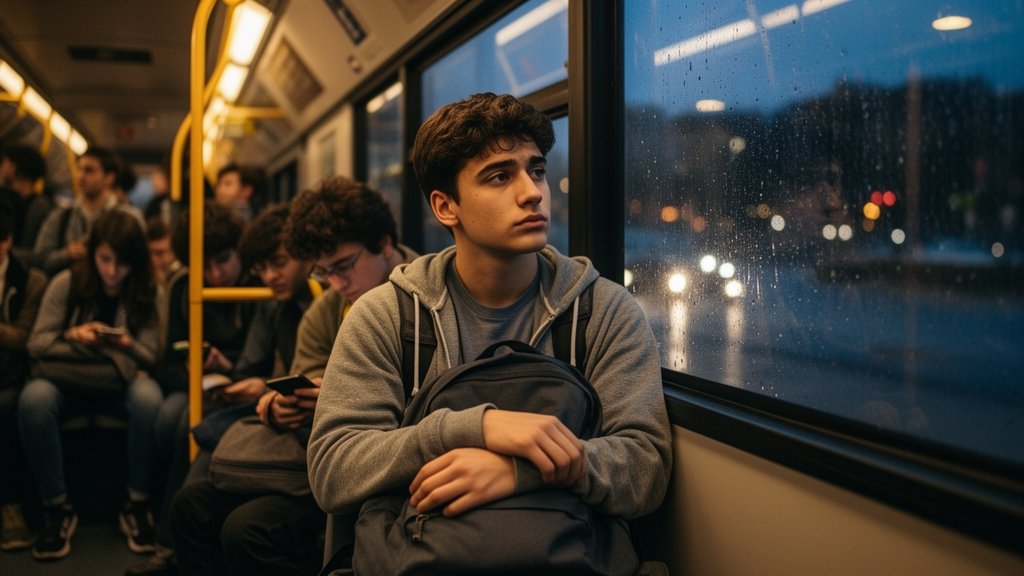
Commuting has become a routine part of student life in many countries, but a new study from Ireland suggests it is not the hidden driver behind well-being gaps on campus. Using large-scale survey data from the Eurostudent project for Ireland collected in 2022, researchers examined whether housing arrangements and commute times could explain why some groups of college students report poorer mental health than others.

The analysis found lower well-being scores among low socioeconomic status (SES) students compared with high-SES students, and among female students compared with male students. These disparities mirror broader evidence of poor and declining mental health among college students, with pronounced differences across social groups.

When the researchers looked at how students travel and live, clear patterns emerged. On average, commute times were longer for low-SES students than for their high-SES peers. Female students were more likely to live with their parents than male students, a difference that shapes their daily travel to campus.

The relationship between commuting and well-being was not uniform across groups. Examining heterogeneity in the association, the study found little difference by SES, but stronger effects of longer commutes on well-being for female students compared with males. In other words, a lengthy journey to college appears to weigh more heavily on the well-being of women than of men in this dataset.

To probe deeper, the researchers used quantile regression models, which examine relationships across the entire well-being distribution rather than only at the average. These models revealed notable differences in how well-being relates to spatial mobility variables at different points in the distribution for different groups, suggesting that the impact of commuting is not a single uniform effect but varies depending on where students fall on the well-being scale.

Despite this rich pattern of heterogeneity, the study’s central conclusion is strikingly negative. A decomposition analysis, which quantifies how much of a gap between groups can be attributed to specific factors, found that spatial mobility explains only a small proportion of both the SES and gender differences in poor well-being, a binary measure defined using a threshold in the WHO-5 index.

In practical terms, differences in commuting patterns and in the effects of commuting do not explain the large group-level disparities in college student well-being observed in Ireland. Long journeys and living arrangements matter to individual students, and longer commutes are associated with lower well-being, particularly for women, but they account for only a modest share of the observed gaps between social groups.

The findings suggest that policies aimed at improving student mental health by reducing travel burdens, while potentially beneficial for affected individuals, are unlikely to close the well-being gaps between SES and gender groups on their own. The study is based on cross-sectional survey data from Ireland in 2022, so it captures associations at one point in time rather than causal effects over the long term, and its conclusions apply to the Irish higher education context covered by the Eurostudent survey.

As commuting remains an integral part of day-to-day student life, the research adds an important nuance to debates about student mental health: the roots of well-being disparities appear to lie largely beyond the daily journey to campus, pointing researchers and policymakers toward other factors that shape how different groups of students feel.

Subject of Research: The relationship between spatial mobility and group-level disparities in college student well-being in Ireland

Article Title: Does Spatial Mobility Explain Group-Level Disparities in College Student Well-being?

Article References: Cullinan, J. (2026). Does Spatial Mobility Explain Group-Level Disparities in College Student Well-being?. Social Indicators Research, 185(2), Article 9. https://doi.org/10.1007/s11205-026-03951-4

Image Credits: AI Generated

DOI: 10.1007/s11205-026-03951-4

Keywords: college students, well-being, mental health, commuting, spatial mobility, socioeconomic status, gender disparities, WHO-5 Well-Being Index, Eurostudent, Ireland, quantile regression, decomposition analysis

Cite Scienmag News

Courtney Benton. (October 27, 2026). Long Commutes Do Not Explain Why Some College Students Feel Worse Than Others. Scienmag. https://scienmag.com/long-commutes-do-not-explain-why-some-college-students-feel-worse-than-others/


Courtney Benton. "Long Commutes Do Not Explain Why Some College Students Feel Worse Than Others." Scienmag, 27 October 2026, https://scienmag.com/long-commutes-do-not-explain-why-some-college-students-feel-worse-than-others/. Accessed 27 October 2026.

Courtney Benton. "Long Commutes Do Not Explain Why Some College Students Feel Worse Than Others." Scienmag. October 27, 2026. https://scienmag.com/long-commutes-do-not-explain-why-some-college-students-feel-worse-than-others/

Tags: college student mental health disparitiescollege studentscommutingdecomposition analysiseffects of commuting on female studentsEurostudentEurostudent project findingsfactors influencing college student mental healthgender differences in student mental healthgender disparitieshousing arrangements and academic performanceimpact of long commutes on student mental healthIrelandIrish student mental health studyMental healthmental health gaps among college studentsquantile regressionsocioeconomic statussocioeconomic status and student well-beingspatial mobilitystudent well-being and social inequalitysurvey data on student travel patternswell-beingWHO-5 well-being index
Share26Tweet16
Previous Post

Ultrafast pump-probe spectroscopy catches slow phosphors acting in picoseconds

Next Post

Research report: Case Report: When obstructive sleep apnea is not benign—nasopharyngeal rhabdomyosarcoma in a 3-year-old

Related Posts

Scraped data reveal childcare platform work thrives far beyond Swiss cities
Earth Science

Scraped data reveal childcare platform work thrives far beyond Swiss cities

October 27, 2026
Expert therapists say evidence alone cannot settle treatment decisions
Social Science

Expert therapists say evidence alone cannot settle treatment decisions

October 27, 2026
South Korea Bets Its Dying Regions on Universities in a Radical Experiment of State Survival
Social Science

South Korea Bets Its Dying Regions on Universities in a Radical Experiment of State Survival

October 27, 2026
Historic hill park in Konya falls short on real accessibility for vulnerable users
Social Science

Historic hill park in Konya falls short on real accessibility for vulnerable users

October 27, 2026
Instructors Want Open, Practical AI Teaching Resources, Survey Finds
Social Science

Instructors Want Open, Practical AI Teaching Resources, Survey Finds

October 27, 2026
TikTok LIVE gifts feel like presents but pay like rent, study of African creators finds
Social Science

TikTok LIVE gifts feel like presents but pay like rent, study of African creators finds

October 27, 2026
Next Post
Research report: Case Report: When obstructive sleep apnea is not benign—nasopharyngeal rhabdomyosarcoma in a 3-year-old

Research report: Case Report: When obstructive sleep apnea is not benign—nasopharyngeal rhabdomyosarcoma in a 3-year-old

  • Mothers who receive childcare support from maternal grandparents show more optimized

    Mothers who receive childcare support from maternal grandparents show more parental warmth, finds NTU Singapore study

    27656 shares
    Share 11059 Tweet 6912
  • University of Seville Breaks 120-Year-Old Mystery, Revises a Key Einstein Concept

    1061 shares
    Share 424 Tweet 265
  • Bee body mass, pathogens and local climate influence heat tolerance

    682 shares
    Share 273 Tweet 171
  • Researchers record first-ever images and data of a shark experiencing a boat strike

    546 shares
    Share 218 Tweet 137
  • Groundbreaking Clinical Trial Reveals Lubiprostone Enhances Kidney Function

    531 shares
    Share 212 Tweet 133
Science

Embark on a thrilling journey of discovery with Scienmag.com—your ultimate source for cutting-edge breakthroughs. Immerse yourself in a world where curiosity knows no limits and tomorrow’s possibilities become today’s reality!

RECENT NEWS

  • Research report: Case Report: When obstructive sleep apnea is not benign—nasopharyngeal rhabdomyosarcoma in a 3-year-old
  • Long Commutes Do Not Explain Why Some College Students Feel Worse Than Others
  • Ultrafast pump-probe spectroscopy catches slow phosphors acting in picoseconds
  • Newly qualified nurses in Ghana describe strict supervision and financial strain during clinical rotation

Categories

  • Agriculture
  • Anthropology
  • Archaeology
  • Athmospheric
  • Biology
  • Biotechnology
  • Blog
  • Bussines
  • Cancer
  • Chemistry
  • Climate
  • Earth Science
  • Editorial Policy
  • Marine
  • Mathematics
  • Medicine
  • Pediatry
  • Policy
  • Psychology & Psychiatry
  • Science Education
  • Science News
  • Social Science
  • Space
  • Technology and Engineering

Subscribe to Blog via Email

Enter your email address to subscribe to this blog and receive notifications of new posts by email.

Join 5,151 other subscribers

© 2025 Scienmag - Science Magazine

Welcome Back!

Login to your account below

Forgotten Password?

Retrieve your password

Please enter your username or email address to reset your password.

Log In
No Result
View All Result
  • HOME
  • SCIENCE NEWS
  • CONTACT US

© 2025 Scienmag - Science Magazine

Discover more from Science

Subscribe now to keep reading and get access to the full archive.

Continue reading