

Tuesday, October 27, 2026
Science
No Result
View All Result
  • Login
  • HOME
  • SCIENCE NEWS
  • CONTACT US
  • HOME
  • SCIENCE NEWS
  • CONTACT US
No Result
View All Result
Scienmag
No Result
View All Result
Home Science News Medicine

Bullous erythema ab igne: review of 19 cases finds heat removal is the mainstay of care

October 27, 2026
in Medicine
Ophelia Keating
By Ophelia Keating Scienmag Editorial Profile - Health Services Research
Reading Time: 3 mins read
0
Bullous erythema ab igne: review of 19 cases finds heat removal is the mainstay of care

Bullous erythema ab igne: review of 19 cases finds heat removal is the mainstay of care

65
SHARES
587
VIEWS
Share on FacebookShare on Twitter
ADVERTISEMENT

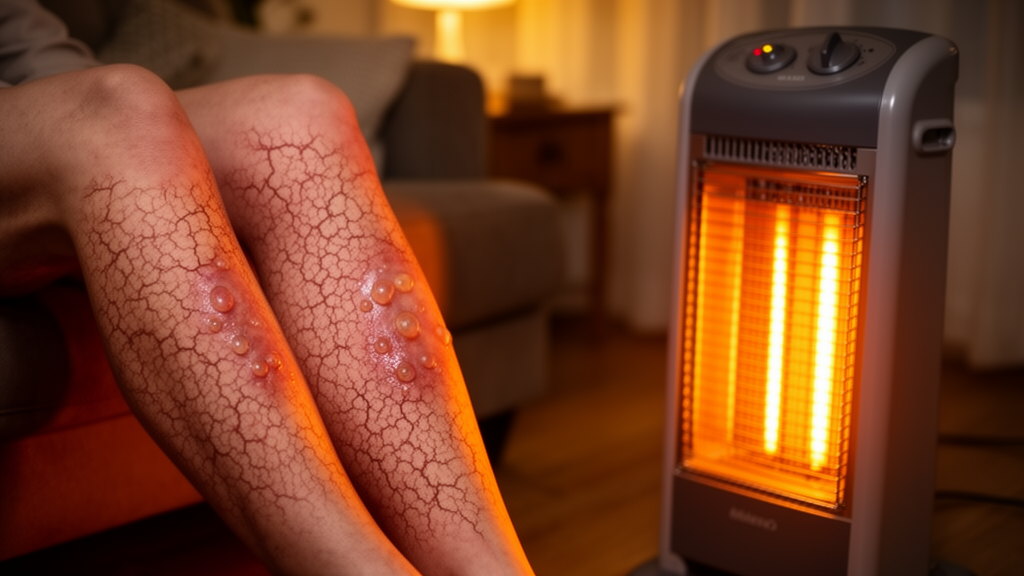
Erythema ab igne, sometimes known by the older name toasted skin syndrome, is a localized cutaneous condition consisting of reticular hyperpigmentation that develops after repeated, prolonged exposure to heat sources. Its bullous variant, in which blisters appear, is rarely reported, and no evidence-based treatment guideline currently exists for it.

Researchers from the Archives of Dermatological Research published review set out to characterize how bullous erythema ab igne presents clinically, which comorbidities are associated with it, and how it has been treated. The team searched PubMed and Google Scholar using the keywords bullous, erythema ab igne and toasted skin syndrome. From that search they analyzed 13 case reports and case series, and added one patient from their own institution, giving a total of 19 patients included in the review.

The demographic and anatomical pattern that emerged was fairly consistent. A slight majority of the cases, 52.6 percent, were men. The legs were involved in 89.5 percent of patients, the trunk in 10.5 percent, and the arms in 5.3 percent, reflecting the body areas most often held close to heat sources for long periods.

Heat exposure was documented in the great majority of cases. Seventeen of the 19 patients, or 89.5 percent, had been exposed to a heat source, which is consistent with the established mechanism of erythema ab igne as a heat-induced dermatosis. The review did not identify the specific heat sources for each patient in the abstracted data, but the strong association with heat exposure underscores the condition’s dependence on external thermal contact.

Comorbidities featured prominently in the collected cases. Seven patients, 36.8 percent, had diabetes, and three patients, 15.8 percent, had hypothyroidism. The authors suggest that work-up for these systemic diseases should be considered in patients presenting with bullous erythema ab igne.

Diagnostic practice varied across the reported cases. Seven cases, 36.8 percent, were diagnosed clinically without tissue sampling, while 12 cases, 63.2 percent, were confirmed by biopsy. This split illustrates that clinicians have not uniformly relied on histopathology when the clinical picture is characteristic, although most reported cases did undergo biopsy.

Treatment findings were dominated by one intervention. The most common treatment was removal of the heat source, used in 89.5 percent of cases, followed by topical antibiotics in 26.3 percent and topical steroids in 15.8 percent. Notably, most patients used a combination of treatments rather than a single approach, and the absence of an evidence-based guideline means current practice is drawn from individual case reports rather than comparative trials.

The review’s conclusions carry important caveats that the authors state explicitly. The number of reported cases of bullous erythema ab igne is small, non-English case reports were excluded from the search, data extraction was performed by a single reviewer, and no formal risk-of-bias assessment was carried out. With only 19 patients in total, the percentages reported should be read as descriptive summaries of the existing literature rather than precise population estimates.

For clinicians, the practical messages from the review are straightforward: suspect bullous erythema ab igne in patients with blistering reticular pigmentation on heat-exposed skin, ask about heat sources, consider screening for diabetes and thyroid disease, and, in diabetic patients, evaluate for peripheral neuropathy.

Subject of Research: Clinical characteristics, comorbidities and treatment of bullous erythema ab igne based on a review of published cases

Article Title: Bullous erythema ab igne: review of the literature

Article References: Hanna, S. P., Jung, J. Y., & McCullough, T. (2026). Bullous erythema ab igne: review of the literature. Archives of Dermatological Research, 318(1), Article 539. https://doi.org/10.1007/s00403-026-05027-2

Image Credits: AI Generated

DOI: 10.1007/s00403-026-05027-2

Keywords: erythema ab igne, bullous erythema ab igne, toasted skin syndrome, heat exposure, dermatology, case review, diabetes, hypothyroidism, peripheral neuropathy, skin pigmentation, blistering, topical treatment

Cite Scienmag News

Ophelia Keating. (October 27, 2026). Bullous erythema ab igne: review of 19 cases finds heat removal is the mainstay of care. Scienmag. https://scienmag.com/bullous-erythema-ab-igne-review-of-19-cases-finds-heat-removal-is-the-mainstay-of-care/


Ophelia Keating. "Bullous erythema ab igne: review of 19 cases finds heat removal is the mainstay of care." Scienmag, 27 October 2026, https://scienmag.com/bullous-erythema-ab-igne-review-of-19-cases-finds-heat-removal-is-the-mainstay-of-care/. Accessed 27 October 2026.

Ophelia Keating. "Bullous erythema ab igne: review of 19 cases finds heat removal is the mainstay of care." Scienmag. October 27, 2026. https://scienmag.com/bullous-erythema-ab-igne-review-of-19-cases-finds-heat-removal-is-the-mainstay-of-care/

Tags: associated comorbidities in heat-related skin disordersblisteringblistering skin conditionsbullous erythema ab ignecase reviewclinical features of bullous erythema ab ignedermatological case reviewdermatologydiabetesepidemiology of erythema ab igneerythema ab igneheat exposureheat removal treatment for erythema ab igneheat-induced skin injuryhyperpigmentation from heat exposurehypothyroidismperipheral neuropathyskin changes from prolonged heat exposureskin pigmentationtoasted skin syndrometopical treatmenttreatment guidelines for heat-induced skin lesions
Share26Tweet16
Previous Post

Engineered CAR-NK cells delay HIV rebound after treatment interruption in mice

Next Post

Verb-Driven Task Networks Turn Static Epidemic Plans into Executable Playbooks

Related Posts

Newly qualified nurses in Ghana describe strict supervision and financial strain during clinical rotation
Medicine

Newly qualified nurses in Ghana describe strict supervision and financial strain during clinical rotation

October 27, 2026
Verb-Driven Task Networks Turn Static Epidemic Plans into Executable Playbooks
Medicine

Verb-Driven Task Networks Turn Static Epidemic Plans into Executable Playbooks

October 27, 2026
Engineered CAR-NK cells delay HIV rebound after treatment interruption in mice
Medicine

Engineered CAR-NK cells delay HIV rebound after treatment interruption in mice

October 27, 2026
Scoliosis Screening in China Reveals Suspicious Clustering at the 5-Degree Threshold
Medicine

Scoliosis Screening in China Reveals Suspicious Clustering at the 5-Degree Threshold

October 27, 2026
Baby’s muscle weakness traced to antibodies from a gestational surrogate
Medicine

Baby’s muscle weakness traced to antibodies from a gestational surrogate

October 27, 2026
Ultrasound Shows High Accuracy for Paediatric Intestinal Malrotation and Volvulus
Medicine

Ultrasound Shows High Accuracy for Paediatric Intestinal Malrotation and Volvulus

October 27, 2026
Next Post
Verb-Driven Task Networks Turn Static Epidemic Plans into Executable Playbooks

Verb-Driven Task Networks Turn Static Epidemic Plans into Executable Playbooks

  • Mothers who receive childcare support from maternal grandparents show more optimized

    Mothers who receive childcare support from maternal grandparents show more parental warmth, finds NTU Singapore study

    27656 shares
    Share 11059 Tweet 6912
  • University of Seville Breaks 120-Year-Old Mystery, Revises a Key Einstein Concept

    1061 shares
    Share 424 Tweet 265
  • Bee body mass, pathogens and local climate influence heat tolerance

    682 shares
    Share 273 Tweet 171
  • Researchers record first-ever images and data of a shark experiencing a boat strike

    546 shares
    Share 218 Tweet 137
  • Groundbreaking Clinical Trial Reveals Lubiprostone Enhances Kidney Function

    531 shares
    Share 212 Tweet 133
Science

Embark on a thrilling journey of discovery with Scienmag.com—your ultimate source for cutting-edge breakthroughs. Immerse yourself in a world where curiosity knows no limits and tomorrow’s possibilities become today’s reality!

RECENT NEWS

  • Newly qualified nurses in Ghana describe strict supervision and financial strain during clinical rotation
  • Verb-Driven Task Networks Turn Static Epidemic Plans into Executable Playbooks
  • Bullous erythema ab igne: review of 19 cases finds heat removal is the mainstay of care
  • Engineered CAR-NK cells delay HIV rebound after treatment interruption in mice

Categories

  • Agriculture
  • Anthropology
  • Archaeology
  • Athmospheric
  • Biology
  • Biotechnology
  • Blog
  • Bussines
  • Cancer
  • Chemistry
  • Climate
  • Earth Science
  • Editorial Policy
  • Marine
  • Mathematics
  • Medicine
  • Pediatry
  • Policy
  • Psychology & Psychiatry
  • Science Education
  • Science News
  • Social Science
  • Space
  • Technology and Engineering

Subscribe to Blog via Email

Enter your email address to subscribe to this blog and receive notifications of new posts by email.

Join 5,151 other subscribers

© 2025 Scienmag - Science Magazine

Welcome Back!

Login to your account below

Forgotten Password?

Retrieve your password

Please enter your username or email address to reset your password.

Log In
No Result
View All Result
  • HOME
  • SCIENCE NEWS
  • CONTACT US

© 2025 Scienmag - Science Magazine

Discover more from Science

Subscribe now to keep reading and get access to the full archive.

Continue reading