


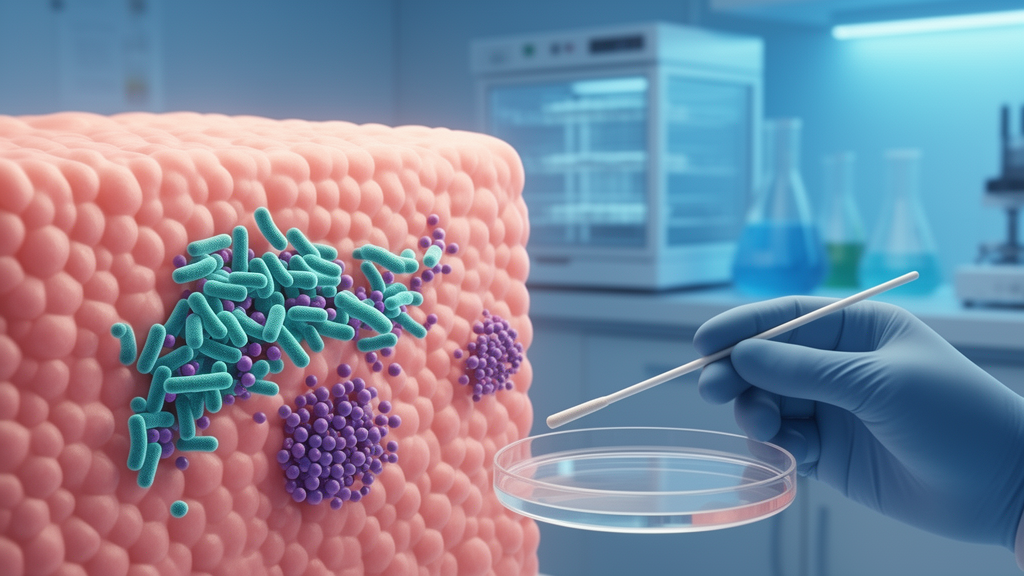
Most women undergoing in vitro fertilization carry an imbalanced community of microorganisms in the lining of the uterus, according to a large new analysis of endometrial biopsies. In a multicenter study spanning 58 IVF clinics, researchers examined samples from 1,619 patients and found that 83.26 percent had a dysbiotic endometrial profile, meaning Lactobacillus bacteria made up less than 90 percent of the microbial community detected. Only 16.74 percent of samples met the criterion for eubiosis, the Lactobacillus-dominant state that previous research has linked to better implantation and pregnancy outcomes.
The study, led by researchers at DiNA Science in Barcelona and Pronacera in Seville, went beyond simply cataloging bacteria. Using real-time quantitative PCR on endometrial biopsies of roughly 30 milligrams each, the team quantified 36 microorganisms, including bacteria, fungi, viruses and protozoa, chosen for their documented relevance to reproductive outcomes. At least one pathogen was detected in 33.17 percent of all samples, and the vast majority of those pathogen-positive samples, 87.15 percent, were dysbiotic.
Statistical analysis showed that dysbiotic samples carried a significantly higher proportion of pathogens than eubiotic samples, with a p-value of 0.003943. Opportunistic bacterial pathogens, in particular, were strongly associated with low Lactobacillus abundance, appearing in 16.91 percent of dysbiotic samples compared with just 4.80 percent of eubiotic ones, a difference the authors reported as highly significant. Two bacterial species dominated the pathogen landscape.
Ureaplasma parvum was detected in 9.2 percent of all samples and Gardnerella vaginalis in 10.2 percent, making them the most frequently identified bacterial pathogens both individually and in combination. Their behavior, however, differed in a revealing way. Ureaplasma parvum appeared at similar rates in eubiotic and dysbiotic samples, with no statistically significant difference between the two groups, whereas Gardnerella vaginalis was far more common in dysbiotic environments, a difference that reached a p-value below 0.0001.
This pattern suggests that Gardnerella, an organism associated with bacterial vaginosis, thrives when Lactobacillus protection recedes, while Ureaplasma can colonize the reproductive tract regardless of which bacteria dominate. Fungi and viruses also made appearances, though less frequently. Candida species were detected in 8.2 percent of samples and were significantly more prevalent in dysbiotic samples, with a p-value of 0.0194.
Cytomegalovirus, a herpesvirus capable of crossing the placenta and causing congenital infection, was found in 1.6 percent of samples, while Herpes Simplex Virus 1 appeared in a single sample and Trichomonas vaginalis in two. Some samples harbored multiple pathogens at once. In dysbiotic samples, the most common pairings were Ureaplasma parvum with Gardnerella vaginalis and Ureaplasma parvum with Candida, each co-occurring in 11 samples, while eleven samples overall contained three pathogens simultaneously.
These co-infection patterns mirror observations from vaginal microbiology, where organisms associated with bacterial vaginosis often travel together. The study population consisted of women over 18 with a history of reproductive challenges, including implantation failure, recurrent implantation failure, unexplained miscarriage, unexplained infertility, recurrent vaginosis, endometritis or endometriosis, and autoimmune or inflammatory disease. The average patient was just over 40 years old.
When the researchers compared microbial profiles across these clinical indications, they found no significant differences in eubiosis or dysbiosis rates, or in the types and proportions of pathogens, between women with implantation failure, recurrent implantation failure and previous miscarriage. Microbial composition also showed no significant associations with body mass index or the day of the menstrual cycle at sample collection, and results did not differ significantly between clinics. A particularly valuable component of the work involved follow-up.
Eighty-six patients underwent a second, and in nine cases a third, endometrial biopsy after receiving personalized antimicrobial or probiotic treatment, with an average of about 79 days between biopsies. Among the 71 patients whose first biopsy had revealed pathogens, 54, or 76.06 percent, showed no pathogens after treatment. Across the paired samples, pathogen detection dropped significantly, with a p-value below 0.001.
The proportion of eubiotic samples rose from 15.58 percent before treatment to 20.78 percent after, and the share of samples with very low Lactobacillus abundance, below 10 percent, declined, although the paired statistical test for Lactobacillus shift itself did not reach significance, with a p-value of 0.0909. Treatment was not uniformly successful, and the failures are instructive. Seventeen patients, or 23.94 percent of those treated after a pathogenic first result, still showed pathogens in their second biopsy.
In eight of these cases the same organism persisted, and the most frequent survivor was Ureaplasma parvum, which persisted in six patients. The authors suggest two possible explanations: antibiotic resistance, which is documented in Ureaplasma species against macrolides, tetracyclines and fluoroquinolones, or reinfection from an untreated sexual partner. One patient in the study illustrates the second possibility vividly.
She was treated twice with doxycycline without clearing the organism, and only after her partner received treatment following the second biopsy did Ureaplasma parvum disappear from her samples. In other persistent cases, the ecological niche left vacant by the targeted pathogen appears to have been colonized by different opportunistic bacteria rather than by protective Lactobacillus. The scientific context here is contested terrain.
The idea of a stably Lactobacillus-dominated endometrium has been questioned in recent years, with some studies suggesting that Lactobacillus detected in endometrial samples may partly reflect contamination from the vagina during sample collection, and others reporting that metabolically active microorganisms in healthy women do not show Lactobacillus dominance. The authors of the new study chose the 90 percent threshold because it is the most widely validated cutoff in the literature, originally proposed in work that linked non-Lactobacillus-dominated endometrial microbiota with poorer implantation, clinical pregnancy, ongoing pregnancy and live birth rates. They acknowledge, however, that future studies tracking clinical outcomes may show that Lactobacillus abundance is better interpreted as a continuous variable rather than a strict cutoff.
Why does any of this matter for fertility? High levels of Lactobacillus are thought to protect the reproductive tract by producing lactic acid and hydrogen peroxide, modulating the local environment and preventing pathogen colonization, while Lactobacillus metabolites also stimulate antimicrobial peptides and anti-inflammatory cytokines, conditions favorable to embryo implantation. Conversely, a non-Lactobacillus-dominated endometrium has been associated with elevated pro-inflammatory markers, and organisms such as Ureaplasma and Mycoplasma have been linked to infertility, implantation failure, miscarriage and preterm birth.
The mechanisms behind Ureaplasma's harm may stem from inflammation and cellular damage caused by its enzymatic activity rather than from shifts in the wider microbial community, which could explain why it colonizes both eubiotic and dysbiotic uteri with similar frequency. The authors are careful about the limits of their findings. The study lacked an untreated control group and did not report reproductive outcomes such as implantation or live birth, so the observed drop in pathogens after treatment cannot be taken as proof that antimicrobial or probiotic therapy improves IVF success.
Treatment duration and probiotic formulations varied among patients, and prior research suggests probiotic courses of at least three to six months may be needed to meaningfully raise Lactobacillus abundance. The authors also note that broad-spectrum antibiotics can disrupt the reproductive microbiota and, by not discriminating among bacterial species, may create favorable conditions for pathogens or resistant strains. They call for future studies with untreated controls, reproductive outcome data and analysis of partners' microbiota to prevent reinfection with sexually transmissible organisms.
Even with those caveats, the sheer scale of the dataset, more than 1,700 tests across 58 clinics, makes a clear contribution: endometrial microbial imbalance, and hidden pathogens within it, are common in IVF patients, and current diagnostic tools can detect them and track their response to treatment.
Subject of Research: Prevalence of endometrial microbiota dysbiosis and pathogens in IVF patients and changes after antimicrobial and probiotic treatment
Article Title: Endometrial microbiota in IVF patients: Lactobacillus dominance, pathogen prevalence and recurrence after treatment
Article References: Campos, D., Diez-Tercero, L., Berenguer, C., Singh Raj, V., Díaz-López, C., Pérez-Sánchez, M., Martínez-Lara, A., Cotán, D., & Sandalinas Alabert, M. (2026). Endometrial microbiota in IVF patients: Lactobacillus dominance, pathogen prevalence and recurrence after treatment. Frontiers in Cellular and Infection Microbiology, 16, 1936487. https://doi.org/10.3389/fcimb.2026.1936487
Image Credits: AI Generated
DOI: 10.3389/fcimb.2026.1936487
Keywords: endometrial microbiota, IVF, Lactobacillus, dysbiosis, Ureaplasma parvum, Gardnerella vaginalis, Candida, Cytomegalovirus, qPCR, infertility, probiotics, implantation
Cite Scienmag News
Morgan Morrow. (October 27, 2026). Endometrial Microbiota Imbalances Found in Nearly Nine in Ten IVF Patients. Scienmag. https://scienmag.com/endometrial-microbiota-imbalances-found-in-nearly-nine-in-ten-ivf-patients/
Morgan Morrow. "Endometrial Microbiota Imbalances Found in Nearly Nine in Ten IVF Patients." Scienmag, 27 October 2026, https://scienmag.com/endometrial-microbiota-imbalances-found-in-nearly-nine-in-ten-ivf-patients/. Accessed 27 October 2026.
Morgan Morrow. "Endometrial Microbiota Imbalances Found in Nearly Nine in Ten IVF Patients." Scienmag. October 27, 2026. https://scienmag.com/endometrial-microbiota-imbalances-found-in-nearly-nine-in-ten-ivf-patients/


