


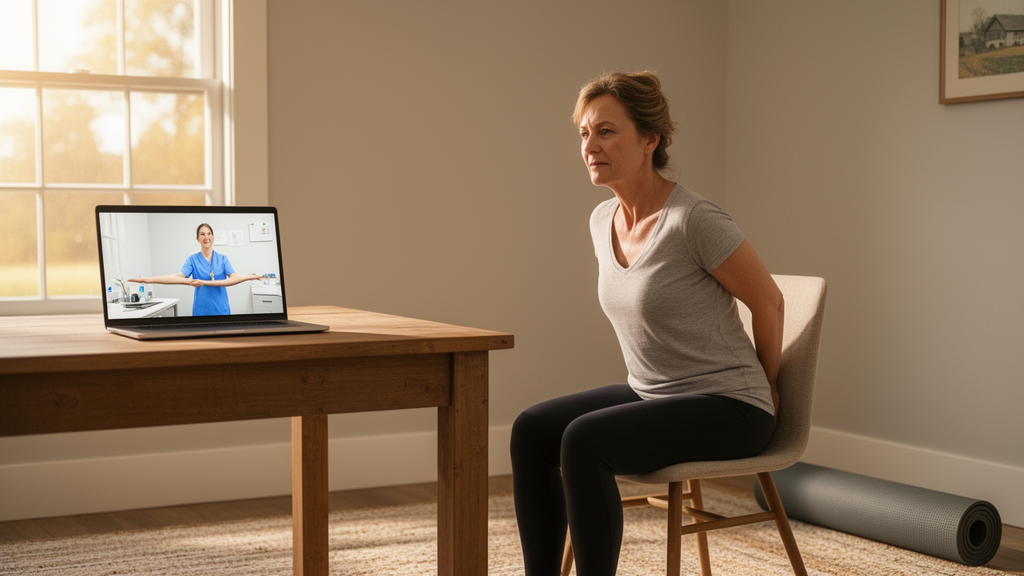
Chronic low back pain is the most expensive health condition in the United States, accounting for more than $134.5 billion in federal spending, and it remains a leading cause of disability worldwide. For the roughly 60 million Americans living in rural areas, where provider shortages, transportation barriers and geographic isolation limit access to preventive and specialty care, reaching nonpharmacologic treatments such as physical therapy can be especially difficult. A research team from Johns Hopkins University and MedStar Health is testing whether telehealth can close that gap.
In a study published in Frontiers in Rehabilitation Sciences, Kisha J. Ali and colleagues report qualitative findings from the ARBOR-Telehealth project, a type 1 hybrid effectiveness-implementation design that embeds implementation research inside a pragmatic randomized clinical trial. The trial aims to deliver guideline-based physical therapy for chronic low back pain to adults in rural Maryland via video visits, with the longer-term goal of decreasing opioid use. The analysis followed established qualitative rigor standards, with trustworthiness procedures running parallel to the quantitative components of the trial.
From the interviews, the researchers distilled ten overarching themes that could shape whether rural patients actually engage with telehealth-delivered therapy: access to care, technology, age-related concerns, usefulness, broadband internet availability, comparison to in-person care, equipment, space, acceptance of telehealth, and therapeutic bonds between patients and therapists. Crucially, the qualitative work was not just descriptive. The identified challenges fed directly into the co-design of actionable mitigation strategies for the trial's implementation plan.
That means the randomized phase of ARBOR-Telehealth will launch with context-specific adjustments, such as addressing technology setup and connectivity, rather than discovering engagement problems after enrollment. This pre-implementation approach reflects the hybrid effectiveness-implementation model, in which researchers evaluate both whether the intervention works and how best to deliver it in a real rural health system. The stakes extend beyond back pain management.
The study contributes evidence to ongoing National Institutes of Health efforts to improve pain management and reduce reliance on opioids in communities disproportionately affected by the overdose crisis. The published report covers baseline interviews with a small purposive sample of nine individuals at a single rural health system, and the themes describe perceived barriers and facilitators rather than measured clinical outcomes. Whether the telehealth intervention actually reduces opioid use, improves function, or sustains engagement will be answered by the randomized trial itself, whose results are not yet available.
For rural patients and clinicians, the message from the interviews is one of cautious feasibility: telehealth physical therapy is viewed as potentially useful and acceptable, provided that connectivity, technology support, equipment needs and the preservation of a strong therapeutic relationship are deliberately engineered into the program.
Subject of Research: Telehealth-delivered physical therapy for chronic low back pain in rural communities
Article Title: Implementation of rural telehealth physical therapy for chronic low back pain: qualitative findings informing a randomized clinical trial aimed at decreasing opioid use
Article References: Ali, K. J., McLaughlin, K. H., Boyér, L. L., Martino, G., & Skolasky, R. L. (2026). Implementation of rural telehealth physical therapy for chronic low back pain: qualitative findings informing a randomized clinical trial aimed at decreasing opioid use. Frontiers in Rehabilitation Sciences, 7, 1951507. https://doi.org/10.3389/fresc.2026.1951507
Image Credits: AI Generated
DOI: 10.3389/fresc.2026.1951507
Keywords: chronic low back pain, telehealth, physical therapy, rural health, opioids, implementation science, qualitative research, randomized clinical trial, health care access, broadband internet, Maryland, NIH
Cite Scienmag News
Ophelia Keating. (October 27, 2026). Telehealth Physical Therapy for Rural Chronic Back Pain: Interviews Shape Opioid-Reduction Trial. Scienmag. https://scienmag.com/telehealth-physical-therapy-for-rural-chronic-back-pain-interviews-shape-opioid-reduction-trial/
Ophelia Keating. "Telehealth Physical Therapy for Rural Chronic Back Pain: Interviews Shape Opioid-Reduction Trial." Scienmag, 27 October 2026, https://scienmag.com/telehealth-physical-therapy-for-rural-chronic-back-pain-interviews-shape-opioid-reduction-trial/. Accessed 27 October 2026.
Ophelia Keating. "Telehealth Physical Therapy for Rural Chronic Back Pain: Interviews Shape Opioid-Reduction Trial." Scienmag. October 27, 2026. https://scienmag.com/telehealth-physical-therapy-for-rural-chronic-back-pain-interviews-shape-opioid-reduction-trial/


