

Tuesday, October 27, 2026
Science
No Result
View All Result
  • Login
  • HOME
  • SCIENCE NEWS
  • CONTACT US
  • HOME
  • SCIENCE NEWS
  • CONTACT US
No Result
View All Result
Scienmag
No Result
View All Result
Home Science News Medicine

Home-based care for mild diphtheria matched hospital outcomes in Nigeria’s record epidemic, study finds

October 27, 2026
in Medicine
Kristina Jarvis
By Kristina Jarvis Scienmag Editorial Profile - Infectious Disease Medicine
Reading Time: 3 mins read
0
Home-based care for mild diphtheria matched hospital outcomes in Nigeria’s record epidemic, study finds

Home-based care for mild diphtheria matched hospital outcomes in Nigeria's record epidemic, study finds

65
SHARES
587
VIEWS
Share on FacebookShare on Twitter
ADVERTISEMENT

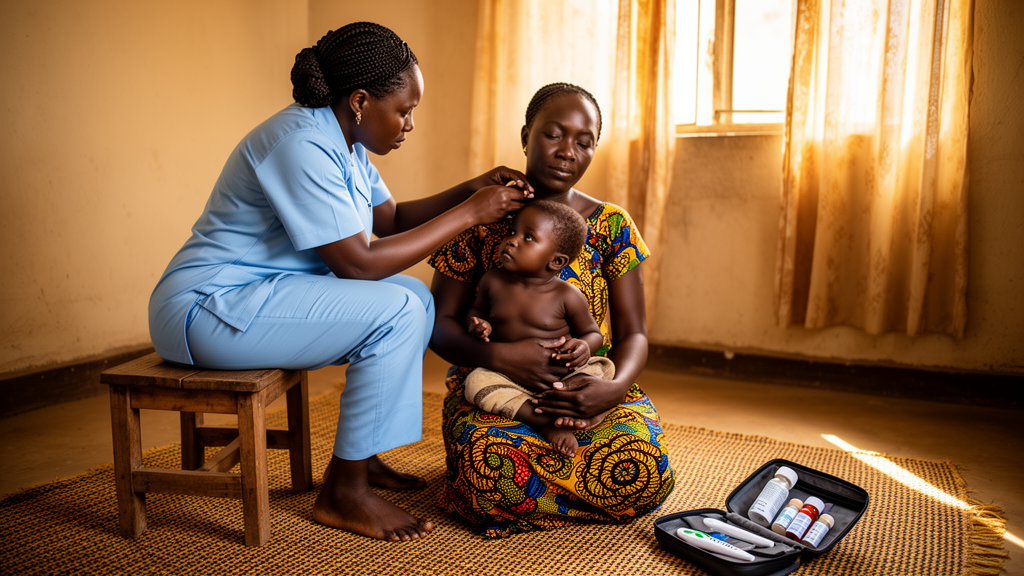
During Nigeria's largest recorded diphtheria epidemic, first notified on 1 December 2022 and exceeding 40,000 confirmed cases by January 2026, hospital capacity in Kano State was overwhelmed. In response, Médecins Sans Frontières introduced home-based care for patients with mild disease, a departure from the standard practice of treating all cases in dedicated diphtheria treatment centres. The study compared patients with mild diphtheria notified between January 2023 and January 2024 who were treated either at home or in a diphtheria treatment centre.

Cases were exactly matched on sex, age group, vaccination status, and ward of residence, and were interviewed between September and October 2024, a median of 421 days after notification. Of the 986 patients originally sampled, 491, or 49.8 percent, were interviewed; with 178 replacement patients of similar characteristics, 669 patients were analysed, comprising 362 in home-based care and 307 in treatment centres. The researchers used conditional logistic regression, adjusted for age, vaccination status, and treatment delay, to estimate the association between treatment modality and mortality, with robustness checked through propensity score weighting and sensitivity analyses.

After adjustment, mortality was lower among patients treated at home than in treatment centres, but the confidence interval included the null value, with an odds ratio of 0.36 (95 percent confidence interval 0.12 to 1.07; p = 0.066). Adding calendar time to the model gave a similar estimate (odds ratio 0.35, 95 percent confidence interval 0.08 to 1.57; p = 0.170). In other words, the data were consistent with a survival advantage for home-based care but could not rule out no difference between the settings.

Notably, home-based care was not associated with increased household transmission or long-term sequelae, addressing two of the principal concerns that might have made decentralised care risky. Two other factors emerged as more clearly linked to survival. Each additional day of delay before treatment was associated with increased mortality, with an odds ratio of 1.29 per day (95 percent confidence interval 1.00 to 1.67; p = 0.048).

Vaccination was associated with lower odds of death, with an odds ratio of 0.32 (95 percent confidence interval 0.10 to 0.98; p = 0.047). The authors are careful to spell out the limitations of the analysis. Only 24 deaths occurred in the cohort, which limits the statistical power to detect differences between care settings, and residual confounding by disease severity cannot be excluded, since patients treated at home were triaged as mild cases while those in treatment centres may have included patients whose condition was harder to classify.

The use of replacement patients when originally selected individuals could not be interviewed introduces further uncertainty, and roughly half of the sampled patients were never reached. The retrospective design also means the results reflect associations observed in one epidemic setting rather than the effects of a randomised comparison. Even with those caveats, the study carries practical weight for epidemic response.

The authors conclude that vaccination and early treatment were associated with survival, while the care setting itself was not clearly associated with outcomes. When supported by clinical triage and structured follow-up, decentralised care may be an option for managing mild cases during diphtheria epidemics in settings with constrained hospital capacity.

Subject of Research: Outcomes of home-based versus facility-based care for mild diphtheria during the Kano State, Nigeria epidemic

Article Title: Outcomes of home-based versus facility-based care for mild diphtheria during a large epidemic in Kano State, Nigeria: A retrospective matched cohort study

Article References: Polonsky, J., Hudu, S., Uthman, K., Katuala, Y., Evbuomwan, P. E., Osman, H. J. O., Sulaiman, A. K., Adjaho, I. I., Doumbia, C. O., Gignoux, E., & Ale, F. (2026). Outcomes of home-based versus facility-based care for mild diphtheria during a large epidemic in Kano State, Nigeria: A retrospective matched cohort study. PLOS Medicine, 23(10), e1005097. https://doi.org/10.1371/journal.pmed.1005097

Image Credits: AI Generated

DOI: 10.1371/journal.pmed.1005097

Keywords: diphtheria, Nigeria, Kano State, home-based care, Médecins Sans Frontières, retrospective cohort study, mortality, vaccination, household transmission, epidemic response, treatment delay, Outcomes

Cite Scienmag News

Kristina Jarvis. (October 27, 2026). Home-based care for mild diphtheria matched hospital outcomes in Nigeria’s record epidemic, study finds. Scienmag. https://scienmag.com/home-based-care-for-mild-diphtheria-matched-hospital-outcomes-in-nigerias-record-epidemic-study-finds/


Kristina Jarvis. "Home-based care for mild diphtheria matched hospital outcomes in Nigeria’s record epidemic, study finds." Scienmag, 27 October 2026, https://scienmag.com/home-based-care-for-mild-diphtheria-matched-hospital-outcomes-in-nigerias-record-epidemic-study-finds/. Accessed 27 October 2026.

Kristina Jarvis. "Home-based care for mild diphtheria matched hospital outcomes in Nigeria’s record epidemic, study finds." Scienmag. October 27, 2026. https://scienmag.com/home-based-care-for-mild-diphtheria-matched-hospital-outcomes-in-nigerias-record-epidemic-study-finds/

Tags: comparison of treatment modalitiesdiphtheriadiphtheria home-based careeffectiveness of home-based versus hospital treatmentepidemic responsehome-based carehome-based healthcare for infectious diseaseshospital capacity overwhelmedhousehold transmissionKano StateMédecins Sans FrontièresMédecins Sans Frontières interventionmild diphtheria treatment outcomesmortalitymortality rates in diphtheria treatmentNigeriaNigeria diphtheria epidemicoutcomesoutpatient care for communicable diseasespatient matching and analysis methodsrecord-breaking epidemic managementretrospective cohort studytreatment delayvaccination
Share26Tweet16
Previous Post

Fear of Movement After Stroke Falls Into Three Distinct Patterns, Study of 353 Patients Finds

Next Post

Blood Tests and Endoscopy Combine to Predict Ulcerative Colitis Without Calprotectin

Related Posts

Antibody-Drug Conjugates Extend Survival in Triple-Negative Breast Cancer, Meta-Analysis Finds
Medicine

Antibody-Drug Conjugates Extend Survival in Triple-Negative Breast Cancer, Meta-Analysis Finds

October 27, 2026
Scoping Review Maps Six Domains of Economic Security for Health Research
Medicine

Scoping Review Maps Six Domains of Economic Security for Health Research

October 27, 2026
Students Track Radon in Catalan Classrooms and Learn the Science Behind the Risk
Medicine

Students Track Radon in Catalan Classrooms and Learn the Science Behind the Risk

October 27, 2026
Pacritinib After Ruxolitinib: Five-Case Saudi Series Reports Higher Blood Counts and Smaller Spleens
Medicine

Pacritinib After Ruxolitinib: Five-Case Saudi Series Reports Higher Blood Counts and Smaller Spleens

October 27, 2026
Nursing Students Show Suboptimal AI Readiness, With Education Level and Coursework Emerging as Key Predictors
Medicine

Nursing Students Show Suboptimal AI Readiness, With Education Level and Coursework Emerging as Key Predictors

October 27, 2026
Siblings of Children with Cancer Show No Lasting Drop in School Grades, Swedish Register Study Finds
Medicine

Siblings of Children with Cancer Show No Lasting Drop in School Grades, Swedish Register Study Finds

October 27, 2026
Next Post
Blood Tests and Endoscopy Combine to Predict Ulcerative Colitis Without Calprotectin

Blood Tests and Endoscopy Combine to Predict Ulcerative Colitis Without Calprotectin

  • Mothers who receive childcare support from maternal grandparents show more optimized

    Mothers who receive childcare support from maternal grandparents show more parental warmth, finds NTU Singapore study

    27656 shares
    Share 11059 Tweet 6912
  • University of Seville Breaks 120-Year-Old Mystery, Revises a Key Einstein Concept

    1061 shares
    Share 424 Tweet 265
  • Bee body mass, pathogens and local climate influence heat tolerance

    682 shares
    Share 273 Tweet 171
  • Researchers record first-ever images and data of a shark experiencing a boat strike

    546 shares
    Share 218 Tweet 137
  • Groundbreaking Clinical Trial Reveals Lubiprostone Enhances Kidney Function

    531 shares
    Share 212 Tweet 133
Science

Embark on a thrilling journey of discovery with Scienmag.com—your ultimate source for cutting-edge breakthroughs. Immerse yourself in a world where curiosity knows no limits and tomorrow’s possibilities become today’s reality!

RECENT NEWS

  • Antibody-Drug Conjugates Extend Survival in Triple-Negative Breast Cancer, Meta-Analysis Finds
  • Scoping Review Maps Six Domains of Economic Security for Health Research
  • Students Track Radon in Catalan Classrooms and Learn the Science Behind the Risk
  • Pacritinib After Ruxolitinib: Five-Case Saudi Series Reports Higher Blood Counts and Smaller Spleens

Categories

  • Agriculture
  • Anthropology
  • Archaeology
  • Athmospheric
  • Biology
  • Biotechnology
  • Blog
  • Bussines
  • Cancer
  • Chemistry
  • Climate
  • Earth Science
  • Editorial Policy
  • Marine
  • Mathematics
  • Medicine
  • Pediatry
  • Policy
  • Psychology & Psychiatry
  • Science Education
  • Science News
  • Social Science
  • Space
  • Technology and Engineering

Subscribe to Blog via Email

Enter your email address to subscribe to this blog and receive notifications of new posts by email.

Join 5,151 other subscribers

© 2025 Scienmag - Science Magazine

Welcome Back!

Login to your account below

Forgotten Password?

Retrieve your password

Please enter your username or email address to reset your password.

Log In
No Result
View All Result
  • HOME
  • SCIENCE NEWS
  • CONTACT US

© 2025 Scienmag - Science Magazine

Discover more from Science

Subscribe now to keep reading and get access to the full archive.

Continue reading