


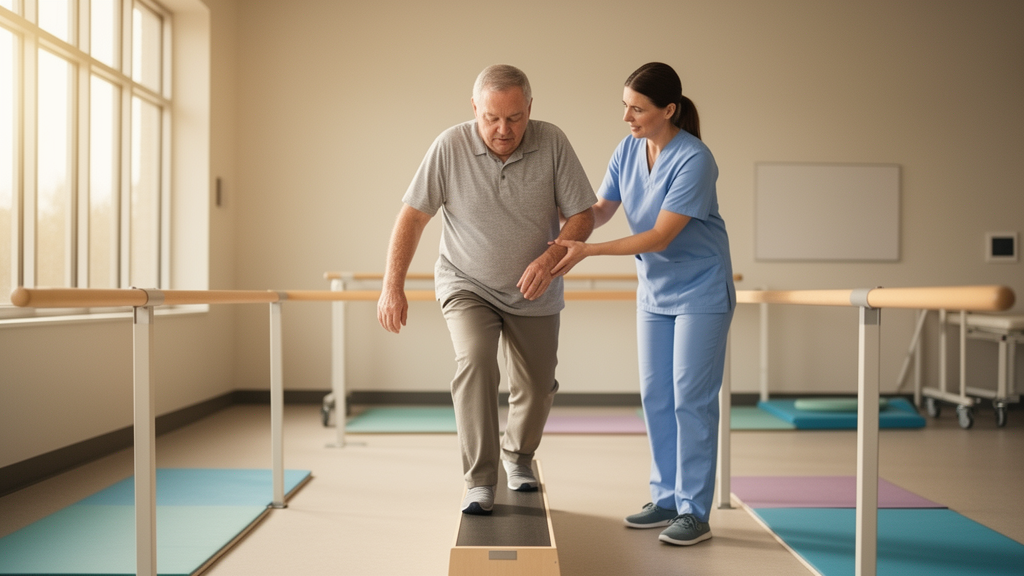
Fear of movement, known clinically as kinesiophobia, is far from a uniform experience among middle-aged stroke survivors. A cross-sectional study conducted at six tertiary hospitals in Wuhan, China, has identified three distinct psychological profiles of kinesiophobia in patients recovering from stroke, suggesting that rehabilitation support may need to be tailored to how each patient's fear is structured rather than treated as a single problem. Researchers led by Ting Liu of Tianyou Hospital Affiliated to Wuhan University of Science and Technology, together with colleagues at Zhongnan Hospital of Wuhan University, surveyed middle-aged stroke patients in the recovery phase between May 15 and September 15, 2025.
Using convenience sampling, they distributed questionnaires across the six hospitals and received 364 responses, of which 353 were valid, a return validity of 96.98 percent. Each participant completed a general information questionnaire along with three validated instruments: the Tampa Scale of Kinesiophobia, which measures fear of movement and reinjury; the Stroke Symptom Experience Scale, which captures the burden of post-stroke symptoms; and the Confidence after Stroke Measure, which assesses a patient's belief in their own recovery capability. Rather than simply ranking patients by their fear scores, the team applied latent profile analysis, a statistical technique that uncovers hidden subgroups within a population based on patterns of responses.
This person-centered approach revealed three profiles. The largest group, accounting for 64.9 percent of patients, was labeled the pain-dominated profile, in which fear of movement was anchored primarily in pain experiences. A further 19.5 percent fell into the trauma-sensitive profile, characterized by heightened sensitivity to the trauma of the stroke itself.
The smallest group, 15.6 percent, showed a self-regulation profile with comparatively lower kinesiophobia. To understand what distinguished the groups, the researchers ran multinomial logistic regression, a method suited to predicting membership in more than two categories. Five factors emerged as significant differentiators across the profiles: education level, family history of stroke, the number of stroke episodes, symptom burden, and rehabilitation confidence.
All of these associations reached statistical significance at P < 0.05. Nevertheless, the authors argue that the latent profile approach offers practical value for clinicians. The researchers conclude that healthcare providers should attend to the distinct kinesiophobia patterns and demographic characteristics of different patients and develop targeted interventions to reduce fear of movement and promote active participation in exercise rehabilitation.
The article, accepted in Frontiers in Psychology's Movement Science section, was received in August 2026 and accepted in October 2026, with the final formatted version to be published soon.
Subject of Research: Latent kinesiophobia profiles and associated factors among middle-aged stroke patients in the recovery phase
Article Title: Latent profile analysis of kinesiophobia and influencing factors among middle-aged stroke patients during the recovery period
Article References: Liu, T., Yang, X., Zhang, Z., & Hu, Y. (2026). Latent profile analysis of kinesiophobia and influencing factors among middle-aged stroke patients during the recovery period. Frontiers in Psychology, 17, Article 1975436. https://doi.org/10.3389/fpsyg.2026.1975436
Image Credits: AI Generated
DOI: 10.3389/fpsyg.2026.1975436
Keywords: kinesiophobia, stroke rehabilitation, latent profile analysis, middle-aged patients, Tampa Scale of Kinesiophobia, pain, symptom burden, rehabilitation confidence, cross-sectional study, Wuhan, Frontiers in Psychology, movement science
Cite Scienmag News
Cassandra Pierce. (October 27, 2026). Fear of Movement After Stroke Falls Into Three Distinct Patterns, Study of 353 Patients Finds. Scienmag. https://scienmag.com/fear-of-movement-after-stroke-falls-into-three-distinct-patterns-study-of-353-patients-finds/
Cassandra Pierce. "Fear of Movement After Stroke Falls Into Three Distinct Patterns, Study of 353 Patients Finds." Scienmag, 27 October 2026, https://scienmag.com/fear-of-movement-after-stroke-falls-into-three-distinct-patterns-study-of-353-patients-finds/. Accessed 27 October 2026.
Cassandra Pierce. "Fear of Movement After Stroke Falls Into Three Distinct Patterns, Study of 353 Patients Finds." Scienmag. October 27, 2026. https://scienmag.com/fear-of-movement-after-stroke-falls-into-three-distinct-patterns-study-of-353-patients-finds/


