


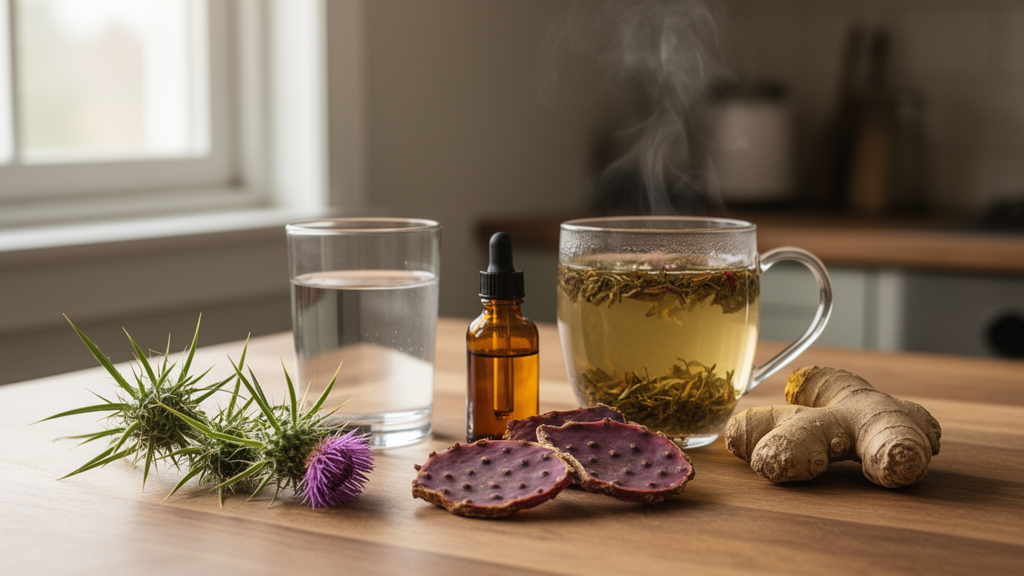
A sweeping scoping review of botanical interventions for alcohol hangover has found that, despite decades of marketing and research, the clinical evidence base remains limited, heterogeneous, and often conflated with indirect measures such as biomarker changes. The review, published in Frontiers in Pharmacology in the ethnopharmacology section, systematically mapped human and preclinical studies of plant-based remedies for hangover symptoms and examined how reproducibly researchers report the identity and composition of the botanical products they test. The research team, drawn from institutions including the China Academy of Chinese Medical Sciences and Changchun University of Chinese Medicine, searched eight databases — PubMed, Embase, Web of Science, the Cochrane Library, CBM, CNKI, VIP and Wanfang Data — from inception to July 22, 2025, supplementing the searches with citation tracking and peer recommendations.
To organize the evidence, they assigned findings to three levels: Level 1 covered direct human hangover symptom outcomes, Level 2 covered human pharmacokinetic, biochemical, mechanistic and pharmacogenetic measures, and Level 3 covered preclinical animal evidence. Safety data were charted separately, and botanical identity was assessed with a framework informed by the ConPhyMP guidelines for reporting plant extracts. The search yielded 22 studies reported across 21 publications: 15 human studies and seven animal studies, with one publication containing both.
Across the human trials, 470 participants were enrolled or randomized, and 437 were included in the reported analyses. The direct symptom evidence was strikingly mixed. Of the publications reporting human symptom outcomes, seven showed a positive signal, six reported mixed results, and two were null.
The reviewers deliberately refused to treat pharmacokinetic shifts or biomarker changes — such as altered alcohol or acetaldehyde exposure — as substitutes for symptom improvement, a distinction that has often blurred in prior literature and in product marketing, where a favorable blood marker is presented as proof that a remedy makes people feel better. Reproducibility of the botanical interventions themselves emerged as a major weakness. Scientific botanical identity was reported in 19 of the 21 publications, but authentication and voucher specimen numbers appeared in only 3 of 21 each, and quantitative marker analysis or a defined phytochemical profile was reported in just 8 of 21.
In practical terms, that means most studies could not demonstrate that the material they tested was chemically consistent with what a future study — or a commercial product — would contain, undermining comparability across trials and any attempt to replicate a positive finding. Safety reporting was similarly inconsistent across the evidence base. Although botanical products are often perceived as inherently benign, the review found that adverse events and tolerability were not systematically documented, leaving long-term safety unestablished.
The authors concluded that the current evidence is insufficient to establish routine therapeutic efficacy or long-term safety for any botanical hangover intervention. The authors call for future work to prioritize adequately powered randomized trials with validated symptom outcomes, explicit prevention-versus-treatment timing, and reproducible botanical and phytochemical characterization as prerequisites for credible evidence. For consumers, the take-home message is cautionary rather than dismissive.
Several botanical interventions did show preliminary signals in selected hangover symptoms or alcohol-related biomarkers, so the field is not empty — but the signals come from small, heterogeneous studies with mixed and null findings alongside the positives, and with product identity often poorly documented. No remedy in this evidence base can currently be described as proven effective. The study type matters for interpretation: as a scoping review, this work maps and characterizes the existing literature rather than pooling effect sizes or issuing treatment recommendations.
Its value lies in the diagnosis it offers — direct symptom evidence is sparse and inconsistent, biomarker data have been over-interpreted as clinical benefit, and the botanical materials under study are frequently under-characterized. Until trials meet the standards the reviewers outline, the scientific answer to the morning-after question remains, for now, unresolved.
Subject of Research: Scoping review of clinical and preclinical evidence for botanical interventions against alcohol hangover
Article Title: Botanical interventions for alcohol hangover: a scoping review
Article References: Wang, X., Song, M., Zhou, L., Yao, J., Cui, Y., Guo, J., Chang, T., & Liao, X. (2026). Botanical interventions for alcohol hangover: a scoping review. Frontiers in Pharmacology, 17, Article 1945900. https://doi.org/10.3389/fphar.2026.1945900
Image Credits: AI Generated
DOI: 10.3389/fphar.2026.1945900
Keywords: alcohol hangover, botanical interventions, scoping review, ethnopharmacology, phytochemical characterization, clinical evidence, biomarkers, plant extracts, safety reporting, randomized trials, Botanical, interventions
Cite Scienmag News
Ophelia Keating. (October 27, 2026). Botanical Hangover Remedies Show Hints of Benefit, But Evidence Remains Thin. Scienmag. https://scienmag.com/botanical-hangover-remedies-show-hints-of-benefit-but-evidence-remains-thin/
Ophelia Keating. "Botanical Hangover Remedies Show Hints of Benefit, But Evidence Remains Thin." Scienmag, 27 October 2026, https://scienmag.com/botanical-hangover-remedies-show-hints-of-benefit-but-evidence-remains-thin/. Accessed 27 October 2026.
Ophelia Keating. "Botanical Hangover Remedies Show Hints of Benefit, But Evidence Remains Thin." Scienmag. October 27, 2026. https://scienmag.com/botanical-hangover-remedies-show-hints-of-benefit-but-evidence-remains-thin/


