


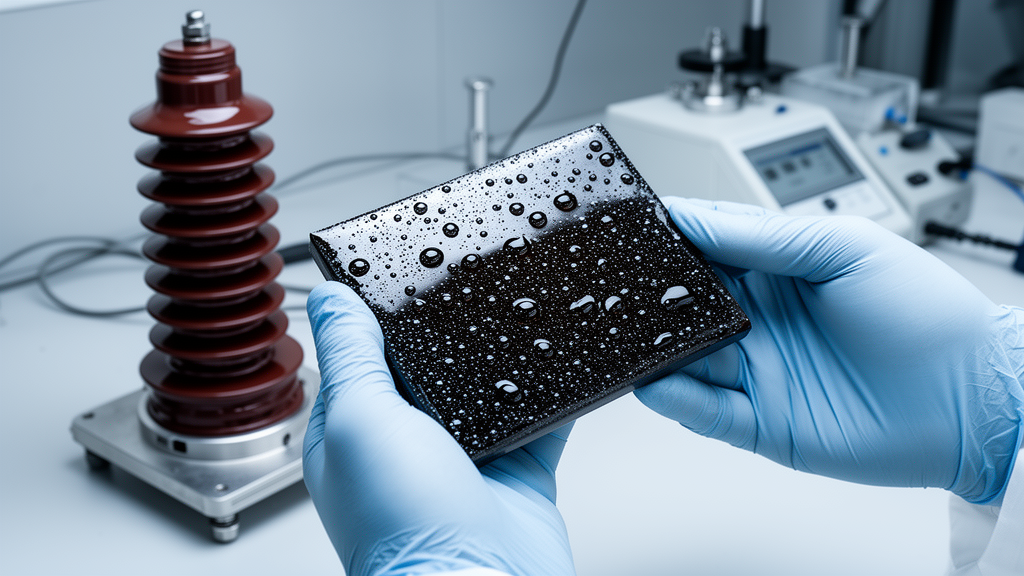
The team used Response Surface Methodology built on a Central Composite Design, running 20 experimental combinations to map how three processing variables—EPDM concentration, nano-silica loading, and sonication time—influence the final material. Testing followed recognized standards: tensile strength was measured under ASTM D638, while water absorption was assessed by ASTM D570 after 240 hours of immersion. The statistical analysis revealed that all three parameters significantly affected both responses within the investigated ranges, with nano-silica loading showing the largest statistical effect.
The fitted linear models showed satisfactory fit and predictive statistics, and lack-of-fit tests were non-significant, meaning the models adequately described the data without systematic deviation. Within the experimental design space, increasing nano-silica loading and longer sonication time were associated with higher tensile strength and reduced water absorption. The authors attribute these trends to changes in the polymer–filler environment and the processing-dependent state of the silica-containing phase.
The optimized formulation achieved a tensile strength of 90.9 ± 0.46 MPa and water absorption of 0.0441 ± 0.0003% under the investigated test conditions—figures reported with their measurement uncertainties from the study's test protocol. Epoxy-based nanocomposites are widely studied for electrical insulation because of their strong mechanical and dielectric performance, but moisture absorption and brittleness remain persistent weaknesses. The study is an optimization experiment over a defined design space, and its conclusions apply to the investigated ranges of EPDM concentration, silica loading, and sonication time.
The authors position the Epoxy/EPDM/nano-silica system as a candidate for further investigation in electrical-insulation applications rather than a validated commercial material.
Subject of Research: Statistical optimization of epoxy/EPDM/nano-silica ternary nanocomposites for mechanical strength and moisture resistance
Article Title: RSM-based optimization of mechanical and moisture resistance properties of ternary polymer nanocomposites
Article References: Wero, A. B., & Yigezu, B. S. (2026). RSM-based optimization of mechanical and moisture resistance properties of ternary polymer nanocomposites. Scientific Reports. https://doi.org/10.1038/s41598-026-75224-6
Image Credits: AI Generated
DOI: 10.1038/s41598-026-75224-6
Keywords: epoxy, EPDM, nano-silica, nanocomposites, Response Surface Methodology, Central Composite Design, tensile strength, water absorption, electrical insulation, polymer composites, ASTM D638, ASTM D570
Cite Scienmag News
Denise Maddox. (October 27, 2026). Optimizing Epoxy Nanocomposites for Stronger, Water-Resistant Electrical Insulation. Scienmag. https://scienmag.com/optimizing-epoxy-nanocomposites-for-stronger-water-resistant-electrical-insulation/
Denise Maddox. "Optimizing Epoxy Nanocomposites for Stronger, Water-Resistant Electrical Insulation." Scienmag, 27 October 2026, https://scienmag.com/optimizing-epoxy-nanocomposites-for-stronger-water-resistant-electrical-insulation/. Accessed 27 October 2026.
Denise Maddox. "Optimizing Epoxy Nanocomposites for Stronger, Water-Resistant Electrical Insulation." Scienmag. October 27, 2026. https://scienmag.com/optimizing-epoxy-nanocomposites-for-stronger-water-resistant-electrical-insulation/


