


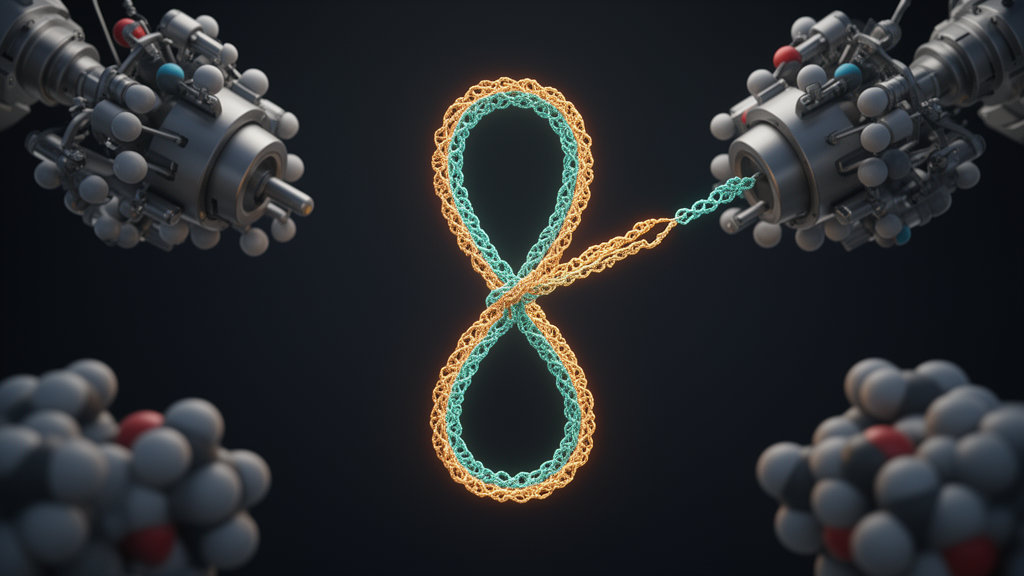
Triculamin, a potent antibiotic lasso peptide first isolated in 1967, is built by a biosynthetic pathway that does not follow the canonical logic of any other known lasso peptide. A new study in The Journal of Antibiotics reports that the unusual follower peptide in this pathway is not a dispensable accessory but an essential component required for the antibiotic's biosynthesis. In triculamin, the researchers set out to determine whether this atypical follower is functionally required.
Using structural prediction combined with targeted mutations of key conserved residues, the team found that the follower peptide appears to interact with the macrocyclase, the enzyme that closes the lasso ring. Based on these findings, the authors hypothesize that these interactions create an enzyme-substrate complex that ensures delivery of the core peptide to the enzyme's active site, explaining why the follower cannot be dispensed with. The study also explored whether the pathway could be engineered.
By modifying the core peptide, the researchers demonstrated that analogs of the lasso peptide can be produced, indicating that the triculamin macrocyclase is substrate-promiscuous and can accept altered substrates. Through this engineering work, the team identified lysine-3 within the lasso peptide ring as the site of acetylation, pinpointing a specific chemical modification in the mature molecule. Finally, the researchers achieved successful heterologous expression of the triculamin pathway in Burkholderia sp. FERM BP-3421.
According to the study, this organism proved to be a superior heterologous host, offering a practical route for producing the antibiotic and its engineered analogs in a non-native host. Together, the results clarify why triculamin's biosynthesis departs from the standard lasso peptide blueprint: the follower peptide is integral to the macrocyclase reaction rather than peripheral to it. The findings also suggest that the system is amenable to manipulation, since core peptide changes were tolerated by the biosynthetic machinery.
Because the work combines structural prediction, mutational analysis and heterologous expression, the mechanistic model of follower-macrocyclase interaction remains a hypothesis, and the reported analog production and host performance are limited to the systems tested in the study.
Subject of Research: Biosynthesis of the lasso peptide antibiotic triculamin and the essential role of its unusual follower peptide
Article Title: An unusual follower peptide is required for biosynthesis of the antibiotic lasso peptide triculamin
Article References: Svenningsen, T., Merrild, A., Buchbjerg Petersen, A., Nosolini Dos Reis, A., Pold, A. M., Lange, H., & Tørring, T. (2026). An unusual follower peptide is required for biosynthesis of the antibiotic lasso peptide triculamin. The Journal of Antibiotics. https://doi.org/10.1038/s41429-026-00966-4
Image Credits: AI Generated
DOI: 10.1038/s41429-026-00966-4
Keywords: triculamin, lasso peptide, antibiotic, biosynthesis, follower peptide, macrocyclase, heterologous expression, Burkholderia, substrate promiscuity, acetylation, unusual, follower
Cite Scienmag News
Ophelia Keating. (October 26, 2026). Unusual follower peptide proves essential for making lasso antibiotic triculamin. Scienmag. https://scienmag.com/unusual-follower-peptide-proves-essential-for-making-lasso-antibiotic-triculamin/
Ophelia Keating. "Unusual follower peptide proves essential for making lasso antibiotic triculamin." Scienmag, 26 October 2026, https://scienmag.com/unusual-follower-peptide-proves-essential-for-making-lasso-antibiotic-triculamin/. Accessed 26 October 2026.
Ophelia Keating. "Unusual follower peptide proves essential for making lasso antibiotic triculamin." Scienmag. October 26, 2026. https://scienmag.com/unusual-follower-peptide-proves-essential-for-making-lasso-antibiotic-triculamin/


