


Adults with metabolic syndrome who completed a 90-day telemedicine-supported lifestyle program in Hungary lost on average 5.23 kilograms and trimmed nearly 5 centimeters from their waistlines, while a sequential control group that received only an initial dietetic consultation lost 1.92 kilograms over the same standardized period. The study, conducted by researchers at the University of Szeged in collaboration with the University of Pannonia and published in Frontiers in Cardiovascular Medicine, also recorded a significant drop in HbA1c of 0.41 percentage points in the intervention group and a rise in HDL-cholesterol, both of which remained statistically significant after correction for multiple testing. Perhaps most striking for anyone who has struggled to shed pounds, the participants who stepped on the scale most often and those who logged the lowest calorie intake relative to their basal metabolic rate were the ones who lost the most weight.
Metabolic syndrome is defined by the co-existence of at least three of five risk factors: abdominal obesity, abnormal glucose metabolism, elevated triglycerides or low HDL-cholesterol, and hypertension. Together these cluster into a powerful predictor of cardiovascular disease. Patients with the condition face a 4.03-fold higher risk of developing coronary artery disease according to a recent systematic review, and among patients already diagnosed with coronary artery disease, the presence of metabolic syndrome is coupled with roughly a 50 to 80 percent increased risk of cardiovascular mortality and major cardiovascular events. Cross-sectional studies of cardiac departments have found the condition in as many as 47.3 to 49.5 percent of patients. With the Obesity Atlas projecting that the number of adults living with obesity will rise from 0.81 billion in 2020 to 1.53 billion by 2035, scalable ways to deliver lifestyle intervention have become a pressing clinical need.
The problem is that effective lifestyle change is labor-intensive. Successful programs typically require at least 7 to 10 face-to-face sessions between patients and healthcare professionals over 3 to 12 months, and the best-documented results come from more than 14 sessions within six months. That level of contact demands significant time and money from both providers and patients. Digital self-monitoring tools offer a potential shortcut: dietary self-monitoring through web or mobile applications has been shown to outperform paper food diaries, largely because apps deliver immediate feedback on the balance between calorie consumption and estimated energy requirements. Personalized feedback alone may confer roughly a 2 kilogram advantage over interventions without it. But most commercial diet-logging services keep their data locked behind contract law, making it hard to integrate them into genuine medical workflows. The Szeged team built its own university-owned nutrition logging service precisely to close that gap.
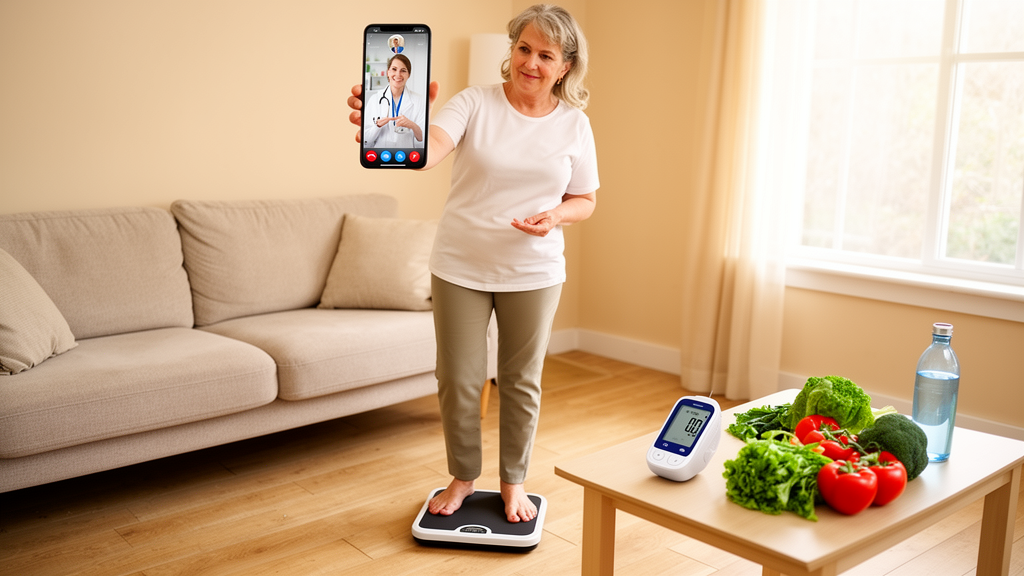
The trial enrolled 133 adults with metabolic syndrome between July 2021 and June 2023, recruited through physician referrals from Szeged and surrounding villages. All participants received an initial individual dietetic consultation and identical physical activity instructions targeting at least 150 minutes of weekly exercise at 60 to 80 percent of their maximal predicted heart rate. The intervention group, however, received a smartphone equipped with a dietary logger providing instant visual feedback on meals, a Polar M430 GPS watch for heart-rate-monitored training, a wireless body weight scale transmitting data automatically through a GSM hub, and biweekly teleconsultations with dietitians and physiotherapists lasting 10 to 15 minutes each. Total coaching time never exceeded 90 minutes per patient over the three months. The COVID-19 pandemic forced the investigators to abandon randomization: the active group was recruited first, and the control group was enrolled sequentially after the pandemic subsided, receiving standard care with at most two in-person follow-up consultations.
Because follow-up visits occurred between 83 and 178 days after enrollment, the researchers standardized all outcome values to a day-90 equivalent using linear interpolation. The primary outcome, waist circumference measured at the midriff, fell by 4.98 centimeters in the active group but only 1.17 centimeters in controls. The adjusted analysis revealed a significant group-by-baseline interaction: the benefit of telemonitoring grew with the severity of abdominal obesity. At a baseline waist circumference of 100.1 centimeters, the adjusted between-group difference was essentially zero, but at 118.1 centimeters it reached 3.90 centimeters in favor of the intervention group. A sensitivity analysis using the actual observed follow-up values showed the same baseline-dependent pattern, with an adjusted difference of 4.75 centimeters at the highest baseline waist circumference.
The secondary outcomes told a nuanced story. Abdominal circumference showed a significant adjusted between-group difference of 2.59 centimeters after Benjamini-Hochberg correction. Body weight favored the intervention group by 1.69 kilograms in the adjusted model, but this did not survive the multiple-testing correction. Skinfold thicknesses at four sites fell significantly only in the active group, yet none of the adjusted between-group differences reached significance. Body fat mass declined by 3.75 kilograms in the intervention group, but visceral fat area dropped almost identically in both arms. On the metabolic side, HbA1c fell 0.41 percentage points in the active group with an adjusted between-group difference of 0.40 percentage points that remained significant after correction, and HDL-cholesterol rose significantly. Triglycerides fell significantly only in the active group, though the adjusted difference was not significant.
One finding deserves particular attention: skeletal muscle mass declined by 0.70 kilograms in the intervention group while remaining stable in controls, and this adjusted difference remained significant after correction. The fat-free mass reduction represented about 23 percent of total weight loss, consistent with the roughly 25 percent ratio typically seen in classic hypocaloric diet programs. The authors attribute this to the aerobic focus of the exercise protocol, which targeted the standard 150-minute weekly cardio goal through heart-rate-based monitoring. Higher activity levels of 250 to 300 minutes per week and resistance training are known to better preserve lean mass, suggesting that future telerehabilitation systems should move beyond cardio-centric monitoring and integrate structured, telemonitored resistance exercise.
The exploratory adherence analysis divided the 56 intervention participants who had complete weight data into four subgroups by relative weight change: those losing 7 percent or more, 5 to 7 percent, 2 to 5 percent, and less than 2 percent. Two adherence measures showed significant linear trends across these subgroups. The ratio of days with body weight records was highest in the biggest losers, who weighed themselves on 93 percent of monitored days compared with 62 percent in the smallest-loss group. Average daily logged calorie intake relative to basal metabolic rate was lowest in the biggest losers at 60 percent, compared with 86 percent in the group that barely lost weight. Notably, the frequency of food logging and exercise logging showed no significant trends, and neither did estimated training energy expenditure. The authors caution that this observational analysis cannot establish causation, but the self-weighing finding echoes earlier database analyses of more than 10,000 users in which the percentage of self-weighing days correlated inversely with weight change.
The study has important limitations that shape how the results should be read. The non-randomized, sequential design arose from pandemic constraints, and the groups differed at baseline: the active group was younger, heavier, and had larger waist circumferences than the controls. The researchers addressed this with analysis of covariance adjusted for baseline values, age, and sex, using robust standard errors, but residual confounding cannot be excluded. The 90-day intervention period was short, leaving long-term sustainability unknown, and the linear standardization of follow-up values assumes a constant rate of change that may not reflect real biological trajectories. Self-reported dietary intake remains vulnerable to under- or over-reporting, and participants with sufficient digital literacy and motivation to enroll may differ systematically from the broader metabolic syndrome population. The study also deviated from its registered protocol in design and primary outcome definition, which the authors transparently document.
Even with those caveats, the magnitude of the results places this multimodal approach in the upper range of behavioral and telehealth programs of similar duration. The 5.2-kilogram loss over 12 weeks rivals the classical LEARN behavioral program and clearly exceeds what lower-intensity app-based counseling typically achieves. In an era when GLP-1 receptor agonists can induce 8 to 15 kilograms of loss over 6 to 12 months, the authors position intensive telemedical support as a valuable non-pharmacological complement rather than a replacement, noting that lifestyle interventions are rarely patentable and therefore seldom attract funding for large randomized trials. The University of Szeged has launched a pilot project to evaluate the method in routine clinical practice, and the team argues that the model, which requires no more than 90 minutes of professional time per patient over three months, is particularly well suited to resource-limited settings and to patients with limited mobility or time. Larger randomized studies with concurrent controls and longer follow-up will be needed to confirm generalizability, scalability, and cost-effectiveness, but for a condition that drives much of the world’s cardiovascular burden, a scalable digital program built on regular self-weighing and honest calorie logging is a finding worth weighing carefully.
Subject of Research: Telemedicine-supported lifestyle intervention and adherence factors associated with weight reduction in adults with metabolic syndrome
Article Title: Adherence-related factors associated with weight reduction: clinical outcomes of telerehabilitation in patients with metabolic syndrome
Article References: Ábrahám, J. E., Vágvölgyi, A., Máthéné Köteles, É., Korom, A., Barnai, M., Szűcs, M., Szálka, B., Király, A., Vassányi, I., Nemes, A., Várkonyi, T., Lengyel, C., & Kósa, I. (2026). Adherence-related factors associated with weight reduction: clinical outcomes of telerehabilitation in patients with metabolic syndrome. Frontiers in Cardiovascular Medicine, 13, Article 1804026. https://doi.org/10.3389/fcvm.2026.1804026
Image Credits: AI Generated
DOI: 10.3389/fcvm.2026.1804026
Keywords: metabolic syndrome, telemedicine, telerehabilitation, weight loss, dietary self-monitoring, self-weighing, HbA1c, body composition, adherence, digital health, cardiovascular risk, lifestyle intervention
Cite Scienmag News
Daisy Hatcher. (October 26, 2026). Telemedicine Lifestyle Program Linked to Weight Loss and Better Blood Sugar Control in Metabolic Syndrome. Scienmag. https://scienmag.com/telemedicine-lifestyle-program-linked-to-weight-loss-and-better-blood-sugar-control-in-metabolic-syndrome/
Daisy Hatcher. "Telemedicine Lifestyle Program Linked to Weight Loss and Better Blood Sugar Control in Metabolic Syndrome." Scienmag, 26 October 2026, https://scienmag.com/telemedicine-lifestyle-program-linked-to-weight-loss-and-better-blood-sugar-control-in-metabolic-syndrome/. Accessed 26 October 2026.
Daisy Hatcher. "Telemedicine Lifestyle Program Linked to Weight Loss and Better Blood Sugar Control in Metabolic Syndrome." Scienmag. October 26, 2026. https://scienmag.com/telemedicine-lifestyle-program-linked-to-weight-loss-and-better-blood-sugar-control-in-metabolic-syndrome/


