

Monday, October 26, 2026
Science
No Result
View All Result
  • Login
  • HOME
  • SCIENCE NEWS
  • CONTACT US
  • HOME
  • SCIENCE NEWS
  • CONTACT US
No Result
View All Result
Scienmag
No Result
View All Result
Home Science News Technology and Engineering

Two Novel Silviavirus Phages Show Lytic Activity Against MRSA

October 26, 2026
in Technology and Engineering
Denise Maddox
By Denise Maddox Scienmag Editorial Profile - Mechanical Engineering
Reading Time: 2 mins read
0
Two Novel Silviavirus Phages Show Lytic Activity Against MRSA

Two Novel Silviavirus Phages Show Lytic Activity Against MRSA

65
SHARES
587
VIEWS
Share on FacebookShare on Twitter
ADVERTISEMENT

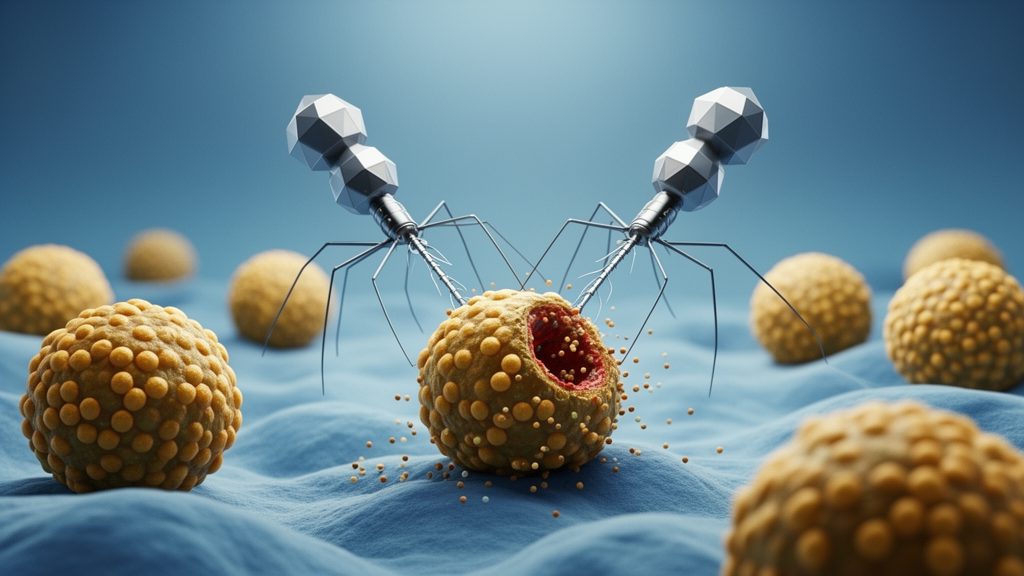
Researchers in India have isolated and characterized two novel bacteriophages, CARØ0038 and CARØ0046, that efficiently lyse methicillin-resistant Staphylococcus aureus (MRSA) under laboratory conditions. The phages were recovered from sewage in Davangere, Karnataka, using MRSA as the host, and are described in a study published in Scientific Reports. With multidrug-resistant S. aureus an increasing clinical concern, the authors position the work as a foundation for further investigation of phage-based antimicrobial candidates rather than a ready-made therapy.

Transmission electron microscopy showed icosahedral heads with short tails, a morphology consistent with members of the class Caudoviricetes. Whole-genome sequencing revealed genomes of 120,939 base pairs for CARØ0038 and 136,667 base pairs for CARØ0046, carrying 227 and 225 predicted coding sequences respectively, with GC contents of 29.5 percent and 29.1 percent. Whole-genome phylogenomic and taxonomic analyses placed both phages within the genus Silviavirus and supported their distinction from closely related reference phages, although the available analyses did not establish a definitive species-level assignment.

Functional testing highlighted the lytic potential of the two isolates. In one-step growth experiments, the phages showed apparent latent periods of 15 to 20 minutes and burst sizes of 49 and 47 plaque-forming units per cell for CARØ0038 and CARØ0046, respectively. An multiplicity of infection of 0.1 yielded the highest experimentally observed titres, indicating efficient replication under the tested conditions.

Stability profiling defined relatively narrow environmental tolerances. Both phages retained high infectivity up to 37 degrees Celsius, but showed marked reductions in infectivity at 45 to 50 degrees Celsius and no detectable recovery after exposure to 60 degrees Celsius. Maximum recovery occurred at pH 7, with no detectable infectious phage outside the pH range of 6 to 8, a constraint that would need consideration in any future formulation work.

Host-range analysis demonstrated clear lysis against all 28 MRSA isolates tested, along with activity against methicillin-susceptible S. aureus. No detectable lysis was observed against S. epidermidis or S. saprophyticus under the conditions tested, suggesting a degree of specificity within the tested staphylococcal panel. The authors note that no known antimicrobial resistance-associated or virulence-associated genes were identified in either genome, a relevant consideration for safety assessment of phage candidates.

Collectively, the genomic and phenotypic data support CARØ0038 and CARØ0046 as distinct Silviavirus phages with efficient lytic activity against S. aureus, including MRSA. The findings provide a basis for further investigation of their potential as phage-based antimicrobial candidates, while the observed temperature and pH sensitivities and the unresolved species-level taxonomy mark out the questions that subsequent work will need to address.

Subject of Research: Isolation and genomic and phenotypic characterization of two novel Silviavirus bacteriophages with lytic activity against methicillin-resistant Staphylococcus aureus

Article Title: Two novel Silviavirus phages with lytic activity against methicillin-resistant Staphylococcus aureus: genomic and phenotypic characterization

Article References: VinodKumar, C. S., Veni Emilda, J. K., Prasad, B. S., Arunkumar, A., Jayasimha, V. L., Nachimuthu, R., Veeraraghavan, B., & Kalasuramath, S. (2026). Two novel Silviavirus phages with lytic activity against methicillin-resistant Staphylococcus aureus: genomic and phenotypic characterization. Scientific Reports. https://doi.org/10.1038/s41598-026-75050-w

Image Credits: AI Generated

DOI: 10.1038/s41598-026-75050-w

Keywords: bacteriophage, MRSA, Silviavirus, Staphylococcus aureus, antimicrobial resistance, phage therapy, genomics, Caudoviricetes, host range, lytic activity, novel, phages

Cite Scienmag News

Denise Maddox. (October 26, 2026). Two Novel Silviavirus Phages Show Lytic Activity Against MRSA. Scienmag. https://scienmag.com/two-novel-silviavirus-phages-show-lytic-activity-against-mrsa/

Denise Maddox. "Two Novel Silviavirus Phages Show Lytic Activity Against MRSA." Scienmag, 26 October 2026, https://scienmag.com/two-novel-silviavirus-phages-show-lytic-activity-against-mrsa/. Accessed 26 October 2026.

Denise Maddox. "Two Novel Silviavirus Phages Show Lytic Activity Against MRSA." Scienmag. October 26, 2026. https://scienmag.com/two-novel-silviavirus-phages-show-lytic-activity-against-mrsa/


Tags: Antimicrobial ResistancebacteriophageBacteriophage therapy for MRSACaudoviricetesCaudoviricetes morphologygenomicshost rangelytic activityLytic activity against antibiotic-resistant bacteriaMethicillin-resistant Staphylococcus aureus (MRSA) controlMRSAnovelNovel Silviavirus bacteriophagesPhage burst size and latent periodPhage characterization and laboratory studiesPhage genomics and taxonomyPhage isolation from sewagephage therapyPhage therapy development for multidrug-resistant bacteriaPhage-based antimicrobial candidatesphagesSilviavirusStaphylococcus aureusWhole-genome sequencing of bacteriophages
Share26Tweet16
Previous Post

Compressed work schedules give long-term care workers more control, slower pace

Next Post

Indigenous Knowledge Systems Linked to Climate Resilience Across Ghana’s Ecological Zones

Related Posts

Neuro-symbolic AI framework tracks hidden beliefs with traceable reasoning
Technology and Engineering

Neuro-symbolic AI framework tracks hidden beliefs with traceable reasoning

October 26, 2026
Circulation-Inspired Algorithm Cuts Error in Solar Cell Parameter Estimation
Technology and Engineering

Circulation-Inspired Algorithm Cuts Error in Solar Cell Parameter Estimation

October 26, 2026
Smart Click: A Single Group Photo Automates Attendance with MTCNN and FaceNet
Technology and Engineering

Smart Click: A Single Group Photo Automates Attendance with MTCNN and FaceNet

October 26, 2026
Volcanic carbon isotope fingerprints reveal hidden gas sources in Pozzuoli’s urban air
Technology and Engineering

Volcanic carbon isotope fingerprints reveal hidden gas sources in Pozzuoli’s urban air

October 26, 2026
Wireless sensor networks help AI judge cultural fit of factory translations
Technology and Engineering

Wireless sensor networks help AI judge cultural fit of factory translations

October 26, 2026
AI Workflow Maps Rock Fractures from Drone Images with Scarce Labels
Technology and Engineering

AI Workflow Maps Rock Fractures from Drone Images with Scarce Labels

October 26, 2026
Next Post
Indigenous Knowledge Systems Linked to Climate Resilience Across Ghana’s Ecological Zones

Indigenous Knowledge Systems Linked to Climate Resilience Across Ghana's Ecological Zones

  • Mothers who receive childcare support from maternal grandparents show more optimized

    Mothers who receive childcare support from maternal grandparents show more parental warmth, finds NTU Singapore study

    27656 shares
    Share 11059 Tweet 6912
  • University of Seville Breaks 120-Year-Old Mystery, Revises a Key Einstein Concept

    1061 shares
    Share 424 Tweet 265
  • Bee body mass, pathogens and local climate influence heat tolerance

    682 shares
    Share 273 Tweet 171
  • Researchers record first-ever images and data of a shark experiencing a boat strike

    546 shares
    Share 218 Tweet 137
  • Groundbreaking Clinical Trial Reveals Lubiprostone Enhances Kidney Function

    531 shares
    Share 212 Tweet 133
Science

Embark on a thrilling journey of discovery with Scienmag.com—your ultimate source for cutting-edge breakthroughs. Immerse yourself in a world where curiosity knows no limits and tomorrow’s possibilities become today’s reality!

RECENT NEWS

  • Indigenous Knowledge Systems Linked to Climate Resilience Across Ghana’s Ecological Zones
  • Two Novel Silviavirus Phages Show Lytic Activity Against MRSA
  • Compressed work schedules give long-term care workers more control, slower pace
  • From Literacy to Competence: Systematic Review Maps Sustainability Education’s Conceptual Shift

Categories

  • Agriculture
  • Anthropology
  • Archaeology
  • Athmospheric
  • Biology
  • Biotechnology
  • Blog
  • Bussines
  • Cancer
  • Chemistry
  • Climate
  • Earth Science
  • Editorial Policy
  • Marine
  • Mathematics
  • Medicine
  • Pediatry
  • Policy
  • Psychology & Psychiatry
  • Science Education
  • Science News
  • Social Science
  • Space
  • Technology and Engineering

Subscribe to Blog via Email

Enter your email address to subscribe to this blog and receive notifications of new posts by email.

Join 5,151 other subscribers

© 2025 Scienmag - Science Magazine

Welcome Back!

Login to your account below

Forgotten Password?

Retrieve your password

Please enter your username or email address to reset your password.

Log In
No Result
View All Result
  • HOME
  • SCIENCE NEWS
  • CONTACT US

© 2025 Scienmag - Science Magazine

Discover more from Science

Subscribe now to keep reading and get access to the full archive.

Continue reading