


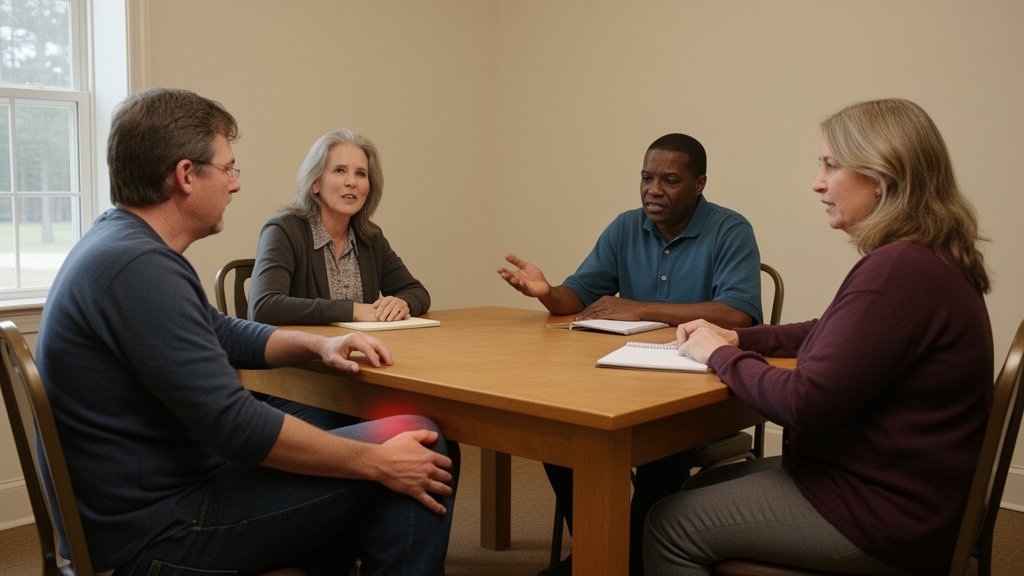
Pain emerged as a major influence on diabetes self-management in two focus groups involving 18 rural adults with type 2 diabetes in Selma, Alabama. Twelve participants reported chronic pain, defined as pain lasting at least three months; five reported pain, and one reported no current pain. Participants described how pain disrupted physical activity, sleep, household tasks and their broader capacity for self-care.
The findings come from a qualitative study rather than a trial or population-wide survey. Researchers recruited participants from the Risk Underlying Rural Areas Longitudinal, or RURAL, Cohort and held the focus groups at a community location in Selma. The aim was to examine how pain, including chronic pain, shapes diabetes self-management among rural adults with type 2 diabetes.
Pain was assessed with a measure covering several dimensions: severity during the previous week, whether pain had persisted for at least three months, pain location, pain severity and the extent to which pain interfered with daily life. Focus-group audio recordings were transcribed verbatim and analyzed using both deductive and inductive thematic analysis. The researchers also conducted inter-coder consistency checks and consensus procedures to support the analysis.
Across the discussions, participants linked pain with changes in everyday routines. Physical activity became more difficult, sleep was disturbed, and household work could become harder to complete. These experiences appeared to constrain the amount of self-care participants could provide for themselves.
Psychosocial stress, financial strain, medication burden and limited access to healthy foods were also identified as barriers, showing that the reported difficulties were not confined to physical discomfort. The accounts also revealed resources that participants used to respond to pain. Some described adaptive coping strategies, including movement used to maintain function, while others turned to alternative remedies.
Family members, coworkers, churches and broader community networks supplied social support. Faith and spirituality were another important source of coping for pain and stress, making existing relationships and community connections central features of participants’ experiences. The study’s authors concluded that pain was a salient factor in diabetes self-management, although the nature and severity of pain varied across participants.
Their proposed direction for future work is to consider shared self-management goals for diabetes and pain while drawing on rural strengths such as social networks, faith communities and community connectedness. The paper also identifies treatment burden, food access, pain management and culturally responsive support as factors that future interventions may need to address. Because the research included only 18 people at one community location, it cannot establish how common these experiences are among rural adults with type 2 diabetes.
The focus groups were designed to identify experiences and themes, not measure causal effects or clinical outcomes. The study also did not test an intervention for diabetes, pain or the two conditions together, so the accounts do not show whether any particular program would improve self-management or health outcomes. Overall, the study presents pain as part of the daily environment in which diabetes self-management takes place.
For the participants in Selma, pain could affect movement, rest, household obligations and the capacity to maintain self-care, while financial pressures, stress, medication demands and food access added to the burden. At the same time, participants described coping resources rooted in family, work, churches, community networks, movement, faith and spirituality. These reported experiences identify pain and connected social conditions as relevant targets for future research on self-management in rural communities.
Subject of Research: How pain and related social factors influence type 2 diabetes self-management among rural adults in Alabama
Article Title: How pain shapes type 2 diabetes self-management in rural communities: a qualitative study
Article References: Allen-Watts, K., Butler, K., Revolte, P., Atkinson, C., Morton-Ford, S., Kinsey, A. W., Palmer, K. N., Johnson, E., Werner, N. E., Hawkins, M., Cherrington, A., Goodin, B. R., Shelton, S. A., Chambliss, J. T., Taylor, T. L., & Judd, S. (2026). How pain shapes type 2 diabetes self-management in rural communities: a qualitative study. BMC Public Health. https://doi.org/10.1186/s12889-026-29612-2
Image Credits: AI Generated
DOI: 10.1186/s12889-026-29612-2
Keywords: type 2 diabetes, chronic pain, rural health, self-management, Alabama, focus groups, qualitative research, social support, community health, health disparities, pain, shapes
Cite Scienmag News
Ophelia Keating. (October 26, 2026). Rural Alabama focus groups reveal how pain reshapes diabetes self-care. Scienmag. https://scienmag.com/rural-alabama-focus-groups-reveal-how-pain-reshapes-diabetes-self-care/
Ophelia Keating. "Rural Alabama focus groups reveal how pain reshapes diabetes self-care." Scienmag, 26 October 2026, https://scienmag.com/rural-alabama-focus-groups-reveal-how-pain-reshapes-diabetes-self-care/. Accessed 26 October 2026.
Ophelia Keating. "Rural Alabama focus groups reveal how pain reshapes diabetes self-care." Scienmag. October 26, 2026. https://scienmag.com/rural-alabama-focus-groups-reveal-how-pain-reshapes-diabetes-self-care/


