


A document-based health systems policy analysis of Somalia finds that national policies support primary health care and universal health coverage, but implementation is constrained by fragmented authority, a large non-state delivery sector, and persistent operational weaknesses. The study examined how health service delivery can be operationalized while advancing universal health coverage in a system operating under protracted fragility, recurrent climate shocks, displacement, and a mixed public, private, and humanitarian delivery landscape. It did not test a health intervention or measure changes in coverage or health outcomes.
Researchers synthesized peer-reviewed literature, official policy documents, technical reports, and program records published from January 2000 to January 2026. Sources were identified through PubMed, Google Scholar, official Federal Ministry of Health sources, and multilateral and humanitarian repositories. Sixty-one sources met the study’s eligibility and credibility criteria. Interpretation used Walt and Gilson’s policy-analysis framework, covering context, actors, policy content, and process, while the World Health Organization’s health-system building blocks served as the primary coding framework.
The evidence identified high household payment exposure, uneven regulatory and reporting capacity, and constraints involving health workers and medicine supplies. Marked geographic and socioeconomic barriers also limited access to services. The analysis documented several delivery assets, including the Essential Package of Health Services, community and mobile platforms, and routine information systems. Their institutionalization was uneven, indicating that these documented assets were not consistently embedded across the health system. Because the study was based on documentary evidence rather than a new survey or intervention, it assessed policy and institutional conditions but did not directly establish changes in service use, spending, or clinical outcomes.
Based on the synthesis, the authors support a sequenced, governance-sensitive approach. They recommend first agreeing a minimum accountability floor, then protecting a core primary care package, stabilizing frontline inputs, and using data for supervision and learning. These recommendations respond to the fragmented implementation environment documented in the reviewed evidence. The analysis further concludes that purchasing and provider-integration reforms should be piloted only where the relevant roles, financing, verification, and implementation capacity are in place; the study did not demonstrate that any one of these reforms had already produced measurable benefits.
Overall, the analysis presents Somalia’s health-service delivery as a policy-governance challenge within a fragmented system. Existing national policies and delivery platforms provide a basis for operational work, but the evidence shows uneven institutionalization and continued constraints in accountability, financing, reporting, workforce support, medicine supply, and access. The resulting policy direction is incremental and conditional: establish a shared accountability baseline, protect essential primary care, stabilize frontline inputs, strengthen the use of routine data, and test more complex purchasing or provider-integration reforms only where implementation conditions can support them. As a policy synthesis covering sources from 2000 through January 2026, the findings identify documented needs and delivery assets, but they do not constitute an evaluation of universal health coverage progress or proof of improved population health.
Subject of Research: Health systems policy analysis of service delivery and universal health coverage in Somalia
Article Title: Operationalizing health service delivery in Somalia: a health systems policy analysis toward universal health coverage
Article References: Ahmed, A. Y., & Mohamed, M. H. (2026). Operationalizing health service delivery in Somalia: a health systems policy analysis toward universal health coverage. BMC Health Services Research. https://doi.org/10.1186/s12913-026-15592-x
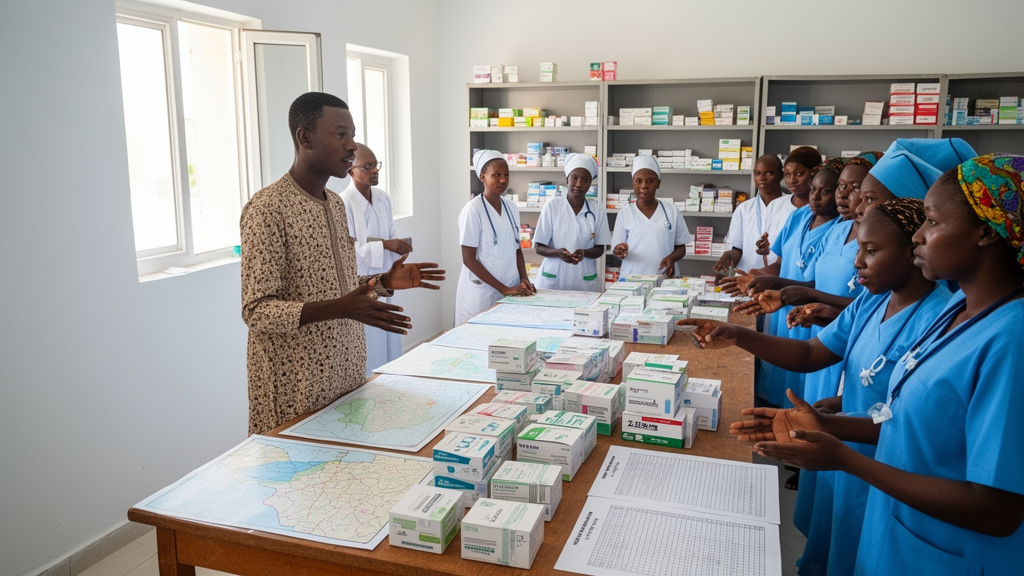
Image Credits: AI Generated
DOI: 10.1186/s12913-026-15592-x
Keywords: Somalia, health systems, universal health coverage, primary health care, health policy, health governance, household payments, frontline inputs, service delivery, document analysis, Operationalizing, health
Cite Scienmag News
Ophelia Keating. (October 26, 2026). Policy analysis maps Somalia’s health-service delivery constraints and reform sequence. Scienmag. https://scienmag.com/policy-analysis-maps-somalias-health-service-delivery-constraints-and-reform-sequence/
Ophelia Keating. "Policy analysis maps Somalia’s health-service delivery constraints and reform sequence." Scienmag, 26 October 2026, https://scienmag.com/policy-analysis-maps-somalias-health-service-delivery-constraints-and-reform-sequence/. Accessed 26 October 2026.
Ophelia Keating. "Policy analysis maps Somalia’s health-service delivery constraints and reform sequence." Scienmag. October 26, 2026. https://scienmag.com/policy-analysis-maps-somalias-health-service-delivery-constraints-and-reform-sequence/


