

Monday, October 26, 2026
Science
No Result
View All Result
  • Login
  • HOME
  • SCIENCE NEWS
  • CONTACT US
  • HOME
  • SCIENCE NEWS
  • CONTACT US
No Result
View All Result
Scienmag
No Result
View All Result
Home Science News Biology

Taylor Swift’s Name Marks Four Newly Described Australian Plant Bugs

October 26, 2026
in Biology
Gavin Prescott
By Gavin Prescott Scienmag Editorial Profile - Ecology and Ecosystem Dynamics
Reading Time: 2 mins read
0
Taylor Swift’s Name Marks Four Newly Described Australian Plant Bugs

Taylor Swift’s Name Marks Four Newly Described Australian Plant Bugs

65
SHARES
587
VIEWS
Share on FacebookShare on Twitter
ADVERTISEMENT

A new genus of Australian plant bugs has been named Swiftiephylus in honor of Taylor Swift, with four species distinguished by pale yellow bodies and conspicuous red markings. Sarah Schroeder of the University of California and Christiane Weirauch formally described the insects in the peer-reviewed journal Insect Systematics & Evolution. The genus belongs to the family Miridae, the largest family of true bugs, which has more than 11,000 described species worldwide.

The publication adds four named species from a collection gathered in Australia between 1995 and 2004. Schroeder named Swiftiephylus taylorae directly for the singer, while the other three species received names drawn from words associated with Swift’s albums: S. amator from Lover, S. intrepidus from Fearless and S. poetorum from The Tortured Poets Department. The names Latinize “Taylor,” “lover,” “fearless” and “poets” in two-part scientific names governed by guidelines such as the International Code of Zoological Nomenclature.

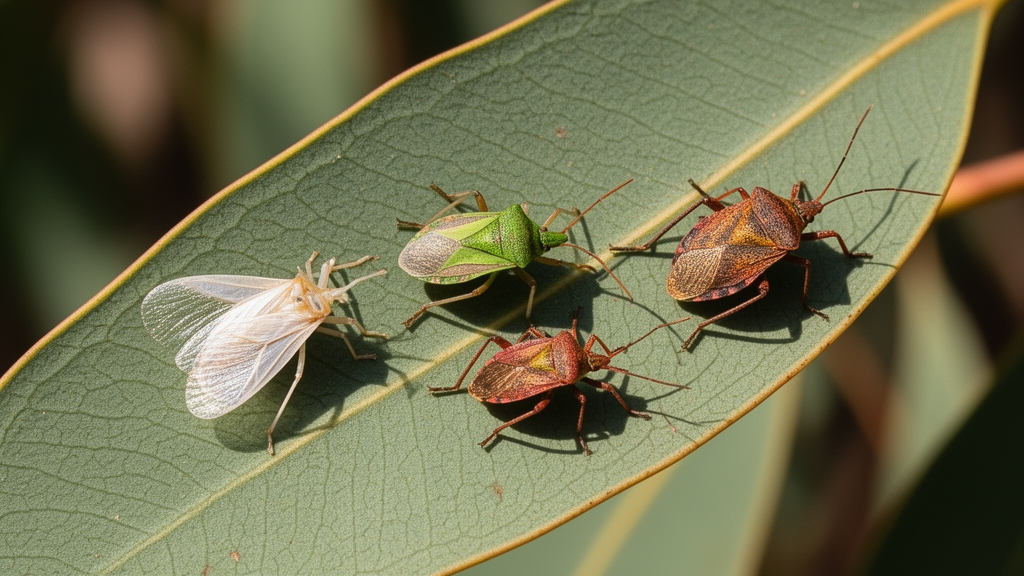
Schroeder’s choice of honoree was prompted by the insects’ appearance. She said their pale yellow coloration and striking red markings reminded her of Swift’s characteristic blonde hair and red lipstick. The coloring also mimics the flowers of the Australian she-oak with which the insects are associated, helping them evade predators.

The same features that inspired the celebrity-inspired naming therefore also correspond to the bugs’ coloration in their floral habitat. Swift joins other prominent figures whose names have been used for living organisms, including David Attenborough, Barack Obama and Beyoncé. The insects studied by Schroeder and Weirauch were collected as part of the National Science Foundation-funded “Planetary Biodiversity Inventory (PBI) for Plant Bugs,” a biodiversity project that gathered more than 50,000 specimens.

After collection, the material remained in museum collections and was not studied during the period covered by the release. The authors later revisited the collections, examined the specimens and described the previously unrecognized genus and its four species. The work demonstrates how natural history museums can retain scientific material for years before it is examined in enough detail to enter the formal taxonomic record.

The publication describes four taxa within a much broader group whose diversity remains incompletely documented. The research release notes that as many as 30 million insect species may still be undocumented, but describing Swiftiephylus does not establish the size, distribution or conservation status of these species beyond the information reported. The four species were also identified from a defined collection associated with Australian she-oak, rather than through a survey designed to measure the abundance of living populations.

Schroeder described the specimens as “vault species,” drawing an analogy with Swift’s “vault tracks”: organisms held in collections for decades that had not yet been brought into scientific view. Their formal description makes four previously hidden plant bugs available for recognition and further study while underscoring the potential scientific value of specimens that remain unstudied in museums.

Subject of Research: Taxonomic description of four Australian she-oak-associated plant bugs in the new genus Swiftiephylus

Article Title: From music genius to insect genus: newly classified Australian bugs named after Taylor Swift

Article References: From music genius to insect genus: newly classified Australian bugs named after Taylor Swift. Original publication (Bibliographic details unavailable.)

Image Credits: AI Generated

DOI: Not provided

Keywords: Taylor Swift, Swiftiephylus, new insect genus, plant bugs, Miridae, taxonomy, museum collections, Australian biodiversity, species description, insect diversity, music, genius

Cite Scienmag News

Gavin Prescott. (October 26, 2026). Taylor Swift’s Name Marks Four Newly Described Australian Plant Bugs. Scienmag. https://scienmag.com/taylor-swifts-name-marks-four-newly-described-australian-plant-bugs/

Gavin Prescott. "Taylor Swift’s Name Marks Four Newly Described Australian Plant Bugs." Scienmag, 26 October 2026, https://scienmag.com/taylor-swifts-name-marks-four-newly-described-australian-plant-bugs/. Accessed 26 October 2026.

Gavin Prescott. "Taylor Swift’s Name Marks Four Newly Described Australian Plant Bugs." Scienmag. October 26, 2026. https://scienmag.com/taylor-swifts-name-marks-four-newly-described-australian-plant-bugs/


Tags: Australian biodiversityAustralian insect collection from 1995-2004Australian plant bugs named after Taylor Swiftevolution and ecology of Miridae bugsgeniusinsect coloration mimicking Australian florainsect diversityinsects named for pop culture iconsMiridaemuseum collectionsMusicnew insect genusnew Miridae species in Australiapeer-reviewed insect taxonomy publicationplant bugsrelationship between insect appearance and predator evasionscientific naming inspired by Taylor Swiftsignificance of insect naming conventionsspecies descriptionSwiftiephylusSwiftiephylus genus descriptiontaxonomytaxonomy of Australian plant bugsTaylor Swift
Share26Tweet16
Previous Post

Review maps interconnected drivers of Lassa fever in Nigeria

Next Post

Global project to analyze 94,000 brain scans across eight disorders

Related Posts

Review finds stronger causal evidence for senescence than mutations in aging
Biology

Review finds stronger causal evidence for senescence than mutations in aging

October 26, 2026
Retrospective study finds multimodal AI improves immunotherapy outcome prediction in advanced lung cancer
Biology

Retrospective study finds multimodal AI improves immunotherapy outcome prediction in advanced lung cancer

October 26, 2026
Bdelloid rotifers repair chromosomes across generations
Biology

Bdelloid rotifers repair chromosomes across generations

October 26, 2026
Mosquito waste sequencing finds West Nile genome and novel viral candidates
Biology

Mosquito waste sequencing finds West Nile genome and novel viral candidates

October 26, 2026
Biomimetic membrane recreates native-like conditions for intestinal organoid cells
Biology

Biomimetic membrane recreates native-like conditions for intestinal organoid cells

October 26, 2026
Engineered probiotics linked to T cells improve colorectal tumor control in mice
Biology

Engineered probiotics linked to T cells improve colorectal tumor control in mice

October 26, 2026
Next Post
Global project to analyze 94,000 brain scans across eight disorders

Global project to analyze 94,000 brain scans across eight disorders

  • Mothers who receive childcare support from maternal grandparents show more optimized

    Mothers who receive childcare support from maternal grandparents show more parental warmth, finds NTU Singapore study

    27656 shares
    Share 11059 Tweet 6912
  • University of Seville Breaks 120-Year-Old Mystery, Revises a Key Einstein Concept

    1061 shares
    Share 424 Tweet 265
  • Bee body mass, pathogens and local climate influence heat tolerance

    682 shares
    Share 273 Tweet 171
  • Researchers record first-ever images and data of a shark experiencing a boat strike

    546 shares
    Share 218 Tweet 137
  • Groundbreaking Clinical Trial Reveals Lubiprostone Enhances Kidney Function

    531 shares
    Share 212 Tweet 133
Science

Embark on a thrilling journey of discovery with Scienmag.com—your ultimate source for cutting-edge breakthroughs. Immerse yourself in a world where curiosity knows no limits and tomorrow’s possibilities become today’s reality!

RECENT NEWS

  • Global project to analyze 94,000 brain scans across eight disorders
  • Taylor Swift’s Name Marks Four Newly Described Australian Plant Bugs
  • Review maps interconnected drivers of Lassa fever in Nigeria
  • Survey links anxiety to recent suicidal ideation among Bangladeshi ever-married women

Categories

  • Agriculture
  • Anthropology
  • Archaeology
  • Athmospheric
  • Biology
  • Biotechnology
  • Blog
  • Bussines
  • Cancer
  • Chemistry
  • Climate
  • Earth Science
  • Editorial Policy
  • Marine
  • Mathematics
  • Medicine
  • Pediatry
  • Policy
  • Psychology & Psychiatry
  • Science Education
  • Science News
  • Social Science
  • Space
  • Technology and Engineering

Subscribe to Blog via Email

Enter your email address to subscribe to this blog and receive notifications of new posts by email.

Join 5,151 other subscribers

© 2025 Scienmag - Science Magazine

Welcome Back!

Login to your account below

Forgotten Password?

Retrieve your password

Please enter your username or email address to reset your password.

Log In
No Result
View All Result
  • HOME
  • SCIENCE NEWS
  • CONTACT US

© 2025 Scienmag - Science Magazine

Discover more from Science

Subscribe now to keep reading and get access to the full archive.

Continue reading