


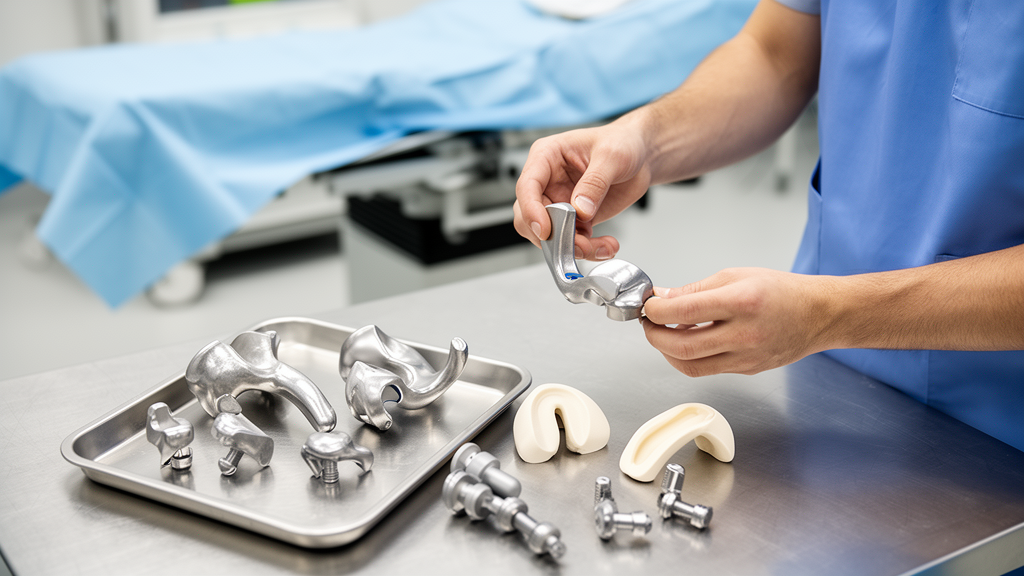
A scoping review found no Level I evidence to guide implant selection during first-time elective aseptic revision total knee arthroplasty. Researchers screened 7,096 research articles and 155 reports from national joint replacement registries, then included 121 articles and six registry reports in an evidence map organized around five key themes. Only 22 included studies, or 18%, clearly used cohorts made up exclusively of first-time elective aseptic revision procedures.
The review addressed implant selection as a research priority highlighted by the James Lind Alliance Priority Setting Partnership on the “problematic knee replacement.” Following the Arksey and O’Malley framework and the Joanna Briggs Institute Manual for Evidence Synthesis, the team reported the work under the PRISMA extension for scoping reviews. The search covered MEDLINE, Embase, CINAHL, CDSR, CENTRAL, DARE, HTA, SCI, PROSPERO and KSR Evidence on 17 August 2026, seeking studies published from 2000 through 2026. Annual reports from 17 national joint replacement registries were also sought, and the review was registered on the Open Science Framework.
The included literature was dominated by observational research and evidence classified at the lower end of the hierarchy. Retrospective case series represented 45 of the 121 research studies, or 37%, while retrospective comparative studies accounted for 41, or 34%. Forty-eight studies, or 40%, were classified as Level IV and 46, or 38%), as Level III; no Level I studies were identified. Among the 102 studies with identifiable national locations, 58, or 48%, came from the United States. Long-term follow-up was uncommon: five studies, or 4% of the full research evidence base, reported a mean or median follow-up of at least 10 years.
These results show that the available evidence is both limited and heterogeneous, particularly for the population targeted by the review. The authors identify three areas for future comparative work: cemented versus hybrid or cementless stems, different constraint levels, and metaphyseal fixation devices. They also recommend clinically homogeneous cohorts, meaning studies in which the groups being compared have sufficiently similar clinical characteristics. The scoping review does not establish which implant type produces better outcomes; instead, it maps the available studies and demonstrates the absence of high-level comparative evidence needed to support implant selection at first-time elective aseptic revision total knee arthroplasty.
Subject of Research: Evidence gaps in implant selection for first-time elective aseptic revision knee arthroplasty
Article Title: Implant selection at elective aseptic revision of a primary total knee replacement: A scoping review and map of the evidence
Article References: Tyas, B., Norman, J., Kolhe, S. N., Harden, M., Hewitt, C., Deehan, D., & Baker, P. (2026). Implant selection at elective aseptic revision of a primary total knee replacement: A scoping review and map of the evidence. PLOS One, 21(10), e0361040. https://doi.org/10.1371/journal.pone.0361040
Image Credits: AI Generated
DOI: 10.1371/journal.pone.0361040
Keywords: revision knee arthroplasty, knee implants, aseptic revision, evidence mapping, scoping review, joint replacement registries, cemented stems, cementless stems, constraint levels, metaphyseal fixation, Implant, selection
Cite Scienmag News
Ophelia Keating. (October 26, 2026). Revision knee implant choices lack high-level evidence. Scienmag. https://scienmag.com/revision-knee-implant-choices-lack-high-level-evidence/
Ophelia Keating. "Revision knee implant choices lack high-level evidence." Scienmag, 26 October 2026, https://scienmag.com/revision-knee-implant-choices-lack-high-level-evidence/. Accessed 26 October 2026.
Ophelia Keating. "Revision knee implant choices lack high-level evidence." Scienmag. October 26, 2026. https://scienmag.com/revision-knee-implant-choices-lack-high-level-evidence/


