

Monday, October 26, 2026
Science
No Result
View All Result
  • Login
  • HOME
  • SCIENCE NEWS
  • CONTACT US
  • HOME
  • SCIENCE NEWS
  • CONTACT US
No Result
View All Result
Scienmag
No Result
View All Result
Home Science News Medicine

Proteomic signatures linked to rapid antibody waning in older vaccinated adults

October 26, 2026
in Medicine
Kristina Jarvis
By Kristina Jarvis Scienmag Editorial Profile - Infectious Disease Medicine
Reading Time: 2 mins read
0
Proteomic signatures linked to rapid antibody waning in older vaccinated adults

Proteomic signatures linked to rapid antibody waning in older vaccinated adults

65
SHARES
587
VIEWS
Share on FacebookShare on Twitter
ADVERTISEMENT

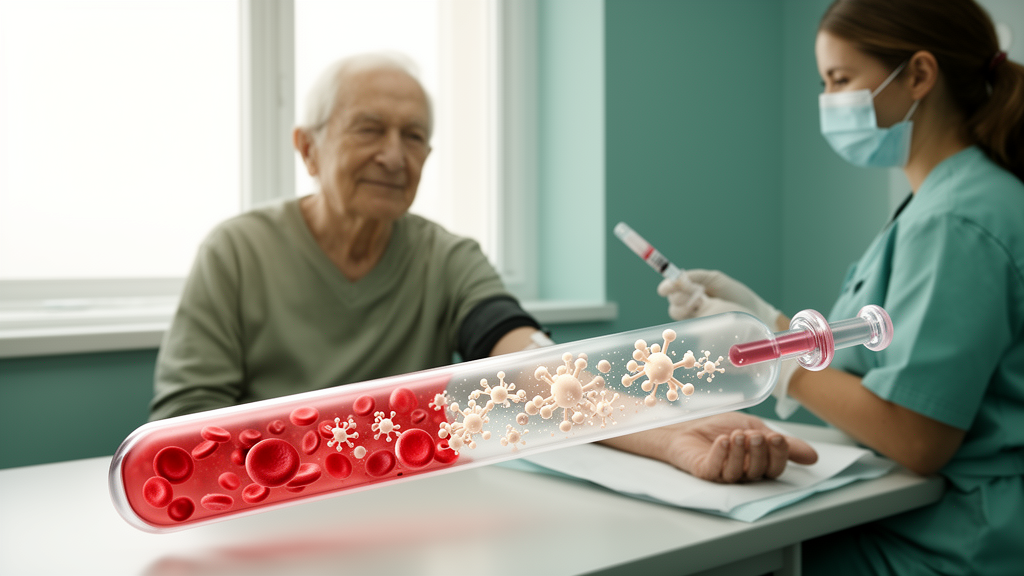
Distinct serum protein patterns were associated with rapid declines in SARS-CoV-2-specific IgG after breakthrough infection among previously vaccinated older adults, according to a nested case-control study embedded in the Yichang COVID-19 Antibody Longitudinal Survey. The exploratory findings link faster antibody waning with longitudinal changes involving complement activation, coagulation cascades, humoral immunity and serine protease inhibitor activity, but they do not establish that these molecular changes cause antibody loss or can predict outcomes in other populations. The study included 67 elderly participants whose SARS-CoV-2-specific IgG concentrations declined monotonically following breakthrough infection.

Researchers classified 34 as rapid decliners and 33 as slow decliners according to their antibody trajectories. None received an additional COVID-19 vaccination during serological follow-up. Rapid decliners were older than slow decliners, while the longitudinal models adjusted for age, sex, body-mass index and comorbidities.

Linear mixed-effects models identified 13 candidate dynamic proteins that showed significant group-by-time interaction signals, meaning their measured changes differed between rapid and slow decliners over the proteomic observation period. The candidates included IGHA1, AZGP1, SERPINA1 and C9. Their association with complement, coagulation, humoral immune and serine protease inhibitor pathways suggests that faster IgG waning coincided with a broader pattern of molecular change rather than a single isolated protein response.

The investigators interpreted the results as evidence of an association between rapid, hybrid immunity-associated IgG waning and complement-coagulation activity with sustained innate immune activation, not as proof of a causal pathway. The researchers then combined baseline clinical characteristics and baseline proteomic profiles with exploratory LASSO-based feature selection and internally cross-validated classification modelling. LASSO selected 14 protein features.

Among the algorithms evaluated, a neural network achieved the highest discrimination between rapid and slow decliners, with an area under the receiver operating characteristic curve of 0.872. A SHAP analysis highlighted C1QB, GRN, AZGP1 and CFHR4 as major contributors to the model’s classifications. These analyses were conducted within the study sample and do not demonstrate that the selected proteins can identify antibody-waning trajectories in an independent population.

Several limitations constrain the findings. The sample was small and selected from one longitudinal cohort, consisted entirely of elderly participants, and compared groups with different baseline characteristics, including age. Classification performance was assessed through internal rather than external cross-validation, and the analysis was exploratory.

The authors described the baseline proteomic signatures as hypothesis-generating candidate biomarkers for future externally validated risk-stratification studies. Whether these markers remain associated with rapid IgG waning outside the original cohort, or whether complement-coagulation activity contributes causally to the decline, remains to be determined.

Subject of Research: Serum proteomic correlates of rapid SARS-CoV-2 IgG waning in older vaccinated adults

Article Title: Longitudinal serum proteomic signatures associated with rapid SARS-CoV-2 IgG waning after breakthrough infection in elderly adults: a nested case-control study

Article References: Yang, C., Wang, H., Zhang, X., Lei, Z., Liu, J., Yan, X., & Wei, S. (2026). Longitudinal serum proteomic signatures associated with rapid SARS-CoV-2 IgG waning after breakthrough infection in elderly adults: a nested case-control study. BMC Infectious Diseases. https://doi.org/10.1186/s12879-026-14205-6

Image Credits: AI Generated

DOI: 10.1186/s12879-026-14205-6

Keywords: SARS-CoV-2, breakthrough infection, IgG waning, serum proteomics, older adults, hybrid immunity, complement activation, coagulation, innate immunity, biomarker discovery, nested case-control study, Longitudinal

Cite Scienmag News

Kristina Jarvis. (October 26, 2026). Proteomic signatures linked to rapid antibody waning in older vaccinated adults. Scienmag. https://scienmag.com/proteomic-signatures-linked-to-rapid-antibody-waning-in-older-vaccinated-adults/


Kristina Jarvis. "Proteomic signatures linked to rapid antibody waning in older vaccinated adults." Scienmag, 26 October 2026, https://scienmag.com/proteomic-signatures-linked-to-rapid-antibody-waning-in-older-vaccinated-adults/. Accessed 26 October 2026.

Kristina Jarvis. "Proteomic signatures linked to rapid antibody waning in older vaccinated adults." Scienmag. October 26, 2026. https://scienmag.com/proteomic-signatures-linked-to-rapid-antibody-waning-in-older-vaccinated-adults/

Tags: age-related differences in vaccine-induced immunitybiomarker discoverybreakthrough COVID-19 infections and immune declinebreakthrough infectioncoagulationcoagulation cascade involvement in immune declinecomplement activationcomplement activation and antibody durabilityCOVID-19 antibody decline in elderlyhybrid immunityIgG waninginnate immunityLongitudinallongitudinal proteomic profiling of vaccinated seniorsmolecular signatures of antibody waningnested case-control studyolder adultspredictors of immune response longevity in older adultsproteomic biomarkers for vaccine responseproteomics and immune pathway analysis inrapid antibody waning after SARS-CoV-2 infectionSARS-CoV-2serine protease inhibitors in COVID-19 immunityserum proteomics
Share26Tweet16
Previous Post

PLOS Raises Peer-Review Concerns for Coal-Mine Dust-Control Study

Next Post

Cross-sectional Uzbek school study links coping, support to high ADHD symptom risk

Related Posts

Research report: Effects of infection control interventions for preventing catheter-related bloodstream infection in intensive care units: a systematic review and meta-analysis
Medicine

Research report: Effects of infection control interventions for preventing catheter-related bloodstream infection in intensive care units: a systematic review and meta-analysis

October 26, 2026
Respiratory pathogen survey reveals mixed infections in Zhuhai children
Medicine

Respiratory pathogen survey reveals mixed infections in Zhuhai children

October 26, 2026
Systematic review finds sparse evidence for community frailty interventions in homelessness
Medicine

Systematic review finds sparse evidence for community frailty interventions in homelessness

October 26, 2026
Research report: Development and psychometric validation of the hospital Security Personnel Narrative Competency Scale (HSPNCS)
Medicine

Research report: Development and psychometric validation of the hospital Security Personnel Narrative Competency Scale (HSPNCS)

October 26, 2026
Dutch study maps care pathways for children with hemophilia
Medicine

Dutch study maps care pathways for children with hemophilia

October 26, 2026
Scoping review finds inconsistent acceptability reporting in healthcare research
Medicine

Scoping review finds inconsistent acceptability reporting in healthcare research

October 26, 2026
Next Post
Cross-sectional Uzbek school study links coping, support to high ADHD symptom risk

Cross-sectional Uzbek school study links coping, support to high ADHD symptom risk

  • Mothers who receive childcare support from maternal grandparents show more optimized

    Mothers who receive childcare support from maternal grandparents show more parental warmth, finds NTU Singapore study

    27656 shares
    Share 11059 Tweet 6912
  • University of Seville Breaks 120-Year-Old Mystery, Revises a Key Einstein Concept

    1061 shares
    Share 424 Tweet 265
  • Bee body mass, pathogens and local climate influence heat tolerance

    682 shares
    Share 273 Tweet 171
  • Researchers record first-ever images and data of a shark experiencing a boat strike

    546 shares
    Share 218 Tweet 137
  • Groundbreaking Clinical Trial Reveals Lubiprostone Enhances Kidney Function

    531 shares
    Share 212 Tweet 133
Science

Embark on a thrilling journey of discovery with Scienmag.com—your ultimate source for cutting-edge breakthroughs. Immerse yourself in a world where curiosity knows no limits and tomorrow’s possibilities become today’s reality!

RECENT NEWS

  • Cross-sectional Uzbek school study links coping, support to high ADHD symptom risk
  • Proteomic signatures linked to rapid antibody waning in older vaccinated adults
  • PLOS Raises Peer-Review Concerns for Coal-Mine Dust-Control Study
  • Engineered gut bacteria produce phages that prevent Salmonella infection in mice

Categories

  • Agriculture
  • Anthropology
  • Archaeology
  • Athmospheric
  • Biology
  • Biotechnology
  • Blog
  • Bussines
  • Cancer
  • Chemistry
  • Climate
  • Earth Science
  • Editorial Policy
  • Marine
  • Mathematics
  • Medicine
  • Pediatry
  • Policy
  • Psychology & Psychiatry
  • Science Education
  • Science News
  • Social Science
  • Space
  • Technology and Engineering

Subscribe to Blog via Email

Enter your email address to subscribe to this blog and receive notifications of new posts by email.

Join 5,151 other subscribers

© 2025 Scienmag - Science Magazine

Welcome Back!

Login to your account below

Forgotten Password?

Retrieve your password

Please enter your username or email address to reset your password.

Log In
No Result
View All Result
  • HOME
  • SCIENCE NEWS
  • CONTACT US

© 2025 Scienmag - Science Magazine

Discover more from Science

Subscribe now to keep reading and get access to the full archive.

Continue reading