

Monday, October 26, 2026
Science
No Result
View All Result
  • Login
  • HOME
  • SCIENCE NEWS
  • CONTACT US
  • HOME
  • SCIENCE NEWS
  • CONTACT US
No Result
View All Result
Scienmag
No Result
View All Result
Home Science News Medicine

Ethiopian fertility preferences show context-dependent links to knowledge and media

October 26, 2026
in Medicine
Ophelia Keating
By Ophelia Keating Scienmag Editorial Profile - Health Services Research
Reading Time: 3 mins read
0
Ethiopian fertility preferences show context-dependent links to knowledge and media

Ethiopian fertility preferences show context-dependent links to knowledge and media

65
SHARES
587
VIEWS
Share on FacebookShare on Twitter
ADVERTISEMENT

In a cross-sectional analysis of 16,322 responses from Ethiopia’s Small, Happy, and Prosperous Family in Ethiopia survey, reproductive knowledge and media exposure showed different associations with fertility preferences across three socioeconomic clusters. Deeper knowledge and greater media exposure were associated with lower fertility preferences in the Rural cluster, but with higher preferences in the Transitional cluster. In the Urban cluster, knowledge was associated with higher fertility preferences while media exposure was associated with lower preferences. The study therefore found no single national relationship linking information-related factors to fertility intentions.

Researchers applied k-means clustering to stratify the regional survey data into Rural, Transitional and Urban archetypes. They then used double machine learning, integrating LightGBM-based linear double machine learning with causal forest double machine learning, to adjust for high-dimensional confounders and capture nonlinear heterogeneity. The analysis also calculated Robustness Values, which quantify the threshold of omitted-variable bias for an estimated association. This combination of methods was designed to compare conditional associations within the statistically derived clusters rather than average them across the entire Ethiopian sample.

The Rural cluster showed negative associations for both information measures. Knowledge depth had an estimated association of −0.051 with fertility preference, while media exposure had an estimate of −0.063. The reported p-values were p < .001 for knowledge depth and p = .009 for media exposure. The causal forest analysis indicated that the association between media exposure depended on pre-existing knowledge in rural settings. In this cluster, the observed media relationship was therefore not structurally independent of respondents’ knowledge levels within the model.

The Transitional cluster produced the opposite pattern. Knowledge depth was positively associated with fertility preference, with an estimate of +0.067, while media exposure had a positive association of +0.101. Both relationships were reported as statistically significant, with p < .001 for each measure. As in the rural analysis, the causal forest results suggested that media exposure operated differently depending on pre-existing knowledge in transitional settings. These results contradict the assumption that greater exposure to reproductive information is uniformly associated with preferences for fewer children.

Urban respondents displayed a divided pattern. Knowledge depth was positively associated with fertility preference, with an estimate of +0.048 and p = .002. Media exposure was negatively associated with fertility preference, with an estimate of −0.075 and p = .005. The causal forest analysis suggested that media exposure in the urban cluster operated structurally independently of pre-existing knowledge, unlike its behavior in the rural and transitional settings. Because the data were cross-sectional, the estimates represent adjusted conditional associations rather than causal effects: the study cannot establish that knowledge or media exposure caused people to hold particular fertility preferences. The authors said the findings support considering cluster-specific strategies, including continued foundational education in rural areas, prioritizing economic structural shifts over information campaigns in transitional zones, and using standalone mass media for normative reframing in urban centers. These are policy implications proposed by the study, not tested interventions or demonstrated program outcomes.

Subject of Research: How socioeconomic context shapes associations between fertility preferences, reproductive knowledge, and media exposure in Ethiopia

Article Title: Double machine learning analysis identifies heterogeneous patterns in Ethiopian fertility intention: cross-sectional study

Article References: Kim, Y., Nam, E. W., Gebru, H. B., & Lee, H. (2026). Double machine learning analysis identifies heterogeneous patterns in Ethiopian fertility intention: cross-sectional study. BMC Public Health. https://doi.org/10.1186/s12889-026-29734-7

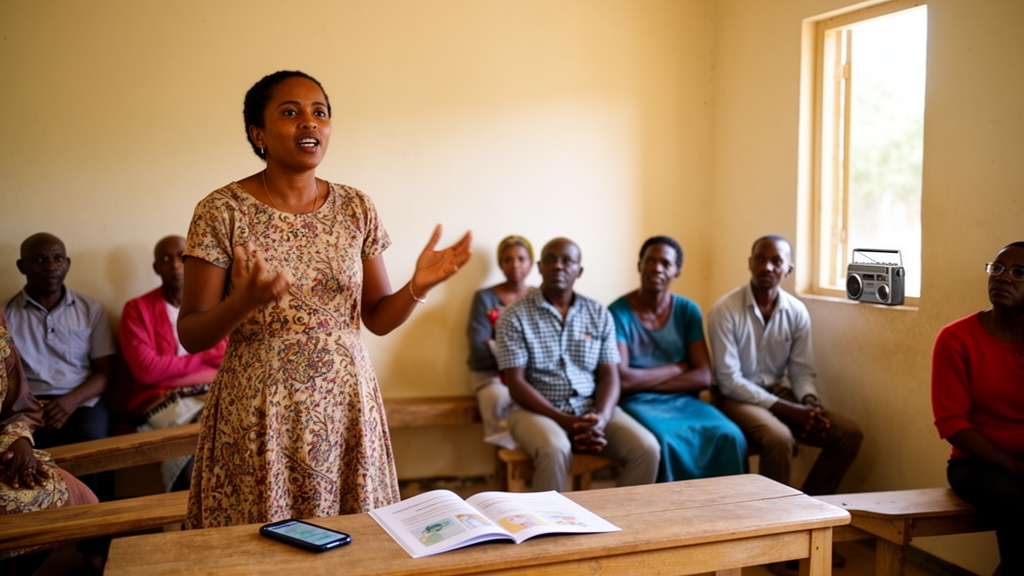
Image Credits: AI Generated

DOI: 10.1186/s12889-026-29734-7

Keywords: Ethiopia, fertility preferences, fertility intentions, reproductive knowledge, media exposure, double machine learning, causal forest, cross-sectional study, socioeconomic clusters, public health, Double, machine

Cite Scienmag News

Ophelia Keating. (October 26, 2026). Ethiopian fertility preferences show context-dependent links to knowledge and media. Scienmag. https://scienmag.com/ethiopian-fertility-preferences-show-context-dependent-links-to-knowledge-and-media/


Ophelia Keating. "Ethiopian fertility preferences show context-dependent links to knowledge and media." Scienmag, 26 October 2026, https://scienmag.com/ethiopian-fertility-preferences-show-context-dependent-links-to-knowledge-and-media/. Accessed 26 October 2026.

Ophelia Keating. "Ethiopian fertility preferences show context-dependent links to knowledge and media." Scienmag. October 26, 2026. https://scienmag.com/ethiopian-fertility-preferences-show-context-dependent-links-to-knowledge-and-media/

Tags: causal forestcausal forest methods in fertility studiescontext-dependent reproductive decision-makingcross-sectional studydoubleDouble Machine Learningdouble machine learning in demographic researchEthiopiaEthiopian fertility preferencesfertility intentionsfertility preferencesimpact of media exposure on fertility desiresinfluence of information sources on fertility choicesk-means clustering for socioeconomic stratificationmachinemedia exposurenonlinear heterogeneity in fertility preferencesPublic healthregional variations in fertility intentionsreproductive knowledgereproductive knowledge and media influencerobustness analysis of fertility determinantsrural versus urban fertility decision factorssocioeconomic cluster analysis in Ethiopiasocioeconomic clusters
Share26Tweet16
Previous Post

American College of Lifestyle Medicine welcomes national resolution advancing nature as a foundation for health and well-being

Next Post

Cameroon interviews reveal diverse motives for buying second-hand products

Related Posts

Shanghai’s primary hospitals supplied most diabetes medicines as costs fell
Medicine

Shanghai’s primary hospitals supplied most diabetes medicines as costs fell

October 26, 2026
American College of Lifestyle Medicine welcomes national resolution advancing nature as a foundation for health and well-being
Medicine

American College of Lifestyle Medicine welcomes national resolution advancing nature as a foundation for health and well-being

October 26, 2026
Mycoplasma pneumoniae co-infections linked to severe pediatric illness in Guangzhou
Medicine

Mycoplasma pneumoniae co-infections linked to severe pediatric illness in Guangzhou

October 26, 2026
Orthopedic-service cultures show 2018–2025 resistance proxies, not infection incidence
Medicine

Orthopedic-service cultures show 2018–2025 resistance proxies, not infection incidence

October 26, 2026
Ecological pressures show uneven links with mental health in 22 EU countries
Medicine

Ecological pressures show uneven links with mental health in 22 EU countries

October 26, 2026
Qualitative study identifies interconnected drivers of supplier-induced demand in Iran
Medicine

Qualitative study identifies interconnected drivers of supplier-induced demand in Iran

October 26, 2026
Next Post
Cameroon interviews reveal diverse motives for buying second-hand products

Cameroon interviews reveal diverse motives for buying second-hand products

  • Mothers who receive childcare support from maternal grandparents show more optimized

    Mothers who receive childcare support from maternal grandparents show more parental warmth, finds NTU Singapore study

    27656 shares
    Share 11059 Tweet 6912
  • University of Seville Breaks 120-Year-Old Mystery, Revises a Key Einstein Concept

    1061 shares
    Share 424 Tweet 265
  • Bee body mass, pathogens and local climate influence heat tolerance

    682 shares
    Share 273 Tweet 171
  • Researchers record first-ever images and data of a shark experiencing a boat strike

    546 shares
    Share 218 Tweet 137
  • Groundbreaking Clinical Trial Reveals Lubiprostone Enhances Kidney Function

    531 shares
    Share 212 Tweet 133
Science

Embark on a thrilling journey of discovery with Scienmag.com—your ultimate source for cutting-edge breakthroughs. Immerse yourself in a world where curiosity knows no limits and tomorrow’s possibilities become today’s reality!

RECENT NEWS

  • Shanghai’s primary hospitals supplied most diabetes medicines as costs fell
  • Cameroon interviews reveal diverse motives for buying second-hand products
  • Ethiopian fertility preferences show context-dependent links to knowledge and media
  • American College of Lifestyle Medicine welcomes national resolution advancing nature as a foundation for health and well-being

Categories

  • Agriculture
  • Anthropology
  • Archaeology
  • Athmospheric
  • Biology
  • Biotechnology
  • Blog
  • Bussines
  • Cancer
  • Chemistry
  • Climate
  • Earth Science
  • Editorial Policy
  • Marine
  • Mathematics
  • Medicine
  • Pediatry
  • Policy
  • Psychology & Psychiatry
  • Science Education
  • Science News
  • Social Science
  • Space
  • Technology and Engineering

Subscribe to Blog via Email

Enter your email address to subscribe to this blog and receive notifications of new posts by email.

Join 5,151 other subscribers

© 2025 Scienmag - Science Magazine

Welcome Back!

Login to your account below

Forgotten Password?

Retrieve your password

Please enter your username or email address to reset your password.

Log In
No Result
View All Result
  • HOME
  • SCIENCE NEWS
  • CONTACT US

© 2025 Scienmag - Science Magazine

Discover more from Science

Subscribe now to keep reading and get access to the full archive.

Continue reading